Establish your presence globally with Neeyamo as we help you go beyond borders to manage your international payroll services and hire new talent in South Korea.
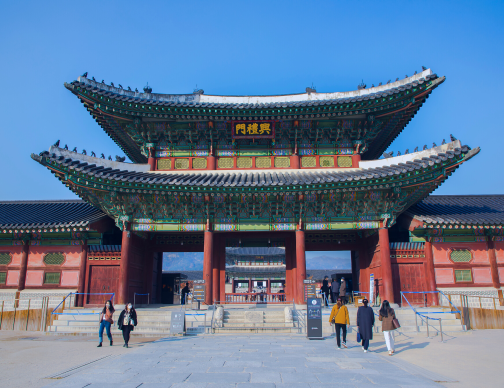
Overview
South Korea has a highly developed and competitive labor market supported by a well-educated workforce and a strong technology and industrial sector. Employers operating in the country must comply with a comprehensive framework of employment, payroll, social insurance, tax, and labor regulations.
South Korea also operates a compulsory military-service system for male Korean citizens, subject to applicable eligibility requirements, exemptions, deferments, and alternative forms of service. Military-service obligations can therefore be an important consideration for employers when hiring and managing certain male employees.
Do your organization's expansion plans require you to hire employees in South Korea? If your organization does not have a local entity, an Employer of Record (EOR) or global payroll provider can help facilitate employment and payroll administration, subject to the applicable legal and regulatory requirements. Services may include employee onboarding, payroll processing, statutory compliance, tax and social insurance administration, benefits administration, and other local employment requirements.
Our Presence



Facts And Stats
Capital
Seoul
Currency
South Korean Won (KRW)
Official Language
Korean
Fiscal Year
01 January - 31 December
Date Format
YYYY/MM/DD
Country Calling Code
82
Other Languages
English, Japanese, Chinese, and Russian.
Time Zone
UTC+09:00
Global Payroll
Overview
What is Global Payroll?
Handling payroll for a widespread workforce can pose a significant challenge for any organization, and the added complication of compliance can make things worse. If companies spend more time processing payroll, it directly impacts day-to-day operations and their overall productivity. The solution to this is global payroll outsourcing using the help of global payroll providers.
What is a global payroll system?
Over the years, Neeyamo – Global Payroll Services has observed these complexities and strived to provide global payroll solutions through a single technology platform – Neeyamo Payroll. Neeyamo's global payroll systems ease the process for companies looking to outsource their global payroll requirements and aid them in navigating the tricky payroll system in South Korea. Neeyamo's payroll software provides the perfect solution for all your global payroll needs – for employees working in primary geographies, the long-tail region, remote or internationally located.
How is payroll calculated?
Payroll calculation varies by country and depends on factors such as employee earnings, applicable taxes, statutory contributions, benefits, deductions, working time, and other country-specific requirements.
Neeyamo supports payroll processing through country-specific payroll capabilities, regulatory expertise, and multi-level controls designed to help ensure accurate and compliant payroll processing. Its technology platform combines payroll automation with local regulatory knowledge to support payroll processing across multiple jurisdictions.
Payroll Taxes
Payroll taxes are statutory taxes and contributions associated with employment and payroll. Certain amounts may be withheld from an employee's salary and remitted to the relevant government authorities, while employers may also be required to make separate statutory contributions.
These taxes and contributions may fund government programs, social security, healthcare, employment insurance, and other statutory employee benefits, depending on the applicable local regulations. Employer and employee obligations vary by country and may depend on factors such as salary, employee status, and applicable contribution limits.
Employee Taxes
- 4.75% - National Pension (NPS)
- 3.595% - National Health Insurance (NHIS)
- ~0.472% - Long-Term Care Insurance (LTCI)
- 0.9% - Employment Insurance (Unemployment)
Employee income tax:
| Taxable Income Bracket (KRW) |
National Income Tax Rate |
Effective Rate (Incl. 10% Local Tax) |
|---|---|---|
| Up to 14,000,000 | 6.00% | 6.60% |
| 14,000,001 - 50,000,000 | 15.00% | 16.50% |
| 50,000,001 - 88,000,000 | 24.00% | 26.40% |
| 88,000,001 - 150,000,000 | 35.00% | 38.50% |
| 150,000,001 - 300,000,000 | 38.00% | 41.80% |
| 300,000,001 - 500,000,000 | 40.00% | 44.00% |
| 500,000,001 - 1,000,000,000 | 42.00% | 46.20% |
| Over 1,000,000,000 | 45.00% | 49.50% |
Non-Resident Tax Rates: The Standard Progressive Rates are generally taxed on their Korea-sourced income using the same progressive brackets (6% to 45%) as residents.
Employer Taxes
- 4.75% - National Pension (NPS)
- 3.595% - National Health Insurance (NHIS)
- ~0.472% - Long-Term Care Insurance (LTCI)
- 0.9% - Employment Insurance (Unemployment)
- 0.25% - 0.85% (varies by company size) - Employment Insurance (Skill Development)
Payroll Cycle
Overview
Payroll is a critical process for any organization. In South Korea, the pay cycle refers to the period for which employees are paid, and the payment frequency may vary depending on the employer's established payroll practices.
Frequency
Payroll in South Korea is generally processed on a monthly basis. Under Article 43(2) of the Labor Standards Act, wages must be paid at least once per month on a fixed day.
13th Month Cycle
There is no general statutory requirement in South Korea for employers to provide a 13th-month salary payment. However, additional bonuses or payments may be provided where required under an employment contract, collective agreement, or company policy.
Global Work
Overview
Employer of Record / EOR:
An Employer of Record (EOR) service provider can support organizations that wish to employ individuals in South Korea without establishing and operating their own local employment infrastructure. Under an EOR arrangement, the EOR becomes the legal employer of the employee and manages employment-related administrative and statutory obligations in accordance with applicable South Korean requirements.
An EOR may support activities such as employment onboarding, payroll administration, statutory tax and social insurance requirements, employee benefits, and other employment-related processes. The EOR arrangement does not remove the employee's rights and protections under applicable South Korean employment laws.
South Korean employment legislation establishes minimum standards relating to employment conditions, including wages, working hours, holidays, annual paid leave, and other employment terms. Employers are also required to clearly state specified employment conditions to employees when entering into an employment contract.
An EOR model can therefore help organizations engage employees in South Korea while the EOR manages the local employment and payroll administration, subject to the applicable legal and contractual arrangements. Neeyamo provides global payroll and EOR solutions designed to support organizations with employee management, payroll processing, and compliance requirements across multiple jurisdictions, including South Korea.
HR Mandates and Practices
Minimum Wage
-
Effective January 1, 2027, South Korea’s national minimum wage will increase to ₩10,700 per hour, representing a 3.7% increase from the 2026 rate of ₩10,320.
-
The minimum wage applies equally across all industries.
-
The corresponding monthly minimum wage is ₩2,236,300, calculated based on 209 hours per month, equivalent to a 40-hour workweek.
Statutory Working Hours
Under Article 50 of the Labor Standards Act, employees may not generally work more than 40 hours per week or 8 hours per day, excluding breaks. By agreement, working hours may generally be extended by up to 12 hours per week, resulting in a maximum of 52 hours per week including overtime, subject to applicable statutory exceptions and working-time arrangements.
Overtime
Employees generally work up to 40 hours per week, with overtime permitted for up to an additional 12 hours per week by agreement, resulting in a general maximum of 52 working hours per week. Overtime work must be compensated at 150% or more of the ordinary wage.
Data Retention Policy
Employers are generally required to retain employment-related records, including employee registers and important documents relating to employment contracts, for at least three years. Tax books, accounting records, and supporting documents must generally be retained for five years from the statutory tax filing deadline for the relevant tax period. Electronic records must also be maintained in an accessible and verifiable form.
Hiring and Onboarding Requirements
Hiring
South Korea prohibits discrimination in recruitment and employment without reasonable grounds. Under the National Human Rights Commission of Korea Act, discriminatory treatment in employment, including recruitment, is prohibited when based on grounds such as sex, religion, disability, age, social status, region or state of origin, ethnic origin, physical condition, marital status, pregnancy or childbirth, family type, race, skin color, ideology or political opinion, certain criminal records, sexual orientation, academic career, and medical history.
The NHRCK Act does not treat all preferential treatment for specific groups as discriminatory. Temporary favorable treatment intended to address existing discrimination, as well as legislation and policies designed for this purpose, is excluded from the definition of discriminatory acts.
In addition, specific employment laws apply to recruitment. Employers must not discriminate based on gender during recruitment and employment, and age discrimination in recruitment and employment is prohibited unless there is a reasonable justification.
Employee onboarding Document Checklist
- Pre-employment docs: Resume/CV, signed consent form for personal data collection (PIPA compliance).
- Statutory requirement docs: Resident Registration Number (RRN), bank account details (for payroll), National Pension and Health Insurance enrollment forms.
- Personal details: Emergency contact information, Family Registry Certificate (optional, needed only if claiming family tax deductions or family allowances).
- Immigration/work authorization docs: Passport copy, Alien Registration Card (ARC), and valid work visa (for foreign nationals).
- Health and safety docs: General health examination certificate (Mandatory under the Occupational Safety and Health Act for certain roles/companies).
Employment Contract
- Employment Contracts: Employers must clearly state key employment conditions, including wages, contractual working hours, statutory holidays and annual paid leave. The employer must provide the employee with a written or electronic document specifying wage components, calculation and payment methods, contractual working hours, holidays and annual paid leave.
- Part-Time Employees: Employees working an average of less than 15 hours per week over four weeks are generally excluded from statutory holiday and annual leave provisions.
- Contract Restrictions: Contract terms below statutory standards are void. Employers cannot impose predetermined penalties, wage deductions for advances, or compulsory savings arrangements.
- Dismissal: An employer may not dismiss, suspend, transfer, reduce wages, or impose disciplinary measures without justifiable cause. Special protection applies during periods of occupational injury/disease treatment and specified maternity periods.
- Managerial Dismissal: Requires urgent business necessity, efforts to avoid dismissal, fair selection criteria, and required consultation with employee representatives.
- Dismissal Notice: Employers generally must provide at least 30 days' advance notice of dismissal or pay at least 30 days' ordinary wages in lieu. Statutory exceptions apply, including certain employees with less than three months' continuous service. Dismissals must be notified in writing, stating the grounds and timing.
- Unfair Dismissal: Employees may seek a remedy through the Labor Relations Commission within 3 months.
- Final Payments: Wages and other amounts due upon termination must generally be paid within 14 days, unless otherwise agreed due to special circumstances
- Retirement Benefits: Governed primarily by the Employee Retirement Benefit Security Act.
- Employment Records: Employers must maintain employee and employment-related records for the statutory retention period.
Probation
South Korean law does not prescribe a mandatory or maximum probation period. Employers may establish a probationary period through the employment contract or company rules; a 3-month probation period is common practice. Employees on probation remain protected by applicable unfair-dismissal provisions. Separately, employees who have worked continuously for less than three months are exempt from the statutory 30-day advance dismissal notice requirement under Article 26 of the Labor Standards Act.
Statutory Leave
Annual Leave
Article 60 provides 15 days of paid annual leave to employees who have at least 80% attendance during the preceding year. Employees with less than one year of service or less than 80% attendance receive one day per month of perfect attendance. Employees with at least three years of continuous service receive additional leave based on service, up to a maximum of 25 days.
Sick Leave
South Korea does not generally provide statutory paid sick leave under the Labor Standards Act. Sick leave may be provided under company policy or collective agreement. Employees may use available annual leave where permitted.
Occupational Injury/Illness
Under Article 52 of the Industrial Accident Compensation Insurance Act, employees may receive 70% of their average wage during medical treatment, except where incapacity lasts 3 days or less.
Maternity Leave
Female employees are entitled to 90 days of maternity leave, including at least 45 days after childbirth. For a premature birth, the entitlement is 100 days, with at least 45 days after childbirth. For multiple births, the entitlement is 120 days, with at least 60 days after childbirth.
The first 60 days are paid; for multiple births, the first 75 days are paid, subject to the statutory maternity benefit rules. For large enterprises, the remaining 30 days of the standard 90-day leave (or 45 days for multiple births) are paid through Employment Insurance.
Miscarriage/Stillbirth Leave
The entitlement varies based on the stage of pregnancy, ranging from 5 to 90 days. Leave is paid in accordance with the applicable statutory maternity leave payment rules. Employees must submit a leave request with the required medical documentation.
Paternity/Spousal Childbirth Leave
An employee whose spouse gives birth is entitled to 20 days of paid leave. The leave must be used within 120 days from the date of childbirth and may be taken in up to three separate periods. Employers may not dismiss or otherwise disadvantage an employee for taking this leave.
Long-Term Family Care Leave
Employees may take unpaid family care leave of up to 90 days per year to care for family members due to sickness, injury, or old age. The leave may be divided into multiple periods, with each period generally lasting at least 30 days.
Short-Term Family Care Leave
Employees may take up to 10 days per year for short-term family care needs. In specified circumstances, the limit may be extended to 20 days, or 25 days for eligible single-parent employees.
Infertility Treatment Leave
Employees can take up to 6 days per year, with the first 2 days being paid.
Menstrual Leave
One day of unpaid leave per month, upon request, for female employees.
Compensatory Leave
Leave may be granted instead of additional wages for extended, night, or holiday work, subject to a written agreement with the labor representative.
Termination
Voluntary Termination (Employee Resignation)
- An employee may resign by giving notice to the employer.
- For an employment contract with no fixed term, the resignation becomes effective one month after the employer receives the notice.
- Where remuneration is fixed for a specific period, different timing rules may apply.
- Employer acceptance is not generally required for the resignation to become effective under Article 660.
Involuntary Termination (Employer-Initiated Dismissal)
- Under Article 23 of the Labor Standards Act (LSA), an employer cannot dismiss an employee without justifiable cause.
- For dismissal for managerial reasons/redundancy an urgent managerial necessity. The employer must also make efforts to avoid dismissal and establish reasonable and fair selection criteria. Where a representative labor union or employee representative is applicable, the employer must provide the required advance notice and consult in good faith regarding measures to avoid dismissal and the selection criteria.
- Certain protected periods also restrict dismissal, including periods relating to occupational injury/disease and statutory maternity leave, subject to the exceptions provided by law.
Notice Period
- An employer must generally provide an employee with at least 30 days' advance written notice of dismissal or pay 30 days' ordinary wages in place of notice, in accordance with Article 26 of the Labor Standards Act.
- The 30-day advance notice requirement does not apply to employees who have less than three months of continuous service.
- The dismissal must also generally be notified in writing, stating the grounds and timing of the dismissal.
Final Settlement Payment
- The employer should complete applicable final payroll and statutory employment-related procedures following termination, including payment of amounts legally due and updating/reconciling applicable social insurance records.
- Employment, dismissal, and retirement-related records must be retained for the statutory retention period.
Visa
- Foreign nationals must obtain an appropriate work-authorized visa/status of stay before working in South Korea. The required visa depends on the nature of the work and the employee's qualifications.
- Common employment visas include E-1 (Professor), E-2 (Foreign Language Instructor), E-3 (Research), E-4 (Technical Guidance), E-5 (Professional), E-6 (Culture and Art), E-7 (Specific Activities), and E-9 (Non-Professional Employment).
- E-7 is commonly used for foreign professionals and skilled workers and is subject to occupation, qualification, and salary requirements. E-9 is for eligible non-professional workers under Korea's Employment Permit System (EPS).
- Foreign nationals intending to stay for more than 90 days must generally complete foreigner registration within 90 days of entry and obtain a Residence Card.
- Employers should verify the employee's passport, Residence Card, and work-authorized immigration status before employment and ensure that the employee's visa remains valid throughout employment.
Employee Background Checks
- Pre-employment background checks are regulated primarily by the Personal Information Protection Act (PIPA) and other applicable laws. Employers must have a lawful basis for collecting and using candidates' personal information and should collect only information relevant to the position.
- Criminal checks: Highly restricted. Criminal-record information may generally be obtained only where specifically permitted or required by law, such as for certain regulated positions and sectors.
- Education & employment history: Permitted where relevant to the position and collected/processed in accordance with PIPA requirements.
- Financial/credit checks: Restricted under the Credit Information Use and Protection Act and permitted only where legally justified, such as for certain financial-sector roles.
- Drug testing: Not generally required for ordinary employment, but may be required for certain occupations or visa categories, including E-2 foreign language instructors, subject to applicable requirements.
- Third-party checks: Where a third party is used to conduct screening, the employer must ensure the collection and processing of personal information complies with PIPA and other applicable privacy laws.
Last updated on September 24, 2026
If you have any queries or suggestions, reach out to us at irene.jones@neeyamo.com
Recommended Resources & Insights




Have Queries? Get In Touch With Us
Get in touch with one of our experts and take a quick demo of our services