The Growing Complexity of Long-Tail HR
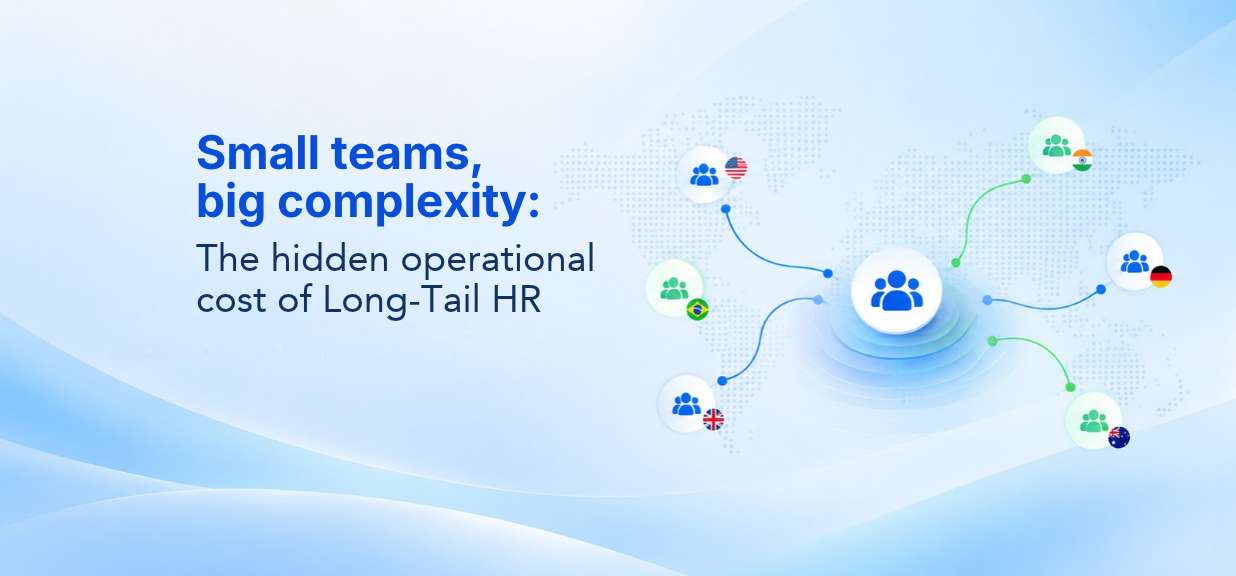
Global workforce expansion is no longer limited to countries where organizations maintain large teams or established operations. Businesses increasingly employ smaller groups of employees across multiple locations, creating a workforce footprint that extends well beyond their primary markets.
While these markets may account for only a small percentage of total headcount, the requirements for managing employees remain substantial. Employment regulations, payroll processing, statutory contributions, employee benefits, and reporting obligations must still be addressed, regardless of whether a country has five employees or five hundred.
This is where long-tail HR becomes a growing operational challenge. It refers to the complexity of managing employees across low-headcount countries, where traditional HR and payroll operating models may not provide the same level of efficiency, visibility, or consistency as they do in larger markets.
As digital work creates opportunities to access talent across borders, organizations are increasingly navigating workforce requirements across diverse locations. The World Economic Forum's 2024 report on global digital jobs explores how digital access and remote work are expanding opportunities for international employment.
This shift brings a less visible challenge into focus: long-tail HR, where managing smaller employee populations across numerous countries can create disproportionate operational complexity.
Why Traditional HR Models Struggle with the Long- Tail?
Imagine managing payroll for hundreds of employees in a major market, alongside a few employees in several smaller countries. The employee numbers may be low, but each location can introduce its own payroll calculations, employment requirements, statutory obligations, and reporting processes.
This is where traditional approaches to global HR and payroll can become difficult to scale.
Three challenges stand out:
- Local compliance: Organizations must account for country-specific employment, tax, and payroll requirements. The OECD's Tax Policy Reforms 2024 documents how countries adopt different approaches to the taxation of foreign workers, illustrating the variation organizations must navigate.
- Fragmented operations: Different providers, disconnected systems, and manual workflows can make it difficult to maintain consistent processes and consolidated workforce information.
- Uneven operational attention: Smaller employee populations can require as much attention to local requirements as larger ones, even when they do not justify dedicated internal teams.
The challenge is not simply managing more employees. It is managing employees across more jurisdictions without multiplying operational complexity.
The Operational Impact of Long-Tail HR
When global HR and payroll operations are fragmented, the consequences extend beyond administration. HR and payroll teams may spend more time coordinating vendors, collecting data, and resolving discrepancies. Inconsistent processes can make consolidated reporting harder, while missed regulatory changes can expose organizations to compliance risks.
Expansion can also become more difficult when every new country requires a separate operational arrangement. Ultimately, organizations risk building a global workforce that operates through disconnected local processes rather than a coordinated global framework. Addressing long-tail HR requires a different approach: one that combines global consistency with local execution.
What Should Organizations Do? Four Practical Steps
1. Map your workforce footprint.
Identify every country where your organization employs people, including locations with only a small number of employees. Understand the payroll arrangements, providers, systems, and compliance responsibilities associated with each location.
2. Standardize where possible and localize where necessary.
Establish common governance, reporting, and data standards across markets while preserving the country-specific requirements needed for compliant payroll and employment administration.
3. Reduce fragmentation.
Review how employee data moves between HR, payroll, time, and finance systems. Identify manual handoffs, duplicated work, and gaps in visibility. Prioritize integration and clearer ownership of processes.
4. Choose a model that supports long-term growth.
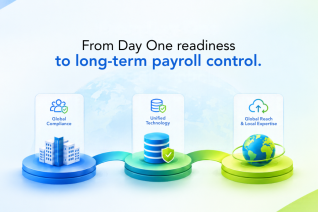
Evaluate whether your global HR and payroll model can accommodate new markets and small employee populations without requiring a separate operating structure for each one. Consider geographic coverage, local expertise, technology integration, compliance processes, and scalability.
The objective is to make global expansion operationally manageable, even when the workforce is spread across less familiar markets.
How Does Neeyamo Support Long-Tail HR Operations?
Long-tail HR calls for a model that recognizes the complexity of every market, regardless of the number of employees located there.
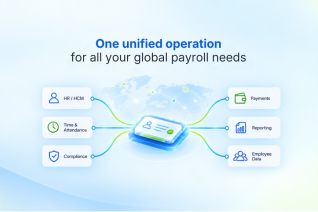
Neeyamo brings together global payroll technology, local expertise, and integration capabilities to help organizations manage employees across diverse geographies. Its global payroll capabilities are designed to support both major markets and long-tail locations through a technology-led approach to multi-country payroll.
The focus is on helping organizations move away from fragmented arrangements toward more connected payroll operations, with country-specific compliance and global visibility working together.
Neeyamo's broader portfolio also includes ARIA, its AI payroll agent, and Compass, its compliance intelligence solution. These capabilities support the wider objective of making global payroll operations more intelligent and helping teams navigate complex payroll and regulatory requirements.
The principle is straightforward: smaller employee populations should not become an obstacle to managing a global workforce effectively.
Low employee headcount should not mean greater operational fragmentation. As organizations expand across multiple markets, managing long-tail HR requires an approach that balances country-specific requirements with consistent global processes. Your global workforce is only as manageable as the operating model behind it.
Explore Neeyamo's global payroll solutions to understand how a connected, technology-led approach can help your organization address long-tail HR and payroll complexity across borders, or drop us your queries at irene.jones@neeyamo.com