Somewhere in your organization, there's an employee who is the only person you employ in their country. No local HR team down the hall. No colleague who has been through the same onboarding. Just a contract, a payslip, and a support inbox in a different time zone.
Their work is held to the same standard as everyone else's. Their experience often isn't.
As Brandon Hall Group notes, the human side of the 80-20 challenge sits in the tail. Around 80% of a multinational's employees are in 20% of its countries, but the remaining markets carry the same compliance, accuracy, and experience standards on a fraction of the headcount. And the employee out there isn't benchmarking against their country team. They're benchmarking against the colleague on the other side of the video call.
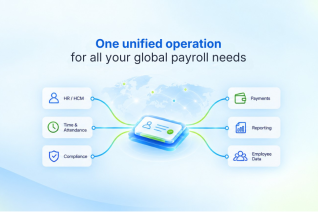
The long-tail is where most payroll models quietly give way. They were designed for density, so a one-person country gets handled through a third-party chain, with every handoff adding delay. Neeyamo took the opposite route: native engines built for underserved countries, all sitting inside a single end-to-end platform. The result is that one employee gets the same quality of experience as a team of ten thousand. Here are four moments where that comparison is won or lost.
Here are four scenarios where that comparison is won or lost.
1. The first 30 days: onboarding without a safety net
At headquarters, onboarding is a system: a buddy, a structured intro, tools ready on day one. In a one-person country, onboarding is mostly paperwork: local contract norms, statutory registrations, tax setup, bank details. Get one wrong, and the first payslip becomes the first impression.
A global onboarding standard has to travel, with the local statutory steps handled by people who know the country. The experience should feel identical even though the mechanics underneath are not.
2. Payday: accuracy and timing
Payday is the moment employees trust you most, and the one where trust breaks fastest. In PayrollOrg's 2025 survey, 78% of workers said a paycheck delayed by even a week would make it hard to meet their financial obligations (PayrollOrg via CPA Practice Advisor). For a long-tail employee, with no local HR down the hall to call, a late or wrong payslip is felt even harder.
The survey was American, but the logic travels. In a country where HQ knows the statutory rules least, a pay error isn't a blip. It's the relationship.
The payroll lens: this is where the Neeyamo difference shows. Aggregator models lean on third-party systems, so a rule change in a small market can reach the payslip late. Neeyamo's native engines are built for each country, with statutory compliance pre-configured and validations that run before payroll does. Rules, filing calendars and currencies differ everywhere, and they don't get simpler because the headcount is small. The accuracy has to be built into the engine.
3. The payslip: can they actually read it?
At headquarters, a confusing deduction gets solved by asking the person at the next desk. A lone employee has no next desk. Statutory contributions, local taxes and year-end tax documents can be baffling in any country, and they're worse when the payslip format, language and terminology reflect headquarters rather than the employee's own market.
The employee lens: a payslip is the one document that tells someone whether their employer understands where they live and work. A payslip generated by a template from another country says the opposite. Neeyamo's native engines are built around each country's own rules, so what lands in the employee's hands reads as if it came from their market, not from a head office three time zones away. Clear, localized, and explained beats are merely correct.
4. When something goes wrong: who do they call?
According to Gartner’s survey of nearly 3,400 employees, only 40% agree their organization is transparent about the total value of their pay (Gartner). When pay isn't clear, people ask the person closest to them, usually their direct supervisor. For a long-tail employee, that supervisor is usually in another country and may know little about local rules. So the question gets passed along, and every handoff adds days.
For a long-tail employee, that supervisor is usually in another country and may know little about local rules. So the question gets passed along, and every handoff adds days. A lone employee needs one accountable owner, support in their language and time zone, and an answer path that doesn't depend on their manager knowing the local rules. A patchwork of local vendors means the employee feels the patchwork. One partner means they feel the company.
Across all four moments, the pattern is the same. The employee isn't asking for special treatment. They're asking not to be treated as an exception.
So here's a simple test. Could a long-tail employee swap places with a colleague at headquarters and notice no difference in how they're onboarded, paid, informed, and supported? If not, the gap isn't a long-tail problem. It's an experience problem that happens to a country where you happen to be small. Small headcount is a fact of geography. A smaller experience is a choice!
Also Read: The 80-20 Challenge in Global Payroll: Why the Long-Tail Payroll Matters
What do your long-tail employees see that headquarters doesn't?
Late payslips, confusing deductions, and questions that bounce across time zones rarely show up in a global dashboard, but your employees feel every one of them. Neeyamo helps you see those gaps and close them with in-country expertise and one accountable team behind every payroll in every country. Talk to us for more queries at irene.jones@neeyamo.com