For multinational organizations, payroll consolidation is no longer just a reporting exercise. It is a business necessity. As organizations expand through acquisitions, Global Capability Centers (GCCs), and distributed workforces, payroll data becomes fragmented across multiple vendors, systems, and local processes. According to Deloitte's 2025 Global Payroll Benchmarking Survey, around 84% of respondents manage more than 20 payroll system integrations, highlighting the growing complexity of global payroll operations.
This complexity often results in payroll consolidation errors that delay reporting, increase compliance risks, and reduce confidence in payroll data. Organizations need an operating model that not only consolidates payroll information but also ensures accuracy, consistency, and control across every country.
This is where a Global Payroll Capability Center (GpCC) becomes a strategic advantage. Before diving into understanding the concept of GpCC, let’s know why errors in payroll consolidation emerge in the first place.
Why Payroll Consolidation Errors Happen
Global payroll environments are inherently complex. Different countries operate with different payroll providers, statutory regulations, pay frequencies, currencies, and reporting formats. Even when organizations implement a global payroll platform, they often continue to rely on multiple local systems for payroll execution.
As payroll data flows from these diverse sources into a central reporting framework, common consolidation challenges emerge:
- Inconsistent employee master data across systems
- Duplicate or missing payroll records
- Disconnected payroll inputs and outputs
- Manual spreadsheet-based reconciliations
- Delayed payroll approvals
- Limited visibility into payroll exceptions
- Different reporting structures across countries
Without standardized governance, payroll teams spend significant time identifying and correcting discrepancies rather than focusing on strategic payroll management. This is where GpCC brings a different strategy to address it.
The Role of a Global Payroll Capability Center
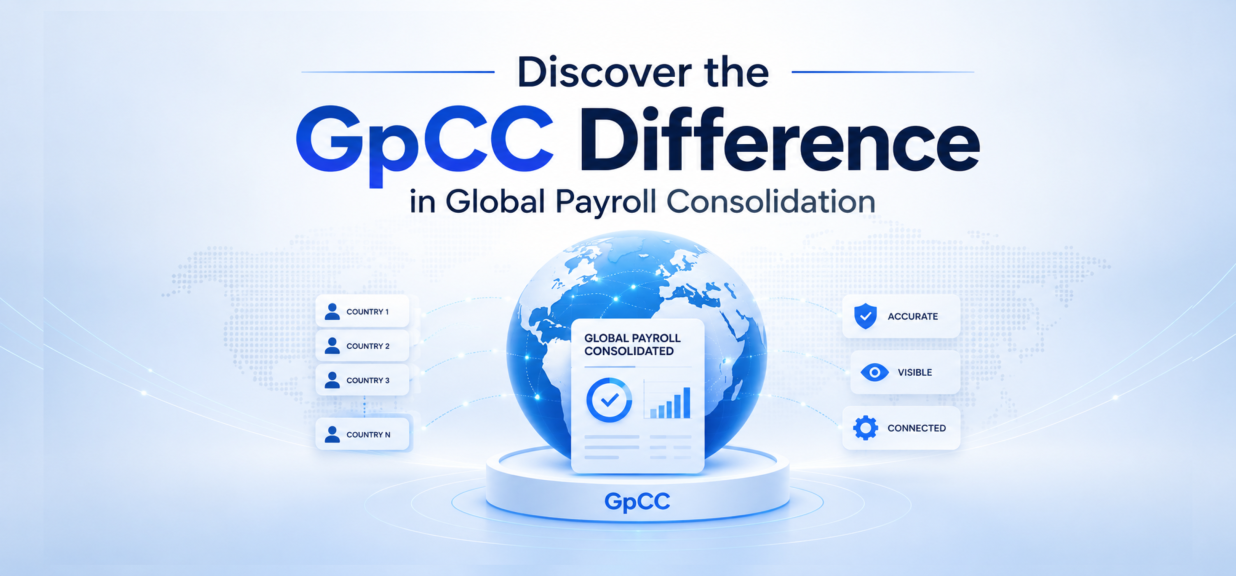
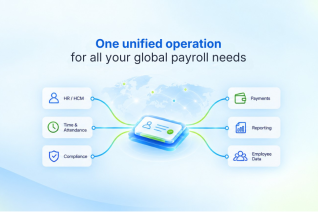
A Global Payroll Capability Center (GpCC) is not another payroll processing team. It is a centralized governance and intelligence layer that connects global payroll operations under a unified operating model. Instead of replacing existing country payroll systems, a GpCC standardizes how payroll is governed, monitored, validated, and reported across the enterprise.
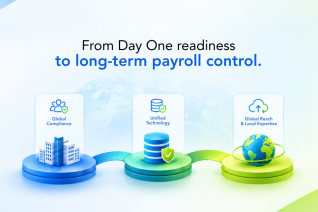
By introducing common processes, standardized controls, and centralized visibility, organizations can significantly reduce payroll consolidation errors while maintaining local compliance requirements.
The result is payroll that operates as one enterprise capability instead of multiple disconnected country processes.
The GpCC Difference: Reducing Payroll Consolidation Errors
Neeyamo's GpCC combines governance with intelligent payroll orchestration to create consistency across global payroll operations.
One of its key strengths is centralized payroll visibility. Instead of navigating multiple local reports, payroll leaders gain access to standardized dashboards that present payroll information in a consistent format. This enables faster identification of anomalies before they impact payroll reporting.
Another differentiator is intelligent payroll validation, like Neeyamo’s Payroll I.O. Solution, which introduces structured input and output controls that validate payroll data before and after processing. This minimizes manual intervention and reduces the likelihood of consolidation errors caused by incomplete or inconsistent payroll inputs. Organizations retain control over their existing payroll ecosystem while improving payroll accuracy across countries. Improving payroll accuracy also comes with standardization of compliance; let’s discuss this further in terms of how GpCC solves compliance governance.
Standardization Without Sacrificing Local Compliance
One of the biggest misconceptions about payroll consolidation is that every country must operate on a single payroll engine.
ALSO READ | How Native Payroll Engines Simplify Multi-Country Payroll
In reality, local payroll regulations differ significantly across jurisdictions. Attempting to force complete standardization often creates new operational challenges.
A GpCC solves this differently.
It establishes standardized governance while allowing local payroll execution to remain compliant with country-specific regulations. Organizations gain common data definitions, unified reporting, consistent control frameworks, and centralized exception management without disrupting established local payroll processes.
This balanced approach enables enterprises to consolidate payroll intelligence while preserving local expertise.
Building Confidence in Global Payroll
Payroll leaders today are expected to provide more than accurate salary calculations. They must deliver reliable reporting, regulatory compliance, operational transparency, and executive-level insights.
Reducing payroll consolidation errors is fundamental to achieving these outcomes.
With Neeyamo's Global Payroll Capability Center, organizations move beyond fragmented payroll management toward a governed operating model that prioritizes visibility, automation, and control. Combined with the capabilities of Neeyamo Payroll I.O, enterprises can strengthen payroll governance, improve reporting accuracy, and reduce the operational effort required to manage payroll across multiple countries.
As global payroll continues to grow in complexity, organizations that invest in a centralized payroll governance model will be better positioned to scale confidently, maintain compliance, and transform payroll into a strategic business capability rather than an operational challenge. Reach out to us here or write to us at irene.jones@neeyamo.com to know more!