Compensation has never been a simple numbers game.
Behind every salary, promotion, new-hire offer, or pay adjustment is a decision about what an organization values. Yet many of those decisions are still made with fragmented data, individual judgment, and policies that can be difficult to translate into action. Pay transparency is becoming an integral part of the payroll experience, insisting on better, consistent, and explainable decisions about pay and the resulting decisions.
That is where Maria Colacurcio brings a particularly interesting perspective.
Meet Maria Colacurcio
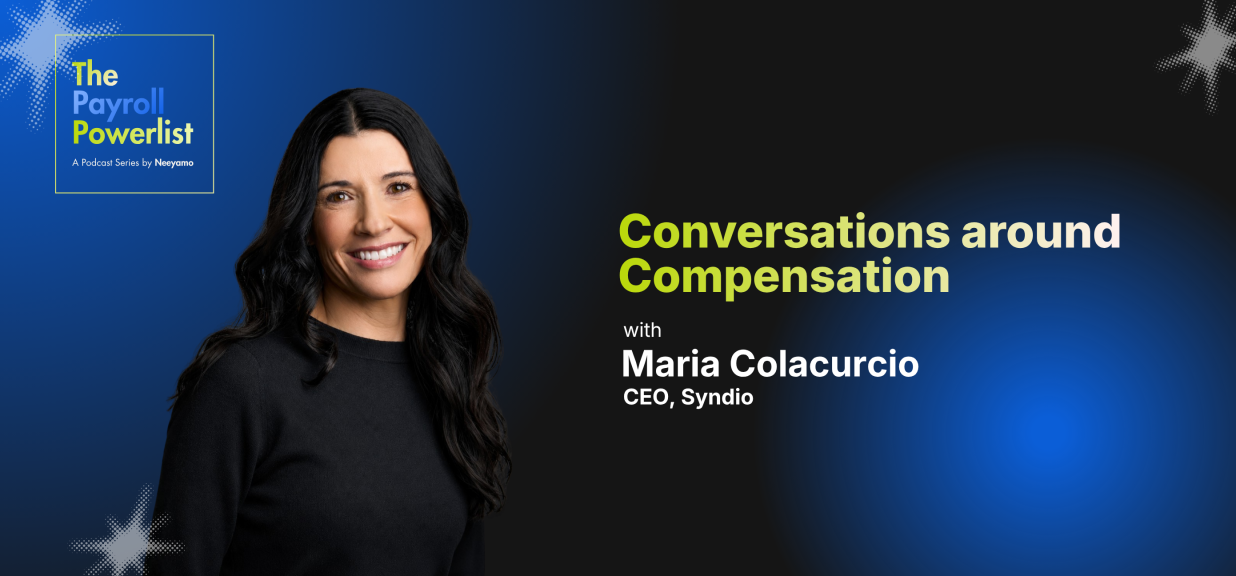
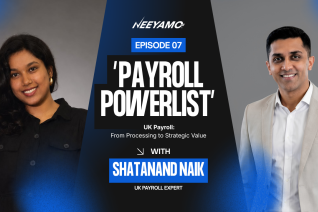
For the latest episode of Payroll Powerlist by Neeyamo, Mario Colacurcio, CEO of Syndio and a prominent figure in the avenues of pay equity, pay transparency, AI, and decision intelligence,, unravels a conversation so often overlooked.
Maria's career has been anything but linear. From initially preparing for a career in law to building technology companies, stepping away from the workforce to raise her children, and eventually returning to leadership, her journey offers a different perspective on what it means to build a career and also rebuild one. Her experience brings a human dimension to some of the biggest questions that face today's workplaces.
What happens when careers are interrupted? How does leadership evolve through periods of uncertainty? How do grounded human decisions tie to the influx of up-and-coming technology?
From Pay Equity to Decision Intelligence
Intelligence for pay equity is a simple but consequential premise, Maria believes. Compensation stands to be one of the most significant financial decisions an organization makes despite fragmented data challenges.
And that raises an important question:
What if organizations could move beyond simply analyzing pay decisions after they happen and use intelligence to improve the decisions themselves?
Takeaways
AI wears many hats: an efficiency engine for automating tasks and making processes faster. Apart from all these distinctive capabilities, AI enables better decisions. When organizations can bring together the information surrounding a compensation decision, AI can help leaders see patterns and context that would otherwise remain buried across systems.
Maria’s insight into this distinction proved that compensation does not exist in a vacuum and involves organizational policies, market conditions, legal requirements, and human judgement.
Conversations are thriving in the industry around pay transparency and pay equity, and employers and employees alike are striving for reason. Managers need to be able to explain why someone received a particular increase. Recruiters may need to explain where an offer sits within a range. Organizations need to understand how decisions align with their compensation philosophy. And as Maria points out, explainability can also create something less tangible but equally important: decision confidence.
Maria also points out that having the right information before the decision is made is a significant step to not creating inequities that compound over time. Starting compensation can influence future pay progression, internal equity, and subsequent decisions throughout an employee's journey.
There is a broader theme running through Maria's perspective. The next generation of workplace technology may not simply automate what organizations already do. It may help organizations understand why they do it. That distinction becomes particularly relevant in compensation.
There Is More to the Conversation
Maria's journey from an unconventional career path to leading a technology company is only one part of the story. The conversation goes deeper into decision intelligence, deterministic versus generative AI, pay transparency, new-hire compensation, manager decision-making, ghost jobs, the future of work, and the ethical considerations organizations need to keep in mind as AI becomes embedded in compensation.
And perhaps most importantly, it explores a question that will become increasingly difficult for organizations to avoid:
As AI becomes better at helping us make decisions, how do we make sure those decisions become better, not simply faster?
Watch the full episode of Payroll Powerlist by Neeyamo with Maria Colacurcio to hear the conversation behind these ideas.