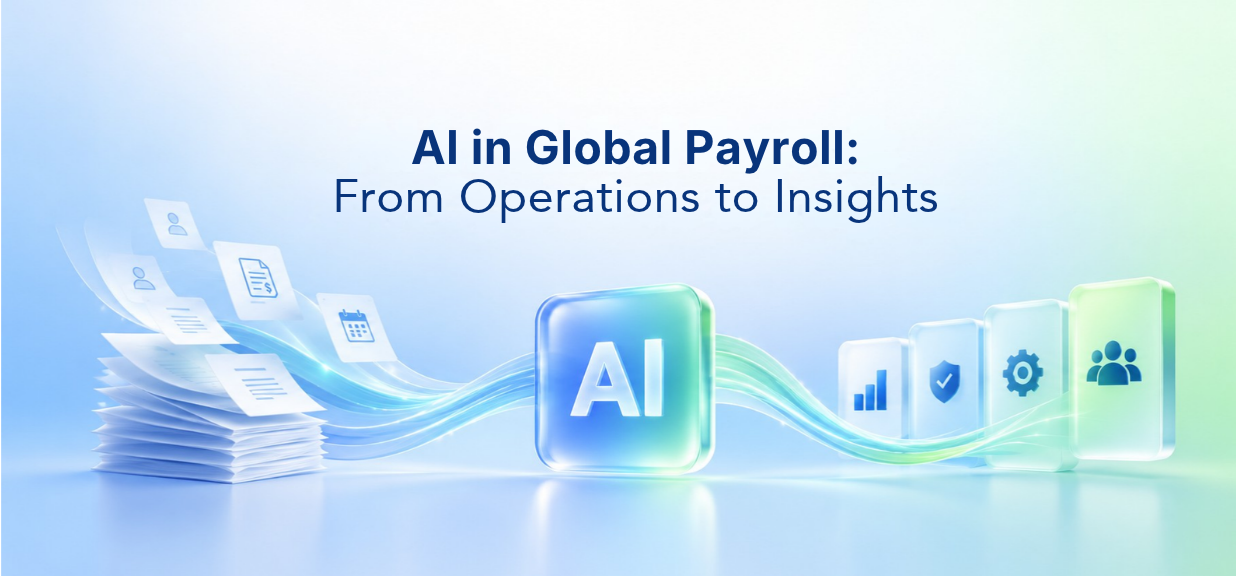
According to research on AI in payroll, AI could reduce payroll cycle times by up to 35%. This highlights the potential for AI to do more than automate repetitive tasks, helping payroll teams identify anomalies, improve controls, and resolve issues more efficiently.
As organizations expand across countries, payroll teams face growing complexity, from changing statutory requirements and inconsistent employee data to reconciliation challenges and employee queries. AI offers practical ways to address these challenges while supporting accuracy, compliance, and better decision-making.
But where can AI in payroll make the biggest difference?
From regulatory intelligence to employee support and payroll analytics, here are eight of the most common AI use cases transforming payroll operations.
AI in Payroll:8 Use Cases
1. Compliance and Regulatory Intelligence
Payroll regulations vary across countries and change frequently. Keeping up with statutory requirements, tax rules, contribution rates, and reporting obligations can be particularly challenging for organizations managing a global workforce.
AI can monitor regulatory developments, interpret policy changes, and flag updates that may affect payroll operations. It can also help identify potential compliance risks and support audit readiness by organizing relevant information and highlighting areas that require attention.
For global payroll teams, AI-powered regulatory intelligence can make it easier to track changes across jurisdictions and understand their implications. Human experts remain essential for validating interpretations and approving changes before they are implemented.
2. Payroll Data Validation and Exception Management
Accurate payroll depends on accurate inputs. Missing employee information, duplicate entries, inconsistent records, and unusual changes to working hours or compensation can all affect payroll outcomes.
AI can validate payroll inputs before processing, identify inconsistencies, and flag unusual patterns that require investigation. During payroll processing, it can detect anomalies such as unexpected salary variations, overtime spikes, or deductions that differ significantly from established patterns.
Beyond identifying exceptions, AI can help explain why a variance occurred, prioritize issues based on potential impact, and recommend corrective actions.
This allows payroll teams to focus on resolving meaningful exceptions instead of reviewing every record manually.
3. Payroll Operations and Workflow Automation
Payroll involves multiple activities, from collecting inputs and reviewing calculations to obtaining approvals and coordinating with finance teams. Delays in one step can affect the entire payroll cycle.
AI can support workflow automation by routing tasks to the appropriate teams, sending reminders, summarizing pending actions, and identifying bottlenecks. It can also help coordinate process handoffs and reduce repetitive administrative work. When combined with clearly defined approval rules and access controls, these capabilities can improve process consistency and help payroll teams meet deadlines.
The objective is not to remove human oversight but to ensure that routine activities move efficiently while decisions requiring judgment remain with the right people.
4. Intelligent Payroll Reconciliation
Payroll reconciliation helps organizations confirm that payroll results align with financial records, bank files, payment instructions, and general ledger entries.
AI can compare information across systems, identify mismatches, highlight unexplained variances, and group related discrepancies for investigation. It can also help explain recurring differences and recommend areas for further review.
For organizations operating across multiple countries, this can improve visibility into payroll costs and support more consistent reconciliation practices.
By identifying discrepancies earlier, AI can help reduce the risk of unresolved financial differences carrying over into reporting and audit processes.
Join the Payroll AI Showcase on December 3, 2026, with Neeyamo and Infinity Payroll Group, bringing 100 minutes of non-stop AI, brought together by eight industry leaders shaping the world of HR and payroll. Through live demonstrations and practical insights with market leaders, including CloudPay, Dayforce, Papaya Global, Phoenix Technology Systems, RollCall.ai, Strada, and Zalaris, the event will redefine payroll operations with AI. Register now to discover what's next for AI in payroll.
5. Payroll Payments and Treasury Intelligence
Processing payroll accurately is only part of the challenge. Organizations must also ensure employees receive the correct amounts on time, often across different currencies, banking systems, and payment networks.
AI can help monitor payment status, identify unusual payment patterns, and flag transactions that may require investigation. Where sufficient historical and real-time data is available, predictive models may also help identify potential payment failures before they occur.
For multinational organizations, AI-assisted analysis can provide insights into cross-border payment trends, foreign exchange exposure, and payroll funding requirements.
These capabilities can support better coordination between payroll, finance, and treasury teams. Payment execution and financial decisions should still follow appropriate authorization and control processes.
6. Employee Payroll Experience
Employees frequently have questions about payslips, tax deductions, leave balances, overtime, and changes in take-home pay. When payroll teams handle every query individually, response times can increase, particularly during payroll periods.
AI-powered conversational assistants can help employees find payroll information, understand payslip components, and access answers to common questions through natural language.
For example, an employee could ask why their take-home pay differs from the previous month and receive an explanation based on the available payroll information. More complex or sensitive cases can be escalated to a payroll professional.
At Neeyamo, ARIA (Adaptive Real-time Intelligent Assistant) brings conversational AI capabilities into HR and payroll experiences, helping employees access relevant information and interact with payroll processes more conveniently.
7. Payroll Knowledge and Case Resolution
Payroll teams manage a substantial amount of operational knowledge, including country-specific policies, standard operating procedures, regulatory guidance, and historical case resolutions.
AI can make this knowledge easier to access by searching relevant documentation, summarizing payroll cases, suggesting possible resolutions, and guiding teams toward applicable policies.
When a payroll issue is reported, AI can summarize the case, identify relevant information, and recommend next steps based on available knowledge. This can help teams resolve recurring issues more consistently and reduce the time spent searching across multiple resources.
Human review remains important, especially when cases involve ambiguous regulations, exceptions to policy, or sensitive employee circumstances.
8. Payroll Analytics, Forecasting, and Decision Intelligence
Payroll data offers valuable insights into workforce costs, overtime, compensation trends, and operational efficiency. However, extracting those insights from large volumes of data can be time-consuming.
AI can support payroll analytics by identifying cost trends, highlighting unusual movements, forecasting payroll expenditure, and generating summaries for business leaders. It can also help explain variances between expected and actual costs and identify patterns that may warrant further investigation.
For organizations managing payroll across multiple entities and countries, these insights can support workforce planning, budgeting, and financial decision-making.
The quality of these insights depends on reliable data, appropriate analytical models, and clear governance over how payroll information is used.
Making AI Work in Global Payroll
The value of AI in payroll goes beyond automating individual tasks. Its broader potential lies in connecting regulatory intelligence, data validation, payroll processing, reconciliation, employee support, and analytics within a consistent operating environment.
For multinational organizations, this requires more than adopting isolated AI tools. It calls for reliable data, integration across payroll and enterprise systems, clear governance, strong security controls, and defined points for human review and approval.
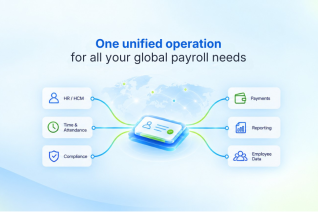
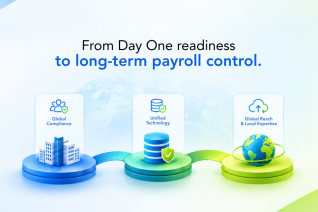
Neeyamo helps organizations manage global payroll through a unified technology approach that brings together payroll operations, local compliance expertise, and employee-centric capabilities. Solutions such as ARIA, Neeyamo’s Adaptive Real-time Intelligent Assistant, help employees interact with payroll information and access support through conversational AI. Compass complements this approach by monitoring regulatory developments across countries, identifying relevant compliance changes, and helping translate them into actionable payroll requirements, with human oversight at key decision points.
Together with Neeyamo’s broader global payroll technology ecosystem, these capabilities support organizations in applying AI across the payroll lifecycle, from employee interactions to compliance monitoring and operational controls.
The goal is not to automate every decision. It is to identify where AI can improve accuracy, visibility, and efficiency while ensuring payroll professionals retain the oversight needed to protect employees and maintain compliance.
Conclusion
AI is creating new opportunities to make payroll more accurate, responsive, and insight-driven. From identifying anomalies and monitoring regulatory changes to improving employee support and forecasting payroll costs, its most valuable applications address real operational challenges.
Successful adoption starts with understanding where AI can deliver measurable value, establishing the right controls, and ensuring that technology works alongside payroll expertise.
Looking to explore how AI can support your global payroll operations?
Contact irene.jones@neeyamo.com to learn more about Neeyamo's approach to AI and global payroll or visit here to know more.