Grief does not follow policy, but payroll must. Bereavement leave, often called compassionate leave, sits at the intersection of human emotion and structured compliance. As organizations expand globally, defining and administering this leave has become increasingly complex, not just culturally but also legally and financially.
What Is Bereavement Leave and Why Does It Matter
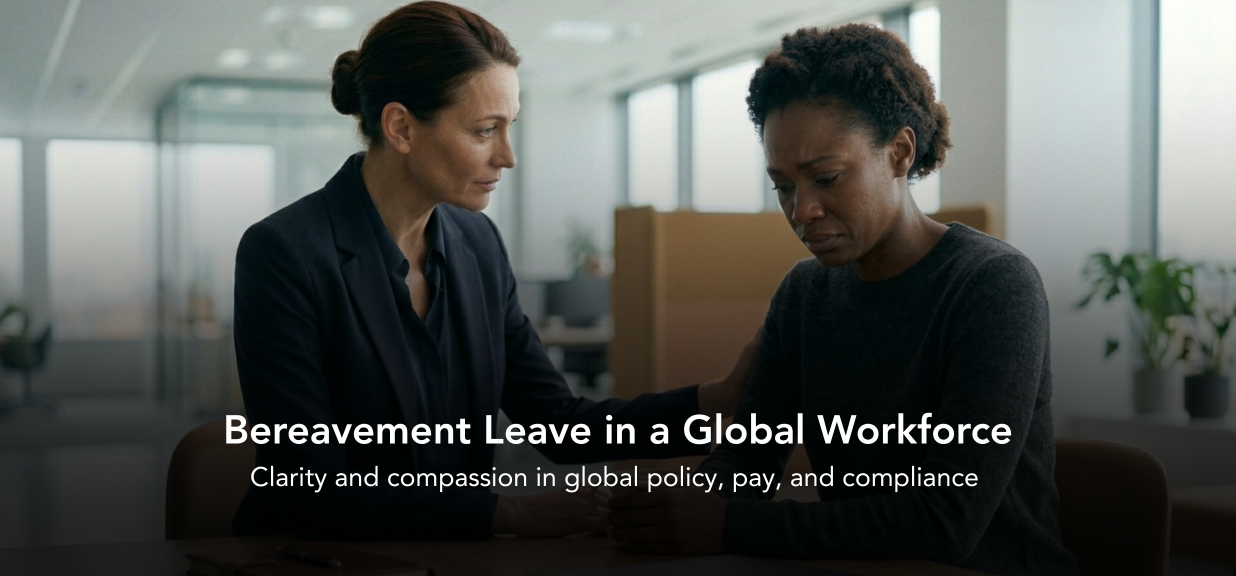
Bereavement leave is time off granted to employees following the death of a loved one, allowing them to grieve, attend funerals, and manage personal affairs. While simple in definition, its application varies widely across countries and organizations.
From a business perspective, it is no longer just a nice-to-have benefit. Research shows that employees dealing with grief often experience reduced productivity, increased absenteeism, and emotional strain. Studies suggest productivity losses can reach 30-40 percent in the weeks following a major personal loss. As a result, organizations are beginning to treat bereavement leave as a critical component of employee well-being and retention.
A Global Patchwork with No Universal Standard
Unlike annual leave or parental benefits, bereavement leave is not globally standardized. Policies differ significantly based on geography.
- The bereavement leave in India and the United States is not mandated by law. Employers typically offer between 3 and 7 days, often unpaid or partially paid.
- The United Kingdom provides statutory paid leave in specific cases, such as the loss of a child, while other forms remain employer-defined.
- Canada's employment regulations offer bereavement leave between 3 and 10 days, depending on the province, with some portion paid in certain regions
- European countries such as France, Slovakia, and Spain have more structured legal frameworks with mandated paid leave for immediate family.
Globally, the average bereavement leave ranges between 3 and 7 days for immediate family members. However, eligibility rules, definitions of family, and payment structures vary widely. This inconsistency poses a major challenge for multinational companies seeking to provide equitable employee experiences across borders.
Paid vs Unpaid Leave and Payroll Complexity
One of the biggest differences across countries is whether bereavement leave is paid.
In many regions, paid leave is limited to first-degree relatives if it is provided at all. In others, leave exists, but compensation is left to the employer's discretion. Some organizations have moved toward more progressive policies, offering extended paid leave of up to 15 or even 20 days annually for significant losses.
For payroll teams, this introduces several layers of complexity:
- Determining eligibility based on the employee’s relationship to the deceased
- Aligning statutory requirements with company policies
- Managing full pay, partial pay, or unpaid leave scenarios
- Ensuring compliance across multiple jurisdictions
Even small differences in definitions, such as who qualifies as a dependent, can significantly impact payroll calculations, especially for global organizations operating across dozens of countries.
Emerging Trends Shaping Bereavement Leave
Bereavement leave is evolving as organizations rethink how they support employees during difficult times. Several trends are shaping the future of these policies.
- Broader definitions of family that include chosen family and non-traditional relationships
- Inclusion of pregnancy loss, miscarriage, and stillbirth bereavement leave in countries such as New Zealand
- Greater focus on mental health recovery and extended support beyond immediate leave
- Flexible work arrangements, such as remote work or phased return after a loss
There is also a gradual shift toward legislation. More countries are beginning to formalize bereavement leave requirements, reflecting a growing recognition of its importance in workforce wellbeing.
The Business Impact of Compassionate Policies
Bereavement leave has a direct impact on workforce performance and organizational culture.
Employees who feel supported during personal crises are significantly more likely to remain loyal to their employer. Compassionate policies contribute to stronger trust, better engagement, and improved retention. On the other hand, unclear or poorly managed policies can lead to compliance risks, payroll errors, and reputational damage.
In a competitive global talent market, how organizations respond to moments of loss can shape their employer brand in lasting ways.
Where Neeyamo’s Global Payroll Solution Fits In
For global organizations, managing bereavement leave is not just an HR responsibility. It is a payroll and compliance challenge that requires precision and consistency.
Neeyamo helps organizations navigate this complexity by:
- Interpreting country-specific bereavement leave regulations
- Ensuring accurate payroll processing across paid and unpaid scenarios
- Maintaining compliance across multiple jurisdictions
- Supporting the creation of standardized yet flexible global leave frameworks
By combining global payroll expertise with local compliance knowledge, Neeyamo enables organizations to deliver both accuracy and empathy. This ensures that employees receive the support they need without delays or administrative challenges.
Bereavement leave is no longer just a policy. It reflects how organizations value their people during life’s most difficult moments. As workforces become more global and diverse, companies must rethink how they define, pay, and manage leave with both consistency and compassion.
When loss meets payroll, getting it right is not just about compliance. It is about supporting people when it matters most.
To know more, drop us your queries to irene.jones@neeyamo.com.