The Capabilities That Make GpCCs Possible
Global payroll is not a problem that enterprises designed their way into.
It is a problem they grew into. Country by country. Vendor by vendor. Acquisition by acquisition. Every decision made sense at the time. Every local setup was reasonable in isolation. And somewhere along the way, what should have been a unified enterprise capability became something else entirely. It became a fragmented ecosystem held together by workarounds, manual processes, and institutional memory that lives in individuals rather than systems.
The Global Payroll Capability Center (GpCC) exists to address that reality. Not by tearing down what exists, but by building something above it: a governed, intelligent operating model that makes global payroll behave like a single enterprise capability, regardless of how many countries, vendors, or systems sit underneath it.
But a GpCC does not materialize on its own. It requires a specific set of capabilities to function. And understanding what those capabilities are and why they are now possible to build is where any serious conversation about global payroll transformation has to begin.
Why Global Payroll Is Fragmented in the First Place
Before understanding what a GpCC does, it helps to know what it responds to.
Most multinational enterprises today run payroll across dozens of geographies simultaneously. Each country has its own regulatory calendar, statutory requirements, vendors, and data definitions. In smaller, harder-to-reach markets, the long tail of global operations compliance risk often quietly concentrates, managed through local efforts rather than governed by a system.
The result is a layered ecosystem of inconsistent controls, uneven compliance documentation, and fragmented reporting. Errors erode employee trust immediately. Compliance gaps invite regulatory penalties. Fragmented reporting obscures exposure until it becomes urgent. And evidence, when an audit arrives, has to be assembled manually, retrospectively, under pressure, by people who already have other jobs.
This fragmentation was rarely intentional. It accumulated. And for many enterprises, the operating model simply grew faster than the governance infrastructure designed to manage it.
That is the gap a GpCC is built to close.
READ MORE | What are Global Payroll Capability Centers and Why it Matters Now
What a GpCC Actually Is
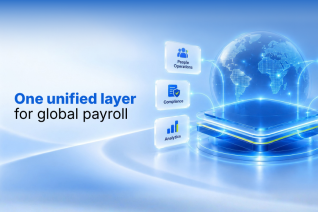
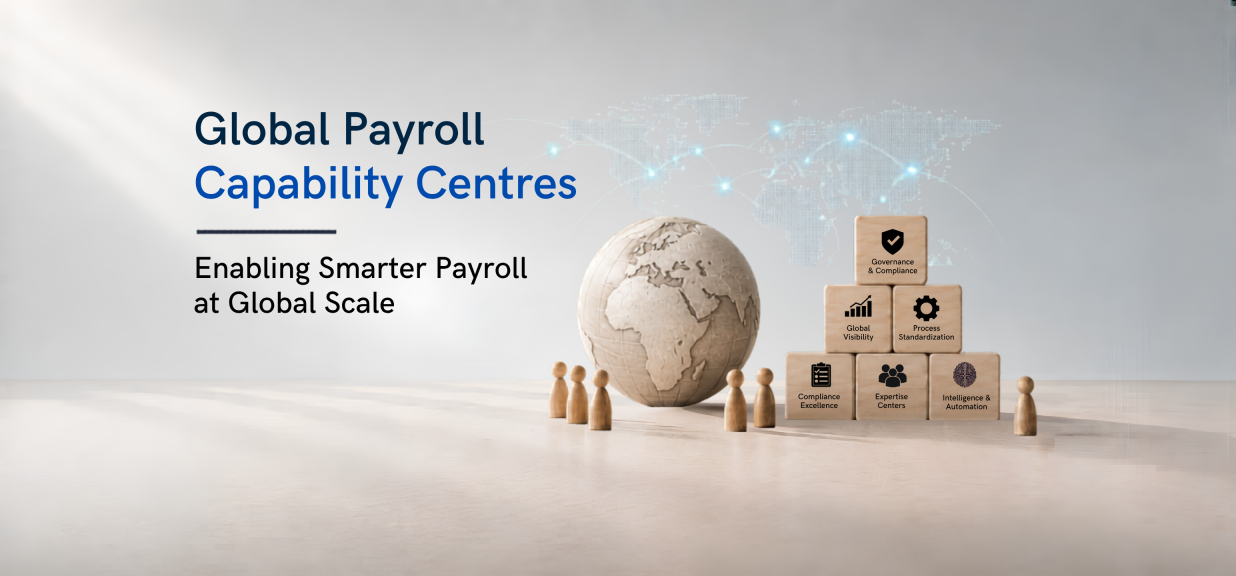
A Global Payroll Capability Center is a governance and intelligence layer that sits above the payroll ecosystem and enables it to operate as a single, coherent, enterprise-grade capability.
It is worth being precise about what that means and what it does not mean.
A GpCC does not replace every local vendor or force every country onto a single platform. Global payroll is too varied for that, and enterprises that have tried to impose a one-size-fits-all system have often found that the cure creates as many problems as the condition it was treating. Local variation in regulation, language, and payment infrastructure is real. It does not go away because a governance center has been established.
What a GpCC does is introduce a unified operating model above that variation. Common data definitions, so that payroll information means the same thing regardless of where it originates. Standardized control frameworks, so that compliance is managed consistently across jurisdictions rather than interpreted independently by each country team. Integrated reporting cadences, so that leadership sees one coherent global picture rather than a collection of disconnected local snapshots.
The organizing logic is straightforward: standardize where possible, orchestrate where necessary, and control by design, not as an afterthought.
Why This Is Possible Now
For years, the concept of unified global payroll governance was appealing in principle but difficult to deliver in practice. The operating infrastructure to connect country execution into a governed system simply did not exist at the scale and intelligence required.
That has changed, and it has changed because of where GCCs themselves have evolved to.
The GCC model has progressed through four structural waves

The first centered on cost arbitrage, consolidating transactional processes to optimize labor costs. The second introduced capability expansion, with GCCs taking on more complex processes and deeper functional ownership.
The third repositioned GCCs as engines of digital transformation, leading cloud adoption and enterprise data modernization.
The fourth is where the leading enterprises are operating today. It marks a shift from service delivery to enterprise co-creation, where GCCs own performance governance, compliance architecture, and increasingly, intelligence infrastructure.
It is in this fourth wave that a GpCC becomes not just viable but essential. Because payroll in an AI-first enterprise is no longer just a processing function, it is a trust function, governing compliance, employee experience, and financial integrity across jurisdictions simultaneously. And the only operating model equipped to manage that responsibility at scale is one where governance is embedded by design, not assembled by exception.
The infrastructure to deliver that model now exists. Platforms built specifically to sit above multi-country, multi-vendor reality. AI capabilities that embed predictive intelligence directly into payroll workflows. Controls that generate evidence automatically rather than requiring retrospective assembly. This is not a future state. Enterprises are building it today.
The Shift That Makes It Work: From Processing to Orchestration
The most important reframe in understanding a GpCC is this: it is not a better version of payroll processing. It is a fundamentally different function.
Payroll processing asks: Did the pay run complete correctly?
A GpCC asks: Is the global payroll ecosystem, across all geographies, all vendors, all legal entities operating within defined standards, generating the evidence it should, and providing the visibility leadership needs to make decisions confidently?
That shift from processing to orchestration is what defines the GpCC's role. It governs a complex ecosystem. It extracts intelligence from it. It uses that intelligence to make payroll predictable, resilient, and audit-ready by design rather than by effort.
In practical terms, this means validation occurs continuously rather than at month-end. Exceptions surface early, when they can still be resolved without disruption. Controls generate evidence automatically, embedded in workflows rather than added afterward. Governance dashboards reflect real-time exposure rather than periodic snapshots.
This is what makes a GpCC more than a governance exercise. It is an operating model redesign, one that changes not just how payroll is managed, but what payroll is capable of delivering to the enterprise.
READ MORE | How GCCs Optimize Payroll Delivery for Multinationals
Why It Matters Now
The scale of GCC growth makes this conversation urgent. Between FY23 and FY25, India alone added 220 new Global Capability Centres, a 14% increase, bringing the total to more than 1,800 centres. India now accounts for approximately 55% of all GCCs globally, employing nearly 1.9 million professionals directly.
These numbers signal scale. But scale without coherent governance creates a different kind of risk. As enterprises build and expand GCCs at pace, the question is not whether the centers are large enough. It is whether the capability inside them matches the complexity of the mandate they have been given.
For payroll specifically, the mandate is significant: accurate, compliant pay delivery across geographies, regulatory environments, tax regimes, and payment infrastructures simultaneously, every cycle, without exception.
A GpCC is what makes that mandate achievable. Not through a single technology or a single vendor, but through a governed operating model that brings the consistency, visibility, and intelligence that global payroll at scale requires.
That operating model is now buildable. The enterprises that build it first will not just run payroll better. They will run their global operations with a confidence that fragmented, ungoverned payroll simply cannot support.
To explore how Neeyamo supports GCC-led payroll transformation and global payroll capability design, reach out to us at irene.jones@neeyamo.com.

Frequently Asked Questions
A GpCC is a governance and intelligence layer that sits above an enterprise's existing payroll ecosystem and makes it operate as a single, coherent, enterprise-grade capability. It does not replace local vendors or force every country onto one platform. Instead, it introduces a unified operating model above the variation, common data definitions, standardized control frameworks, and integrated reporting, so that global payroll behaves consistently regardless of how many countries, systems, or vendors sit underneath it.
Because local payroll operations running well in isolation does not mean global payroll is working well as an enterprise capability. Fragmentation accumulates over time through organic growth, acquisitions, and regional autonomy, leaving enterprises with inconsistent controls, opaque risk exposure, and compliance evidence that has to be assembled manually when audits arrive. A GpCC addresses this by introducing governance and visibility above the local layer, without dismantling the local execution structures that enterprises genuinely depend on.
No. The problem a GpCC addresses is fragmented payroll governance across geographies, which affects any enterprise operating across multiple countries, regardless of size. The scale and complexity of the GpCC will naturally vary based on the enterprise's footprint and operating model. But the underlying need for a unified governance layer, common standards, and integrated visibility is not a large-enterprise-only problem. It is a global operations problem.
The GCC model has evolved through four structural waves. From cost arbitrage, through capability expansion and digital transformation, to the current phase of AI-first enterprise co-creation. A GpCC is a product of that fourth wave. As GCCs have moved from executing transactions to owning governance, compliance architecture, and intelligence infrastructure, payroll has evolved alongside them, from a processing function to a trust function that governs compliance, employee experience, and financial integrity across jurisdictions simultaneously.
In traditional payroll environments, controls are checked retrospectively. Evidence is assembled when an audit arrives, exceptions surface at month-end, and compliance documentation is gathered when it is asked for. Control by design means the opposite: governance is embedded into the workflow itself. Evidence is generated automatically through the payroll process. Exceptions are identified early, before they become escalations. Compliance is continuous rather than periodic. The GpCC does not prepare for audits. It operates audit-ready, by design, at all times.