Payroll has always been business-critical. But in 2026, it is no longer enough for it to be accurate only at the end of the pay cycle. Businesses now need payroll to be predictive, responsive, compliant, connected, and intelligent from the very first input.
For growing businesses and enterprise leaders, choosing the right payroll service provider is not just about outsourcing salary processing. It is about solving the operational pain that sits beneath every pay run: fragmented systems, delayed inputs, compliance uncertainty, employee queries, reporting gaps, manual validations, and the constant pressure to do more with leaner teams.
The right payroll service provider should help your business move from reactive processing to intelligent operations.
Payroll pain points have changed. Has your provider changed with them?
Many organizations still run payroll through a combination of legacy systems, spreadsheets, email approvals, manual checks, and disconnected local vendors. On the surface, The process may still get completed. But behind the scenes, teams are often firefighting.
A payroll input arrives late. A compliance update is missed. A manager approves the wrong data. An employee raises a ticket about a payslip they do not understand. Finance waits for cost reports. HR spends hours chasing clarifications. Workforce operations teams work overtime to prevent errors that the system should have flagged earlier.
These are not minor inefficiencies. They create compliance exposure, employee dissatisfaction, financial leakage, and leadership blind spots. In 2026, a strong payroll service provider must do more than process transactions. It must help prevent avoidable disruptions before they reach payday.
Look beyond processing. Look for intelligence.
Traditional payroll evaluation often begins with questions such as: Can the provider process payroll in our country? Can it integrate with our HR system? Can it support compliance? These questions still matter, but they are no longer enough.
The better question is: Can the provider make payroll easier to manage, easier to understand, and easier to control?
This is where AI becomes important. However, businesses need to be careful. AI in payroll should not mean a generic chatbot placed on top of disconnected systems. It cannot afford vague, probabilistic, or incomplete answers. It needs intelligence that is governed, contextual, compliant, and connected to real workflows.
A future-ready payroll service provider should use AI to reduce manual intervention, guide users through complex actions, surface exceptions, answer questions accurately, and help administrators act faster. The goal is not to replace professionals. The goal is to remove repetitive friction so they can focus on exception management, compliance confidence, and strategic decision-making.
“The next generation of payroll will not be system-driven. It will be intent-driven.” - Ashok Bildikar in Payroll Powerlist Episode 2
Why AI should be part of your provider evaluation
Workforce operations teams are under pressure from every direction. Employees expect instant answers. Business leaders expect real-time visibility. Regulators expect accuracy. Finance expects clean data. HR expects a better employee experience. Meanwhile, teams are expected to manage all of this without increasing complexity.
That is why AI capabilities should now be a key factor in selecting a payroll service provider.
Ask whether the provider’s AI can support real actions, not just answer basic FAQs. Can it help employees retrieve payslips, understand complicated information, or complete guided workflows? Can it operate within guardrails so that responses remain accurate, contextual, and compliant?
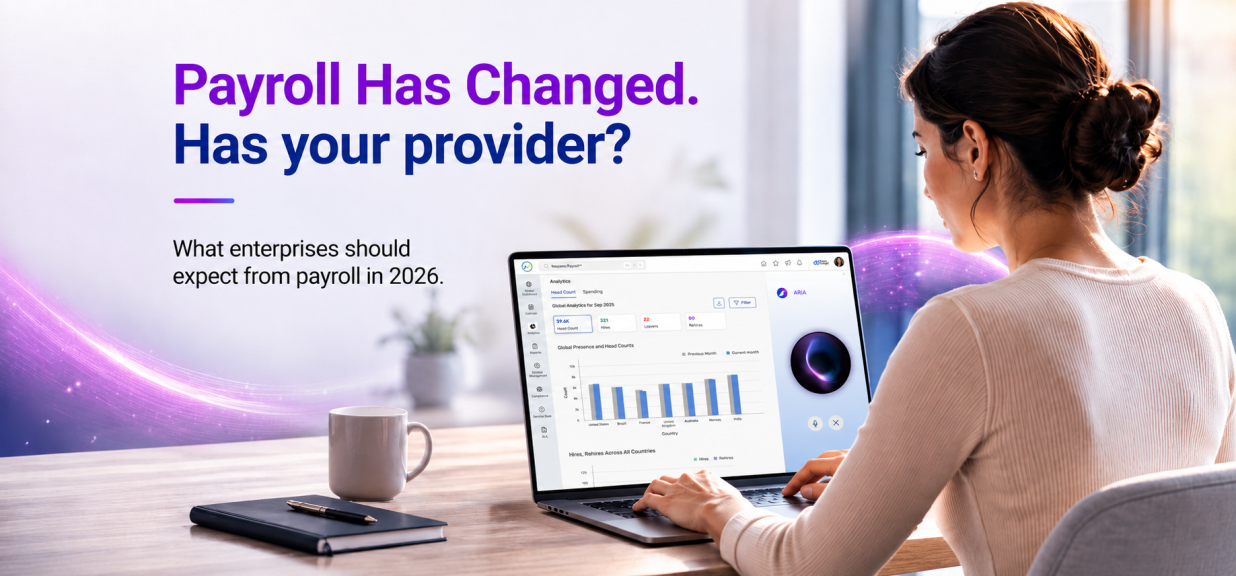
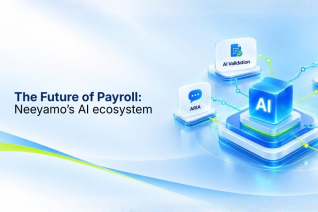
Neeyamo’s ARIA, Adaptive Real-time Intelligent Assistant, reflects this shift. ARIA is an AI-powered payroll and HR agent built to be intuitive, adaptive, and always-on for employees, managers, and administrators. It supports guided workflows, conversational chats, and voice-based interactions, helping users move from query to action rather than simply search for information.
Also read | How ARIA Improves Employee Experience: 5 Practical Use Cases
Choose a provider that can simplify complexity
One of the biggest challenges is not the pay run itself. It is everything that happens before and after it.
The first process begins with, teams must collect, validate, approve, and reconcile data from multiple systems. During the process, they must identify errors, apply rules, manage exceptions, and meet strict timelines. And after, they must answer employee questions, generate reports, support audits, and provide data to the finance team.
A capable payroll service provider should reduce complexity across this entire lifecycle. This means offering robust data validation, clear workflows, integration with HR and finance systems, audit-ready reporting, and the ability to handle country-specific requirements without forcing teams to resort to manual workarounds.
Neeyamo’s Payroll platform highlights the use of hyper-automation, artificial intelligence, and robotics to improve quality, reduce processing time, and improve the payday experience. It also emphasizes integration through a single global gateway and certified connectors with major HRIS platforms such as Workday, Oracle, and SAP SuccessFactors.
Do not underestimate employee experience
When employees have questions about pay, deductions, taxes, leave, or payslips, they expect quick and clear answers. A delayed response can quickly become a trust issue.
This is why employee experience should not be treated as a secondary feature. Your payroll service provider should make it easier for employees to access and understand. Self-service is useful, but intelligent self-service is better. Employees should not have to navigate multiple screens, raise unnecessary tickets, or wait days for basic clarifications.
Prioritize visibility for finance and leadership
For CFOs and CXOs, payroll is not only an HR operation. It is one of the organization’s highest recurring costs. Yet many businesses still lack timely visibility into spend, variance, exceptions, and compliance status.
The right service provider should help leadership move from delayed reporting to actionable insight. Finance teams should be able to see costs by country, entity, business unit, cost center, or worker category. Payroll data should support forecasting, budgeting, audit preparation, and strategic workforce planning.
A provider that cannot deliver reliable visibility may still function, but it will not help leadership control risk.
Evaluate the Service Model Behind the Technology
Even the best platform needs the right service backbone. Payroll is time-sensitive, and when something goes wrong, teams need expert support quickly.
Before selecting a service provider, assess how support is delivered. Are there clear escalation paths? Is country-level expertise available? How are urgent issues handled? What happens during implementation, parallel runs, year-end activities, or regulatory changes?
Technology should make payroll smoother, but service quality determines whether the provider can stand with you when the process becomes complex. Solutions such as NeeyamoPays™ combine localized expertise, embedded compliance intelligence, AI-driven validations, and in-country support within a unified global framework, helping enterprises manage with greater accuracy and control across geographies.
The right provider should help payroll become strategic
In 2026, payroll should not be viewed as a back-office process that simply pays employees on time. It should be a connected, intelligent function that strengthens compliance, improves employee trust, supports finance visibility, and gives leadership confidence.
Choosing the right payroll service provider means choosing a partner that can reduce manual effort, improve control, and bring intelligence into everyday operations.
With Neeyamo’s global payroll expertise, technology-led platform, and AI-powered capabilities such as ARIA, enterprises can move toward a more autonomous, responsive, and employee-centric experience. For organizations ready to modernize payroll, the question is no longer whether it should transform.
The question is whether your current provider can take you there.
Explore how Neeyamo can support your payroll goals. Contact irene.jones@neeyamo.com