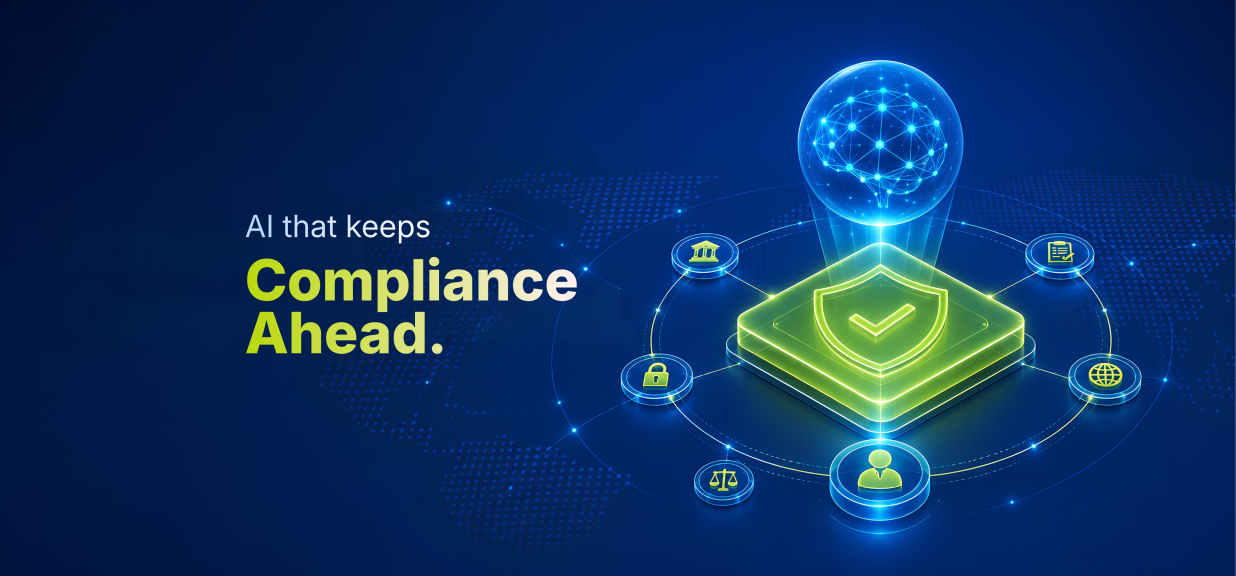
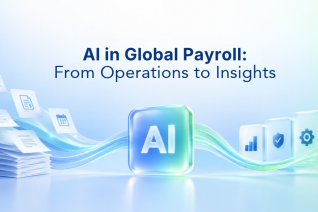
For years, payroll compliance followed a familiar pattern, and now it is important to understand the change through the implementation of AI in global payroll.
Payroll teams monitored legislative updates, reviewed changes issued by government agencies, updated payroll configurations, validated calculations, and ensured employees were paid accurately and on time. It was a structured, cyclical process. While it was certainly complex, it was also largely predictable.
That predictability no longer exists.
Today's multinational organizations operate in an environment where tax legislation, labor laws, statutory deductions, social security requirements, pay transparency regulations, and data privacy obligations are evolving at an unprecedented pace. Regulatory updates are no longer monthly or quarterly occurrences. They happen continuously, often across multiple jurisdictions at the same time.
For payroll leaders, the challenge is no longer simply processing payroll accurately. It is ensuring every payroll run reflects the latest regulatory requirements before a small oversight becomes a costly compliance issue.
This growing complexity is reshaping the role of payroll compliance. Rather than functioning as a periodic checkpoint, compliance has become an ongoing operational capability that demands constant visibility, faster decision-making, and closer collaboration across payroll, HR, finance, legal, and technology teams.
Artificial intelligence (AI) is emerging as a key enabler of this transformation. It is not replacing compliance professionals. Instead, it helps them navigate an increasingly complex regulatory landscape with greater speed, consistency, and confidence.
Why AI in Global Payroll Compliance Is Becoming More Complex
Global expansion has fundamentally changed payroll.
Organizations that once processed payroll in a handful of locations now support employees across dozens of countries. Each jurisdiction introduces its own tax structures, reporting obligations, statutory benefits, employment regulations, and filing deadlines.
Managing these differences has always required expertise. The challenge today is the sheer pace of change.
Governments around the world are accelerating digital tax initiatives, introducing real-time reporting requirements, strengthening labor protections, implementing pay transparency legislation, and increasing expectations around employer accountability. Regulatory change has become continuous rather than periodic.
This broader shift is reflected across finance and tax functions as well. According to Deloitte's 2025 Tax Transformation Trends report, compliance with changing global regulations is the top operational challenge facing tax leaders today. The study, based on responses from 1,000 tax and finance leaders, also highlights growing demands for more granular data, near real-time reporting, and increased use of AI to navigate regulatory complexity.
While Deloitte’s research focuses on tax and finance leaders, the implications are highly relevant to payroll. Payroll sits at the intersection of tax withholding, social contributions, statutory reporting, labour law, and employee data. As tax and regulatory reporting become more granular and time-sensitive, payroll teams face similar pressure to produce accurate, compliant, and near-real-time data.
Hybrid work, remote employment, cross-border hiring, and global talent mobility have blurred jurisdictional boundaries. An employee relocating to another country, even temporarily, may trigger different tax obligations, social security requirements, or employment regulations.
Meanwhile, payroll teams are expected to monitor updates published across hundreds of government portals, revenue authorities, labor ministries, and regulatory agencies.
The issue is not that information is unavailable.
It is that there is simply too much of it.
The real challenge is identifying which regulatory updates actually affect the organization, understanding their implications, and implementing changes before payroll is processed.
In today's environment, compliance is no longer about finding information. It is about making sense of it quickly enough to take action.
Why Traditional Compliance Approaches Are Struggling
Despite advances in payroll technology, many compliance processes remain surprisingly manual.
Teams subscribe to newsletters, monitor government websites, maintain spreadsheets, attend webinars, and exchange updates through email. While these methods have served organizations for years, they were designed for a regulatory environment that moved at a much slower pace.
Today, they are becoming increasingly difficult to scale.
Consider a global organization operating across 40 countries.
Each payroll cycle may require reviewing legislative updates from dozens of tax authorities, labor departments, and social security agencies. Every update must be interpreted, assessed for relevance, communicated to stakeholders, and translated into operational changes.
Not every regulatory announcement affects every employer.
Some changes apply only to specific industries, employee groups, or income thresholds. Others may take effect months later. Distinguishing meaningful regulatory developments from routine announcements has become one of the biggest challenges facing compliance teams.
The consequence is often regulatory fatigue.
When compliance professionals spend significant time collecting information, they have less time available for analysis, strategic planning, or risk mitigation.
The goal is not to eliminate human expertise.
The goal is to allow experts to spend more time making informed decisions rather than searching for information.
In payroll, the impact of a regulatory update can be highly specific. A change in a social security threshold, overtime premium, minimum wage rate, statutory leave entitlement, or tax withholding rule may affect only certain employees, locations, or pay groups. AI can help surface these updates earlier and route them for expert review before they affect payroll calculations.
What AI Can and Can't Do for Payroll Compliance
AI is reshaping payroll compliance by acting as an intelligent assistant, not an autonomous decision-maker. It helps compliance teams process information faster, monitor regulatory changes continuously, and identify potential risks before they become payroll issues.
Where AI Creates Value
- Continuous monitoring: Tracks regulatory updates across multiple jurisdictions, reducing the need for manual research.
- Document summarization: Condenses lengthy legal and tax guidance into clear, actionable insights.
- Relevance filtering: Prioritizes updates based on an organization's locations, workforce, and operational footprint.
- Risk detection: Identifies unusual payroll patterns or potential compliance issues before payroll is finalized, enabling earlier intervention.
This shift is already underway. According to Deloitte's Tax Transformation Trends 2025 research, 21% of tax leaders are prioritizing AI to automate routine data tasks. While adoption is still emerging, it reflects a broader move toward improving operational efficiency and helping teams manage increasing regulatory complexity.
Where Human Expertise Remains Essential
Compliance is rarely straightforward. Employment laws often require interpretation, and regulations vary across jurisdictions, industries, and employee types. Legal precedent, organizational context, and business judgment all play a role in determining the right course of action.
AI should not make legal interpretations or final compliance decisions. Its role is to equip compliance professionals with faster insights so they can focus on analysis, judgment, and strategic decision-making.
The organizations that gain the most from AI won't replace compliance professionals. They'll empower them.
Responsible AI Is Essential for Compliance
As organizations adopt AI within payroll compliance, trust becomes just as important as capability.
Compliance decisions affect employees, governments, auditors, and regulators. Every recommendation generated by AI should be transparent, explainable, and subject to human validation.
Organizations should ask important questions before deploying AI:
- Can recommendations be explained?
- Is there an audit trail?
- How is sensitive payroll data protected?
- Who validates AI-generated outputs?
- What governance processes are in place?
Responsible AI is not simply about reducing risk.
It is about ensuring technology strengthens confidence in compliance rather than creating new uncertainty.
AI should support professional judgment, not replace accountability.
The Future of Payroll Compliance Is Continuous
Compliance is undergoing a fundamental shift.
For years, organizations treated compliance as something that happened around payroll processing. It was viewed as a series of checks completed before employees were paid.
The future looks different.
Compliance is becoming continuous.
Rather than waiting for periodic reviews, organizations are moving toward real-time visibility into regulatory change, ongoing risk monitoring, intelligent prioritization, and earlier intervention.
This evolution does not reduce the importance of payroll professionals.
If anything, it makes their expertise even more valuable.
AI can process vast amounts of information, recognize patterns, and surface potential risks in seconds. Understanding business context, interpreting legislation, balancing competing priorities, and making informed decisions, however, remain distinctly human responsibilities.
The organizations best positioned for the future will not be those with the most automation.
They will be the ones that successfully combine intelligent technology with experienced professionals. In doing so, they will create compliance operations that are faster, more resilient, more transparent, and better equipped to adapt to regulatory change.
How Neeyamo Is Helping Organizations Build AI-Ready Payroll Compliance
As regulatory complexity continues to grow, organizations need more than automation. They need intelligent payroll solutions that combine AI with governance, transparency, and human oversight.
At Neeyamo, we're embedding AI across the payroll lifecycle to help organizations monitor regulatory changes, surface compliance risks earlier, simplify complex legislative updates, and improve operational efficiency. Every AI-driven insight is designed to support payroll professionals, enabling faster and more informed decisions while keeping human expertise at the center of compliance.
With deep global payroll expertise and a technology-first approach, Neeyamo helps organizations build payroll operations that are compliant, resilient, and ready for the future.
Looking Ahead...
The future of global payroll compliance isn't about replacing people with AI. It's about giving payroll and compliance professionals the tools to navigate an increasingly complex regulatory landscape with greater confidence and efficiency. Organizations that embrace this balance between intelligent technology and human expertise will be better prepared for the future of work.
At Neeyamo, we're committed to helping organizations build smarter, more resilient global payroll operations.
Reach out to us at irene.jones@neeyamo.com to know more.