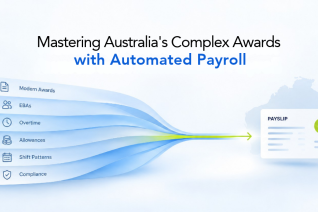
What happens when two employees at the same organization, in similar roles, are entitled to different pay rates, overtime, and allowances? For payroll teams across Australia, this is more than a hypothetical scenario. It reflects the complexities of managing employment conditions governed by industry-specific regulations and negotiated agreements.
In Australia, the Fair Work Act 2009 establishes the national workplace relations framework, supported by the National Employment Standards (NES), Modern Awards, and enterprise agreements. Enterprise Bargaining Agreements (EBAs), commonly referred to as enterprise agreements, introduce another layer of complexity.
Understanding three key concepts is essential:
- Collective Bargaining Agreements (CBAs): Agreements negotiated collectively between employers and employees, often through union representation, to establish employment terms such as wages, working hours, allowances, and other benefits. In Australia, this form of bargaining is primarily formalized through enterprise agreements.
- Enterprise Bargaining Agreements (EBAs): Also known as enterprise agreements, these establish employment conditions negotiated for a particular business or group of businesses. Approved by the Fair Work Commission, they contain workplace-specific provisions while remaining subject to statutory minimum protections.
- Modern Awards: Legally enforceable instruments that establish minimum pay rates and employment conditions across specific industries or occupations, covering overtime, penalty rates, allowances, working hours, and employee classifications.
For organizations managing diverse workforces, the complexity lies in identifying applicable conditions, interpreting agreement-specific provisions, and accurately translating them into payroll calculations. How can organizations manage these overlapping requirements without adding administrative complexity or compromising payroll accuracy?
The Complexity Behind Award-Driven Payroll
As employment conditions evolve, organizations must continuously interpret regulatory changes, update payroll rules, and ensure that the correct provisions apply to each employee under the enterprise agreements. When managed manually, these processes become increasingly time-consuming and prone to inconsistencies, particularly for businesses operating across multiple industries, locations, and employee categories. The challenge lies in translating complex award and agreement provisions into accurate payroll calculations while maintaining consistency, compliance, and operational efficiency.
What Does a Structured Award Management (CBA) Framework Look Like?
Organizations need a structured approach to managing agreement provisions and translating them into accurate payroll outcomes. Three key foundations can support this:
- Centralized Award and Agreement Management: Consolidating employment agreements, award structures, and associated conditions reduces fragmented administration and improves visibility by outlining the different employment conditions established through Modern Awards and enterprise agreements.
- Structured Rule and Entitlement Configuration: Defining employee classifications, pay rates, overtime provisions, allowances, and other entitlements through configurable rules can support accurate payroll processing.
- Consistent Application Across Payroll: Applying relevant agreement provisions through standardized payroll processes can help reduce manual inconsistencies.
Together, these foundations establish a more systematic approach to award-driven payroll, helping organizations manage complexity while supporting accuracy, consistency, and operational control.
How Neeyamo Simplifies Award and Agreement Management
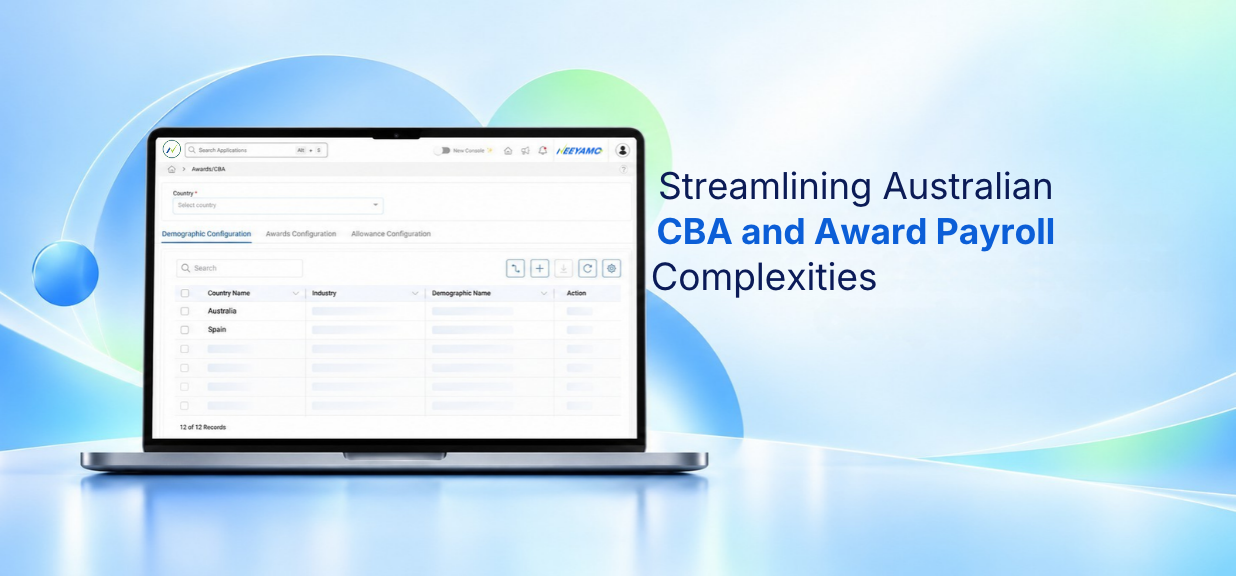
Managing award-driven payroll requires technology that can accommodate differences in employment conditions, employee classifications, and applicable pay rules. Neeyamo introduces a configuration-based approach to defining these conditions and organizing the information required for payroll processing.
The three core configuration areas are:
1. Job Data Configuration
The configuration process begins by associating an industry with relevant employee attributes, referred to as Job Data within the module. These attributes can include employee type, grade, designation, job title, and job classification. This creates a configurable basis for identifying employee characteristics relevant to different award conditions.
2. Awards Configuration
The Awards Configuration interface allows administrators to define an award using its name, code, industry type, and effective dates. It also provides job data mapping, through which applicable employee attributes can be associated with an award. Configuration options include generating a job data classification list or uploading a template, alongside fields for defining pay buckets and corresponding multipliers. These elements establish how award-related conditions are represented within the system.
3. Allowance Configuration
The Allowance Configuration interface supports the association of allowances with a selected award. Administrators can specify the allowance name, pay rate, and applicable job-related classifications, allowing allowance-related conditions to be configured against the relevant award structure.
4. Connecting Award Configuration to Payroll Processing
The workflow is configured in a way that relates awards to PayTime and PayAbsence data. It outlines a process involving configuration checks, transaction data uploads, summary generation, amount calculation, and the subsequent transfer of calculated information into payroll processing.
From Complex Agreements to More Consistent Payroll Operations
Managing multiple awards and enterprise agreements requires payroll teams to maintain consistency across employee classifications, pay conditions, and applicable entitlements. By bringing these elements into defined configuration workflows, the module helps establish a more consistent foundation for managing agreement-specific payroll conditions.
This approach can help organizations reduce reliance on fragmented rule administration, maintain greater visibility into configured award conditions, and support more consistent payroll operations.
What Should Employers Prioritize?
Improving payroll operations begins with understanding how agreement conditions are maintained and applied. Three priorities can help establish a more structured approach:
- Review Existing Award and Agreement Structures: Identify the awards and enterprise agreements applicable to the workforce, including employee classifications, pay conditions, and associated entitlements.
- Standardize Pay Rule Configuration: Assess how classifications, overtime multipliers, allowances, and other agreement-specific provisions are defined and maintained to minimize inconsistencies across payroll processes.
- Establish a Structured Approach to Changes: Review how updates to applicable agreements, employee attributes, and pay conditions are reflected in payroll configurations to support ongoing accuracy.
Together, these priorities can help organizations strengthen the operational foundation required to manage award-driven payroll.
Making Award Management Part of the Payroll Experience
As workforce structures evolve and employment conditions become increasingly complex, award and agreement management must move beyond fragmented administrative processes. A structured approach to configuring awards, mapping employee attributes, and defining applicable pay conditions creates a clearer connection between employment agreements and payroll operations.
Through the CBA Module, Neeyamo brings these configuration elements into a common workflow, supporting a more organized approach to managing award-driven payroll requirements.
For organizations navigating Australia's complex employment landscape, the opportunity lies in making award management a more structured and consistent part of everyday payroll operations. Reach out to irene.jones@neeyamo.com for any queries about Australian payroll.