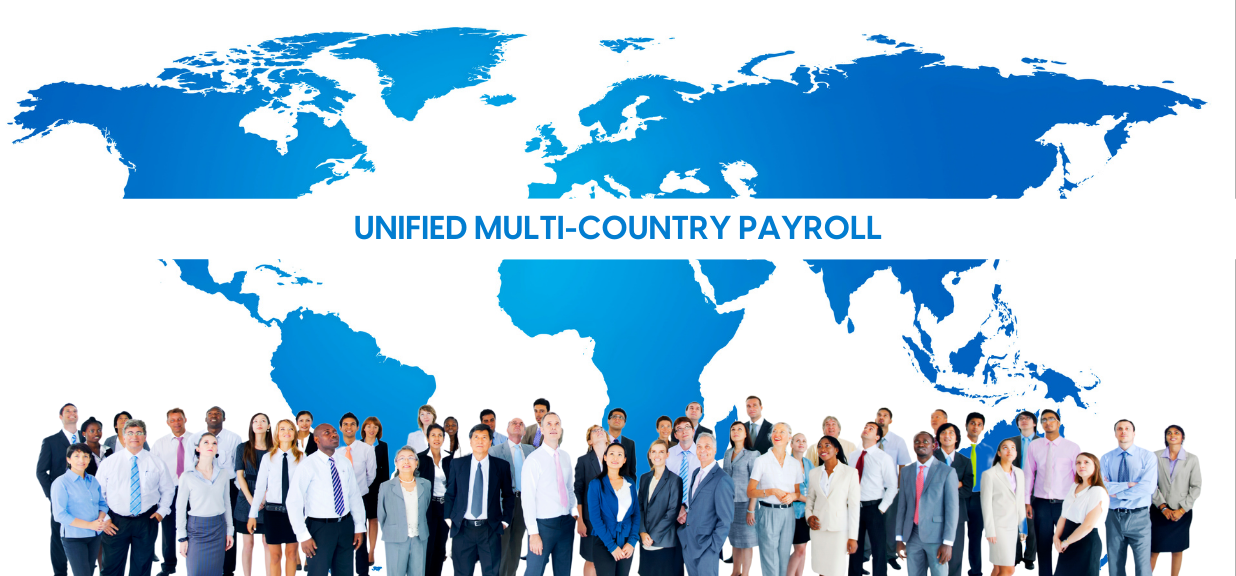
HCM application leaders have been leveraging technology to unify their payroll operations in multiple countries under a small number of vendors, which has created the concept of ‘unified multicountry payroll’. Let’s first look at what this concept is.
Ever tried booking an Uber during rush hours? You can see prices fluctuating every minute! This fluctuation in pricing perfectly illustrates the ‘supply and demand’ theory that economics professors preach. So, as demand increases, prices increase, and that is a universal truth.
Comparably, as the geographic footprint of an organization increases, the complexities in managing global workforce also increase. Fortunately, over the last few years, HR cloud solutions, with technology as the driver, have been helping companies administer multi-country payroll phenomenally, despite its complexity.
What is unified multi-country payroll?
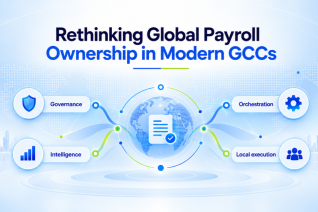
The concept of unified multi-country payroll approaches global workforce management by implementing an integrated solution through which enterprises can oversee the data, processes, and operations involved with their function. HR leaders can strategize either to keep it ‘in-house’ with a payroll management system that is localized enough to be utilized for calculations and/or to ‘outsource’ operations where a business process outsourcing (BPO) payroll vendor/aggregator becomes responsible for the payroll management across all the countries the organizations operate in.
Gartner’s Hype Cycle for Human Capital Management Technology 2020 positions unified multi-country payroll as an emerging strategy in the peak of inflated expectations. This strategy leverages powerful platforms that can help payroll leaders glean valuable insights and make strategic decisions to elevate the payroll function.
Benefits of unified multi-country payroll
The following are the key benefits organizations can reap when they adopt the unified multi-country payroll approach.
1. Enabling integration to boost performance
When you look at what happens with a traditional ‘aggregator’ model, a global service provider will be seen to join hands with a large number of local providers, aiming to manage the customers’ global requirements across all countries of operation. The global service provider aggregates the entire payroll data into one single application for further payroll processing. Although this model was prevalently used, on digging deep, one would find that the odds of inconsistent or erroneous payroll input data being fed into the payroll engines are relatively high. This is because of the existence of different fragmented systems, leading to inaccurate data.
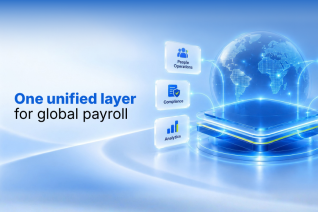
Path-finding solution enables multinational organizations to handle payroll management effectively with a centralized, unified data platform capable of integrating ancillary processes, other HR services, and financial wellness offerings. Such solutions can provide standardized processing of payroll input data in real-time. Irrespective of where an employee is based, companies can manage their payroll with a completely consolidated view and analysis of payroll operations across all countries in which they are operating.
2. Enabling global compliance
As companies expand their global footprint, the need for global compliance and standardization across jurisdictions becomes a paramount contributing factor to their overall growth. Centralized systems enable companies to adhere strictly to both local and global legislation. Amendments and updates to legal protocols and guidelines can be tracked and implemented distinctively into local process systems.
3. Reducing the complexities in expansion
A unified platform can significantly reduce the complexities of global expansion. The unified concept opens the door to a customized, streamlined solution for all international processing needs, saving time and resources so you can focus on moving ahead. Furthermore, such a solution will offer technology-enabled consolidation of global operations, which will ultimately bring down the intricacies of scaling up.
4. Enhancing employee experience
Organizations have started recognizing the need for a payroll system that delivers a seamless employee experience. A unified multi-country payroll solution’s single system of records provides integrated employee data that can be a powerful tool to help drive strategy, increase agility, and improve employee engagement right across your organization. This platform can help companies achieve consistency across services provided to all their employees. Furthermore, it will also provide a localized user interface that adheres to local norms with respect to time, currency, and language. With such a platform, issuing checks on time will no longer be a problem
5. Building comprehensive reports in real-time
When companies manage their global workforce operations through multiple disparate systems, it becomes tedious to measure efficiency. In that case, the visibility and accessibility pertaining to business-critical data that would help HR leaders to glean meaningful insights are low. This inhibits their ability to make data-driven performance management decisions.
Unified multicountry payroll management offers a comprehensive reporting functionality that allows greater visibility to global teams. With audit trails and in-system authorization, a multi-country solution will give clarity over round-the-globe payroll operations and the roles and responsibilities a typical international vendor holds. This also enables management of all employee records across multiple countries from one single interface.
The market for these solutions is continuously transforming as new use cases, capabilities, and customer expectations rise. Leaders of organizations that strive to expand across a multitude of countries should devise a global transformation strategy that integrates payroll operations and offers standardization, harmonization, and simplification. Such a solution would be an antidote to problems like payroll leakages and inconsistency in information pertaining to cross-border management.
With global payroll turning increasingly regulated and complex to manage, outsourcing it to forward-looking service providers is key. Neeyamo is one such payroll service provider mentioned in Gartner’s Market Guide for Multicountry Payroll Solutions. Neeyamo provides end-to-end, full-service payroll solutions that manage input automation, accurate and timely payments, statutory filing, and effective query management.
Reach out to us at irene.jones@neeyamo.com. Our experts are listening and will be happy to assist you.