When people think of Denmark, payroll rarely makes the list. More often, it’s known for its high happiness rankings, strong social security systems, and a workforce that ranks among the most productive in Europe. But behind this reputation lies something less visible and equally important: a highly efficient, transparent economic model.
At the heart of that model is a digitally driven, tax-centric payroll system built on trust.
For payroll leaders, Denmark offers a unique paradox. The system is streamlined, modern, and well-structured, yet it demands a high degree of precision and compliance. It isn’t overly complicated, but it leaves very little margin for error.
So what does it really take to run payroll successfully in Denmark?
A System Designed Around Transparency
Denmark operates a centralized payroll reporting model through eIndkomst, a digital platform connected directly to the Danish Tax Agency.
This setup means payroll is always visible and traceable. Data is submitted frequently, and authorities have immediate access to it. Payroll is not just a month-end activity here. It is an ongoing compliance process that depends on accuracy at every step.
Payroll Cycle and Timelines
Most organizations follow a monthly payroll cycle, with salaries paid at the end of the month. Reporting obligations follow soon after, making timelines critical.
| Payroll Element |
Details |
| Pay Frequency |
Monthly |
| Salary Payment |
End of the month |
| Reporting System |
EIndkomst |
| Reporting Deadline |
10th of the following month |
Meeting these timelines is essential in a system where delays and discrepancies are quickly flagged.
Compensation Without a Minimum Wage
Denmark does not enforce a statutory minimum wage. Instead, salaries are determined through collective bargaining agreements across industries.
For payroll teams, this means compensation is not standardized nationally. It must align with employment contracts and applicable agreements.
The standard workweek is typically 37 hours, and any overtime or additional compensation is governed by contracts rather than uniform regulation.
KNOW MORE | Denmark: A Guideline to Payroll and Employer of Record
Taxation at the Core of Payroll
Payroll in Denmark is heavily driven by taxation. Employer-side social security contributions are relatively low, but employee taxation is significant and must be handled with precision.
Before income tax is calculated, an 8 percent labour market contribution (AM-bidrag) is applied to gross salary. Income tax is then calculated based on progressive rates, including both state and municipal taxes.
Employers rely on each employee’s tax card (skattekort) to determine the correct withholding amount. This makes payroll highly individualized and accuracy critical.
Key Payroll Deductions
| Component |
Rate / Details |
| Labour Market Contribution (AM-bidrag) |
8% of gross salary |
| Income Tax (A-skat) |
Progressive, can go up to approximately 52% |
| Chruch Tax |
Optional, based on employee membership |
Even though the structure appears simple, the reliance on tax cards and progressive taxation requires careful handling.
Employer Contributions
Employer contributions in Denmark are relatively modest compared to other countries, but they are spread across multiple schemes.
These include statutory pension, workplace insurance, and training funds. Individually, the amounts are not high, but payroll teams must ensure that each contribution is calculated and reported correctly.
Holiday Pay and Leave
Denmark follows a structured holiday allowance system known as Feriepenge.
Employees accrue 12.5 percent of their gross salary as holiday allowance. This amount is either paid during leave or deposited into a holiday fund, depending on the arrangement.
Beyond annual leave, Denmark offers strong employee benefits, including sick leave and extensive parental leave. Managing these entitlements requires payroll teams to track accruals and ensure correct payouts.
Compliance Expectations
Running payroll in Denmark involves more than just calculations. Employers must:
- Register with Danish authorities
- Collect and apply employee tax card data
- Withhold and remit taxes accurately
- Submit payroll data through eIndkomst
- Maintain records for compliance and audits
Because the system is digital and transparent, compliance is continuously monitored. Errors are identified quickly, which increases the importance of getting payroll right the first time.
Managing Global Talent
Denmark also offers a favorable tax regime for certain foreign employees. Eligible individuals can benefit from a reduced flat tax rate for a defined period.
For organizations hiring international talent, this adds an additional payroll consideration but also creates an opportunity to attract skilled professionals.
ALSO READ | Country Spotlight: Employer of Record in Denmark
Where Payroll Teams Need to Pay Attention
Despite its streamlined structure, payroll in Denmark comes with its own set of challenges.
Teams often need to navigate:
- Individualized tax calculations based on tax cards
- Variations across collective agreements
- High taxation levels require precise withholding
- Strict reporting timelines
The system is efficient, but it expects accuracy and consistency at all times.
Denmark represents a modern and transparent approach to payroll. The system is digital, efficient, and closely tied to the country’s broader social model.
For payroll leaders, success in Denmark depends on understanding how taxation drives the system, maintaining compliance, and leveraging the right tools to ensure accuracy.
Payroll here is not just an administrative task. It plays a key role in supporting one of the most well-functioning economies in the world.
For organizations expanding into Denmark, getting payroll right is not just important. It is essential.
Why choose Neeyamo for payroll in Denmark?
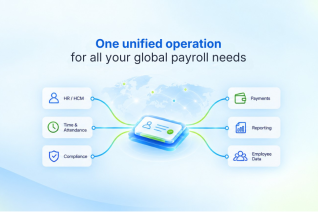
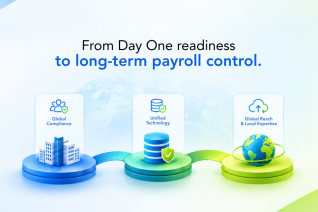
Neeyamo supports organizations in managing payroll in Denmark with a unified global payroll platform that addresses statutory contributions, tax obligations, compliance requirements, and employment regulations. By combining local regulatory expertise with global delivery capabilities, Neeyamo enables businesses to manage payroll in Denmark efficiently, compliantly, and at scale, supporting expansion while minimizing operational and regulatory risk.
Talk to our country payroll expert at irene.jones@neeyamo.com or explore Neeyamo's Global Payroll Solution.