Global Capability Centers have moved far beyond their original mandate of cost efficiency. Today, they operate as strategic hubs that drive innovation, transformation, and enterprise-wide value. As organizations continue to expand their GCC footprint across geographies, one function is quietly carrying a disproportionate share of this complexity: Payroll.
At first glance, payroll appears stable and predictable. Salaries are processed, compliance is maintained, and employees are paid on time. However, beneath this surface lies a deeply complex operational engine that becomes increasingly difficult to manage as scale grows.
The Rise of GCCs as Global Engines
The growth of GCCs has been nothing short of remarkable. India alone is home to more than 1,800 GCCs employing over 1.9 million professionals, making it the largest GCC ecosystem globally.
What began as IT and back-office support has evolved into multifunctional centers that manage finance, HR, analytics, and customer experience. With this evolution comes a sharp increase in workforce diversity, geographic spread, and operational interdependencies.
Payroll, as a function, sits at the intersection of all these variables.
Defining Payroll at Scale in a GCC Environment
Payroll at scale is not just about processing a higher volume of payslips. It represents a multidimensional challenge that includes:
- Managing payroll across multiple countries with distinct regulatory frameworks
- Handling different currencies, tax structures, and statutory requirements
- Supporting varied employee types, including full-time, contractors, and expatriates
- Aligning multiple pay cycles, benefits structures, and compliance timelines
Each additional country or entity adds a new layer of complexity. What works for a single-country payroll model quickly becomes insufficient in a global GCC setup.
ALSO READ | Why India Remains the Global Epicenter of GCC Expansion
The Invisible Layer: Operational Complexity Beneath the Surface
The true challenge of payroll at scale lies in what is not immediately visible.
Fragmented Payroll Ecosystems
Many GCCs operate with a mix of local vendors, in-house systems, and regional platforms. This fragmented approach creates inconsistencies in processes and outputs.
Data Silos and Integration Gaps
Payroll does not operate in isolation. It relies on inputs from HR systems, finance platforms, and time tracking tools. When these systems are not fully integrated, data discrepancies become inevitable.
Manual Dependencies
Despite advances in automation, payroll teams often rely on spreadsheets and manual validations. These interventions increase the risk of errors and reduce efficiency.
Limited Real-Time Visibility
Leaders often lack a unified view of payroll data across geographies. This makes it difficult to track costs, ensure compliance, and make informed decisions in real time.
Compliance at Scale: A Constantly Moving Target
Compliance is one of the most critical aspects of payroll, and also one of the most challenging at scale. Every country has its own tax laws, labor regulations, and statutory requirements. These regulations are frequently updated, requiring continuous monitoring and adaptation.
According to a PwC study, regulatory complexity continues to increase as governments introduce more stringent reporting and compliance standards globally. Failure to comply can result in financial penalties, legal consequences, and reputational damage. In a GCC environment, where operations span multiple jurisdictions, the risk multiplies significantly.
The Cost of Payroll Inefficiency
Payroll inefficiencies are often underestimated because their impact is distributed across processes and teams.
- Increased error rates leading to rework and corrections
- Higher operational costs due to multiple vendor engagements
- Time-intensive reconciliation processes
- Delays in closing payroll cycles
As organizations scale, these inefficiencies compound, creating operational bottlenecks that are difficult to resolve without structural changes.
Employee Experience: The Most Visible Outcome
While payroll operations are largely invisible, their outcomes are highly visible to employees.
Salary accuracy and timeliness are fundamental expectations. Even minor discrepancies can erode trust and impact employee satisfaction. In a global workforce, employees also expect transparency in payslips, clarity in deductions, and consistency across regions.
Payroll, therefore, plays a direct role in shaping employee experience and retention.
Why Legacy Payroll Models Fail in GCCs
Traditional payroll models were not designed for the scale and complexity of modern GCCs.
Decentralized processing leads to inconsistent practices. Overdependence on local vendors limits standardization. Disconnected systems create data silos. These models may function adequately at a smaller scale, but they struggle to keep pace with rapid expansion.
As GCCs grow, the limitations of these legacy approaches become increasingly evident.
Reimagining Payroll: From Fragmentation to Unification
To address these challenges, organizations need to rethink their payroll strategy.
A unified approach focuses on:
- Standardizing processes across geographies
- Centralizing governance while retaining local compliance expertise
- Consolidating vendors and platforms
- Creating a single source of truth for payroll data
This shift enables greater control, consistency, and scalability.
The Role of Technology in Enabling Payroll at Scale
Technology is a critical enabler in this transformation.
Modern payroll platforms offer:
- Integrated ecosystems connecting HR, payroll, and finance
- Automated validations to reduce errors
- Real-time analytics for better decision-making
- Scalable architectures that support multi-country operations
The focus is not just on automation, but on creating a seamless and intelligent payroll experience.
ALSO READ | How GCCs Are Shaping the Future of Global Enterprises
Building a Scalable Payroll Operating Model
Organisations looking to scale their GCC operations must adopt a forward-looking payroll model.
Key considerations include:
- Aligning payroll closely with HR and finance functions
- Investing in robust compliance frameworks
- Reducing manual interventions through automation
- Designing processes that can scale with business growth
A proactive approach ensures that payroll evolves alongside the organization, rather than becoming a constraint.
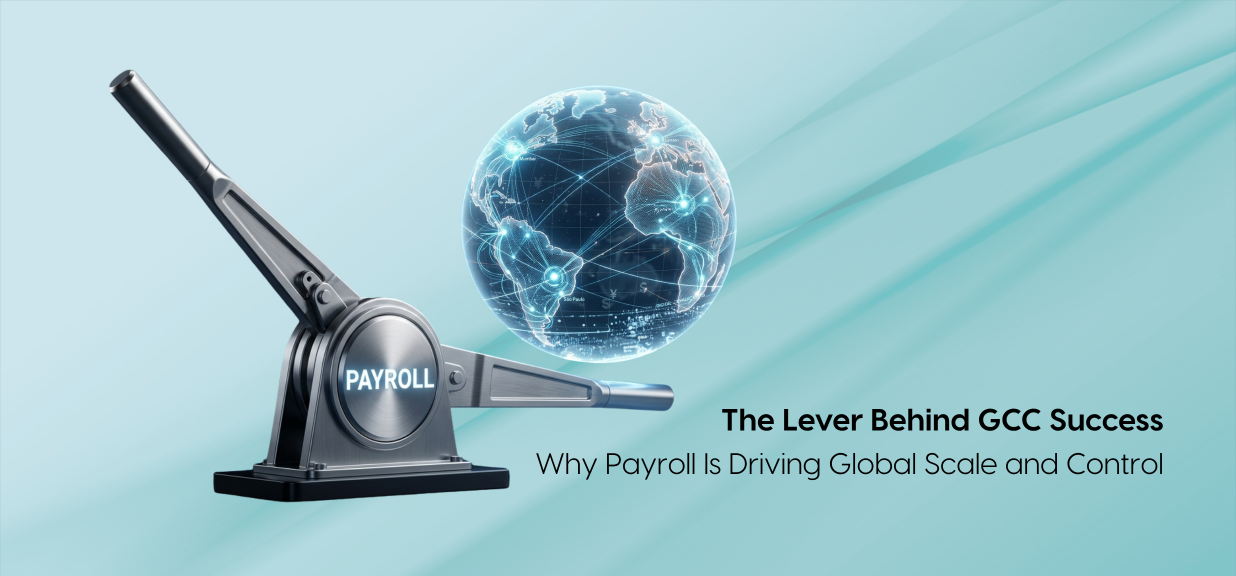
Conclusion: Payroll as a Strategic Lever for GCC Success
Payroll is no longer a back-office function. In the context of Global Capability Centers, it is a critical enabler of operational efficiency, compliance, and employee experience.
As GCCs continue to expand, the ability to manage payroll at scale will become a defining factor for success. Organizations that recognize and address this hidden challenge early will be better positioned to scale with confidence, maintain compliance, and deliver a consistent experience to their global workforce.
Payroll, when managed strategically, supports growth. It enables it.
This is where Neeyamo partners with organizations to simplify complex, multi-country payroll operations, bringing together technology, compliance expertise, and scalability on a single platform.
To explore how your GCC can build a future-ready payroll strategy, reach out to us here or write to us at irene.jones@neeyamo.com!