A payroll scenario:
An employee notices a discrepancy in their salary.
They raise a ticket.
They wait.
Hours turn into days. By the time the answer arrives, the frustration has already spread, trust has taken a hit, and productivity has quietly declined.
Now multiply that across a global workforce.
This is the hidden cost of delayed payroll intelligence.
According to a report by the Deloitte Global Payroll Survey, errors and inefficiencies directly impact employee experience and organizational trust, with consistently ranking among the most critical employee-facing processes.
The question is no longer whether payroll is accurate.
The real question is: how quickly can this provide answers when it matters most?
The Shift from Processing to Intelligence
What was once a back-office function focused on calculations and compliance is now deeply embedded in strategic decision-making. Organizations rely on payroll data to guide hiring strategies, expansion plans, and workforce investments.
Yet, many traditional systems still operate in cycles, not moments.
In a world where business decisions happen in real time, payroll cannot remain bound by batch processing. Intelligence today is not defined by reporting. It is defined by responsiveness.
Why Real-Time Answers Matter More Than Real-Time Payroll
There is growing excitement around real-time payroll. While the idea of instant pay is compelling, it is not the most immediate need.
What employees truly expect is instant clarity.
In our recent podcast with Anne Bernard, Head of People Services, Opella, on how payroll has transitioned from centralized global structures to being more localized, she shared, “The future of HR/Payroll is the real-time answer, not real-time payroll, not yet.”
And a study by PwC Workforce of the Future Report highlights that employees increasingly expect transparency and immediacy in workplace systems, especially those that directly impact them financially.
Consider the everyday questions:
- Why has my net pay changed?
- What caused this deduction?
- How will a bonus or policy change affect me?
When answers are delayed, payroll becomes reactive.
When answers are immediate, it becomes empowering.
This is the distinction that defines intelligent payroll.
The End of Reactive Payroll
Traditional systems are designed around hindsight. Reports are generated after pay runs. Insights are derived after outcomes are known.
This creates systemic delays in decision-making:
- Workforce trends are identified too late
- Compliance gaps are discovered under pressure
- Employee concerns escalate before resolution
Organizations are now leveraging this data for predictive insights. According to McKinsey Global Institute on Data-Driven Organizations, data-driven companies are significantly more likely to acquire customers, retain employees, and improve profitability.
But predictive capability without real-time access limits its value.
Intelligence is not just about foresight. It is about accessibility in the moment of need.
The Employee Experience Imperative
Payroll is the most personal system in the enterprise. It directly impacts trust, satisfaction, and financial well-being.
Yet, many organizations still rely on outdated interaction models:
- Tickets
- Emails
- Manual explanations
A report by Gartner HR Research indicates that employee experience is now a top priority for HR leaders, with digital self-service playing a critical role.
Employees today expect:
- Instant responses
- Clear explanations
- Self-service capabilities
AI-driven payroll assistants and interactive tools are transforming this experience. They allow employees to simulate scenarios, understand pay variations, and get contextual explanations without waiting.
This shift is not incremental. It is foundational.
Integration: The Foundation of Real-Time Intelligence
One of the most overlooked challenges in this space is fragmentation.
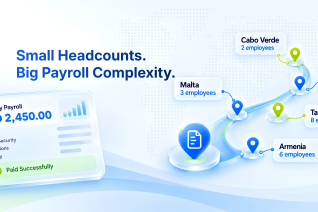
Organizations often maintain manual processes for smaller geographies or low employee populations. While seemingly minor, this creates significant risks:
- Data inconsistencies
- Compliance exposure
- Incomplete global visibility
Even a single missing data point can distort enterprise-level insights.
Real-time answers require a fully integrated ecosystem. Every country, every employee, every data point must be connected.
Without integration, intelligence remains partial. And partial intelligence is operational risk.
Compliance and Risk in a Real-Time World
Regulatory landscapes are evolving rapidly. Governments are introducing new requirements with shorter implementation timelines.
According to the OECD Regulatory Policy Outlook, regulatory changes are becoming more frequent and complex across jurisdictions.
In this environment, delayed visibility is not just inefficient. It is dangerous.
At the same time, payroll fraud is emerging as a critical threat. Phishing attacks, fake bank change requests, and impersonation attempts are becoming increasingly sophisticated.
Real-time systems enable:
- Immediate validation of anomalies
- Faster response to suspicious activities
- Continuous compliance monitoring
This is where intelligence becomes protection.
From Automation to Autonomy
Automation has already transformed operations. Touchless payroll, where processing happens with minimal human intervention, is becoming a reality.
But automation alone does not create intelligence.
The next evolution is autonomous systems powered by AI. Systems that:
- Understand user context
- Anticipate queries
- Deliver conversational, real-time responses
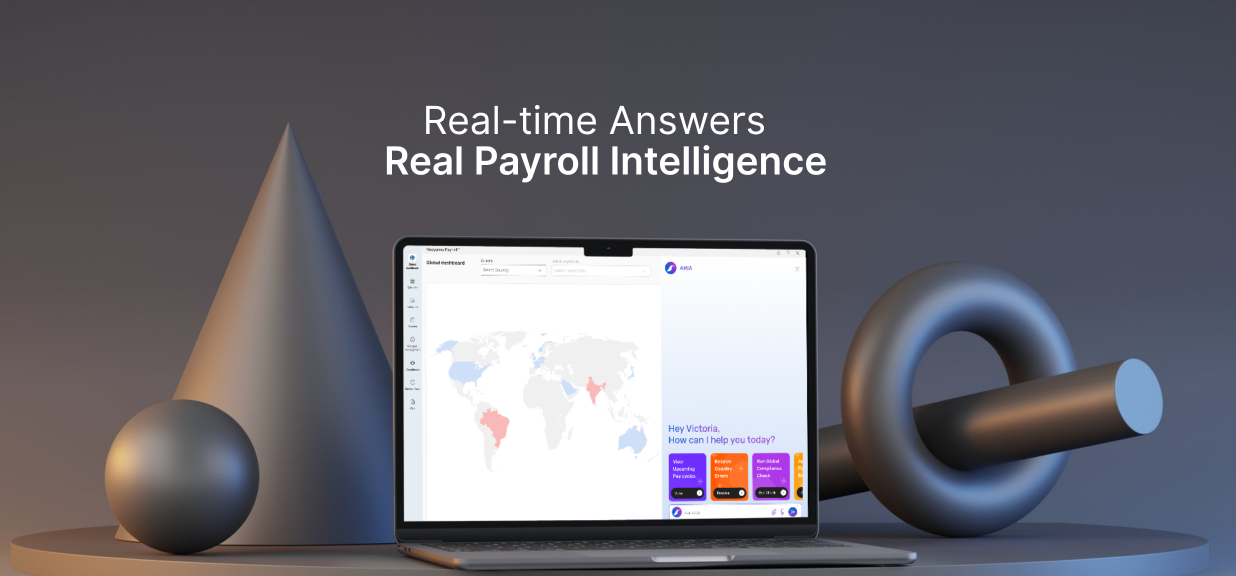
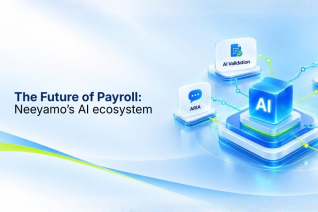
“With ARIA, you can verbally give the instructions to the platform, and platform will do the processing” says Ashok Bildikar, Chairman, Neeyamo, during a recent conversation, talking about how ARIA evolved from concept to launch and how this system can move beyond a routine administrative function into an intelligent and employee-centric experience.
You can access the full episode here | The Payroll Powerlist – Episode 2: From Concept to Launch: The Journey of ARIA at Neeyamo
These systems bridge the gap between complex data and human understanding. They do not just process payroll. They explain it.
Building a Real-Time Payroll Ecosystem
Achieving real-time intelligence requires more than technology. It requires intent.
Organizations must begin with a clear vision of what they should deliver. From there, the focus must shift to:
- Data accuracy and standardization
- Strong governance frameworks
- Seamless integrations
- Scalable platforms
Equally important is mindset transformation. The respective teams must evolve into strategic enablers, not just processors.
Because intelligence is not embedded in systems alone. It is built into how organizations operate.
The Future: Payroll as a Real-Time Command Center
Payroll is moving toward a continuous model.
Employees will have greater flexibility in how they interact with it, whether through traditional cycles, on-demand access, or personalized options.
Organizations will rely on it as a real-time command center for workforce insights.
And the defining capability will not be the speed of processing.
It will be the speed of response.
Conclusion: Intelligence Is Defined by Responsiveness
Accuracy is expected. Compliance is mandatory. Efficiency is baseline.
What differentiates modern systems is responsiveness.
In a world where employees expect instant clarity, leaders demand real-time insights, and risks evolve continuously, payroll must keep pace.
Because ultimately, intelligent payroll is not about how well it processes data.
It is about how effectively it answers the moment. Reach out to us at irene.jones@neeyamo.com to know more!