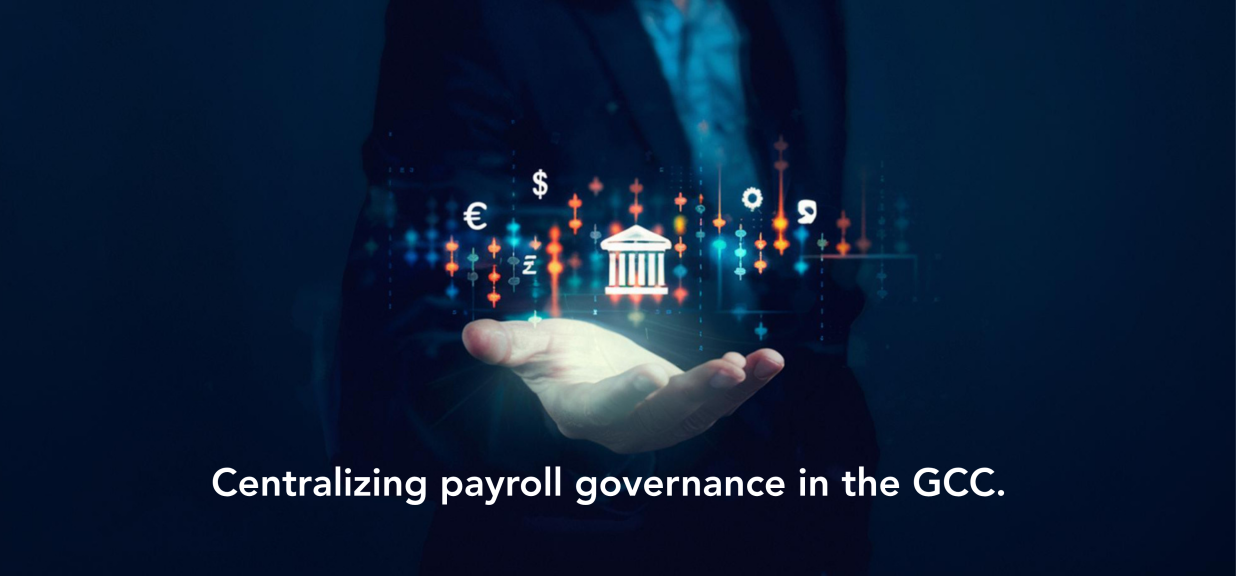
When payroll is treated as a back-office afterthought, compliance failures follow. When embedded within the GCC as a governed capability, it becomes a competitive advantage.
Across boardrooms and leadership off-sites, the conversation around Global Capability Centers has undergone a dramatic evolution. What began as an offshore model anchored in cost reduction has matured into something far more consequential: a strategic nerve center that drives innovation, analytics, and enterprise-grade decision-making for some of the world's largest organisations.
India remains the global epicenter for Global Capability Centers (GCCs), with more than 1,800 centers employing over 2 million professionals and generating upwards of $60 billion in revenue. With continued enterprise investment and expansion into new cities, the sector is projected to cross $100 billion in value by 2030.
And yet, for all the sophistication GCCs have developed in IT delivery, finance shared services, and digital transformation, one critical function persistently remains on the periphery: payroll governance.
That gap is not just a missed opportunity. For enterprises operating across dozens of geographies with hundreds of legal entities, an ungoverned payroll function is an active and growing liability.
The Scale Problem Is Already Here
Consider the operational reality of a mid-to-large enterprise today. Multi-country payroll is no longer a niche concern it is the default state of global business. Yet the governance infrastructure to manage it is lagging behind the scale at which payroll now operates.
Industry research highlights the gap clearly. According to EY’s Global Payroll Survey, only 67% of organizations report having a formalized payroll strategy, meaning nearly one in three global enterprises is managing payroll across multiple jurisdictions without a documented enterprise-wide framework.
Operational inefficiencies further expose the problem. In an environment where payroll must process large volumes of employee data across countries, currencies, and regulatory regimes, this level of manual intervention signals a structural governance issue not simply a technology limitation.
Compliance pressures only compound the challenge. The same Deloitte benchmarking research, referenced by PayrollOrg, identifies regulatory compliance as the number-one improvement priority for payroll teams, ranking ahead of accuracy, reporting capability, employee self-service, and even payroll technology modernization.
Taken together, these findings reinforce a fundamental reality: payroll is not merely a payment process. It is simultaneously a compliance obligation, an employee experience touchpoint, a tax reporting mechanism, and a financial control function.
At global scale, governing that complexity requires centralized oversight. And increasingly, Global Capability Centers are emerging as the natural home for that governance layer.
Why GCCs Are the Natural Home for Payroll Governance
Global Capability Centers are designed to bring order to complexity. They centralize expertise, standardize processes, and create visibility across functions that would otherwise operate in silos. Payroll, by its very nature, cuts across HR, finance, compliance, and technology. Yet in many organizations, it continues to be managed in fragments locally executed, loosely connected, and inconsistently governed.
Embedding payroll governance within the GCC changes that operating model. It introduces a central layer of ownership that does not replace local execution, but aligns it. Instead of multiple country teams and vendors working in isolation, payroll begins to operate as a coordinated global function with shared standards, defined controls, and clear accountability.
This shift is particularly important because payroll complexity does not scale linearly. Every new country adds not just volume, but new regulations, reporting requirements, data dependencies, and operational risks. Without a governance structure that can absorb and manage this complexity, organizations find themselves constantly reacting resolving errors, addressing compliance gaps, and reconciling inconsistencies after the fact.
Equally important is the visibility that comes with central governance. When payroll is managed locally without a unifying layer, leadership has limited insight into how it is performing globally. Costs are difficult to consolidate, risks are hard to track, and inefficiencies remain hidden. With governance anchored in the GCC, payroll data becomes more accessible, comparable, and actionable. Organizations can see patterns, identify issues earlier, and make more informed decisions about their workforce and operations.
Compliance also becomes more predictable. Instead of relying on local teams to interpret and manage regulatory requirements independently, a GCC-led approach introduces standardized controls and oversight. This reduces variability in how compliance is handled and creates a more consistent, audit-ready environment across all countries of operation.
As enterprises invest in automation and AI-led payroll transformation, the role of governance becomes even more critical. Technology can streamline execution, but it cannot compensate for a lack of structure. In fact, without clear governance, automation can amplify existing inefficiencies. GCCs provide the foundation needed to make these transformations effective by ensuring that processes are defined, data is standardized, and systems are integrated before automation is layered in.
What emerges from this model is a fundamental shift in how payroll is perceived. It moves from being a back-office necessity to a governed, enterprise capability that supports compliance, strengthens financial control, and contributes to employee trust. In a global operating environment where scale and complexity are only increasing, that shift is not optional.
Payroll is already operating at a global scale. Bringing its governance into the GCC is how organizations ensure it operates with global discipline.
If you’re looking to make payroll governance a core part of your GCC strategy, discover how Neeyamo supports GCC-led payroll transformation here or connect with us at irene.jones@neeyamo.com