The countdown has begun.
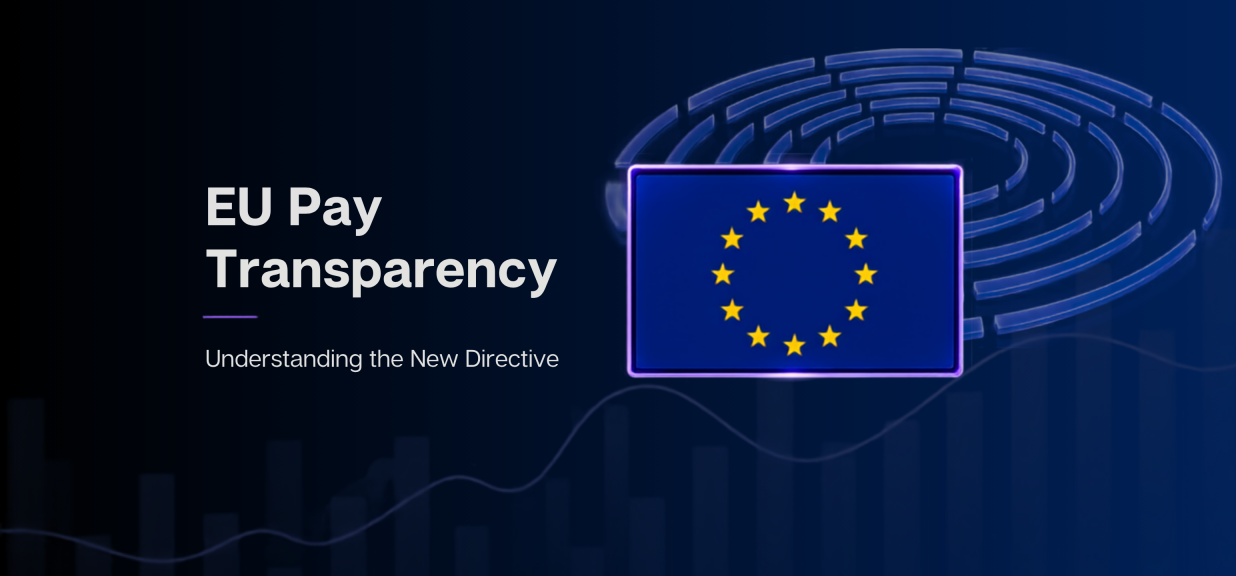
With the 7 June 2026 transposition deadline now here, organizations operating across Europe must be prepared for a new set of EU pay transparency obligations and reporting requirements, introducing a new era of accountability around pay equity and workplace transparency. Much of the conversation so far has focused on reporting requirements, salary disclosures, and gender pay gap calculations.
But for multinational employers, the directive is about far more than compliance.
It is a test of organizational maturity.
The organizations that struggle with the directive are unlikely to do so because they misunderstand the rules. They will struggle because the directive exposes long-standing weaknesses in payroll systems, compensation frameworks, job architecture, and workforce data governance. In many ways, the legislation is less about pay transparency and more about whether employers can confidently explain, justify, and defend their pay practices.
According to the latest figures from the European Commission, women in the EU continue to earn, on average, around 12% less per hour than men, despite decades of equal-pay legislation. The persistence of this gap is one of the key reasons behind the directive's introduction.
For global organizations operating across multiple countries, business units, and payroll providers, that challenge is significantly more complex than it appears on paper.
And contrary to popular belief, that challenge is not limited to organizations headquartered within the European Union.
In reality, the directive's impact extends far beyond Europe's borders.
Any organization employing workers within EU member states regardless of where its headquarters are located must comply with the applicable requirements for its European workforce. Whether a company is based in New York, London, Singapore, or Tokyo, employees working in EU jurisdictions may fall under the scope of the directive.
This creates a new challenge for multinational employers.
Many organizations have historically managed payroll, compensation, and workforce policies differently across regions. However, transparency requirements introduced in Europe may create pressure for greater consistency across the global enterprise.
For example, if salary ranges are disclosed to candidates in European markets but not elsewhere, organizations may find themselves managing differing employee expectations across regions. Similarly, compensation reporting obligations in Europe may expose data gaps that exist across global operations.
As a result, many multinational employers are treating the directive not as a regional compliance exercise, but as an opportunity to establish more consistent compensation governance, pay transparency practices, and workforce data standards worldwide.
For organizations operating across multiple jurisdictions, the challenge is no longer simply understanding the regulation. It is ensuring that payroll and workforce data can withstand scrutiny wherever employees are located.
The Directive Is Creating a Fragmented Compliance Landscape
While the directive establishes a common framework across the European Union, implementation remains the responsibility of individual member states.
As countries transpose the directive into national legislation, employers may face variations in enforcement mechanisms, reporting procedures, and compliance expectations. Organizations with operations across multiple European jurisdictions must therefore navigate both a unified regulatory objective and a potentially fragmented implementation landscape.
For payroll and HR leaders, this creates a dual responsibility.
First, they must understand the overarching principles of pay transparency. Second, they must ensure that local payroll operations, compensation structures, and reporting processes can accommodate country-specific requirements as they emerge.
This is where many multinational organizations face their first challenge.
Years of expansion, acquisitions, and decentralized payroll management have left many businesses operating with fragmented data ecosystems. Employee information sits across multiple systems. Compensation records are managed locally. Job classifications vary by market. Reporting standards differ from one country to another.
The directive does not create these problems. It simply makes them impossible to ignore.
The "Work of Equal Value" Challenge
One of the most significant aspects of the directive is its emphasis on equal pay for work of equal value.
At first glance, this may sound straightforward. In practice, it is one of the most demanding requirements employers will face.
The concept extends beyond employees performing identical jobs. Employers must also assess whether different roles deliver comparable value based on objective criteria such as skills, responsibilities, effort, and working conditions.
A warehouse operations manager and a customer service supervisor may hold very different positions, yet the organization may need to demonstrate whether compensation differences are objectively justified.
For multinational employers, this requirement introduces a substantial operational challenge.
Job titles are rarely standardized across countries. Compensation structures vary by market. Legacy HR systems often contain inconsistent role definitions and classification methodologies. Without a centralized framework for evaluating roles, identifying comparable positions becomes difficult, time-consuming, and potentially vulnerable to scrutiny.
Organizations preparing for the directive should be evaluating their global job architecture now. Standardized role frameworks, consistent grading structures, and harmonized compensation policies will be critical to demonstrating fairness across the workforce.
Three Operational Shifts Every Employer Must Prepare For
The directive introduces several practical requirements that will directly affect hiring, payroll, and employee communications.
1. Salary Transparency Begins Before Hiring
The traditional approach of withholding compensation information until later stages of recruitment is rapidly becoming obsolete.
Under the directive, employers must provide information about initial pay levels or salary ranges before employment begins, enabling candidates to make informed decisions during the hiring process.
Organizations will also be prohibited from asking candidates about their salary history.
This represents a fundamental shift in recruitment practices. Employers must ensure salary bands are clearly defined, consistently applied, and aligned with broader compensation strategies.
For organizations operating across multiple markets, maintaining consistency while accounting for local labor conditions will require careful planning and governance.
2. Employees Gain New Rights to Compensation Information
Employees will have the right to request information regarding their individual pay level and average pay levels, broken down by gender, for categories of workers performing the same work or work of equal value.
Employers must respond within specified timeframes and provide the information in a clear and accessible format.
What sounds like a simple information request may quickly become a complex exercise if payroll and workforce data are dispersed across multiple systems.
Without centralized visibility into compensation data, organizations may struggle to generate accurate responses, increasing both compliance risk and employee distrust.
The directive effectively raises the standard for payroll transparency and data accessibility across the enterprise.
3. The 5% Gender Pay Gap Threshold Demands Action
The directive also introduces heightened scrutiny around gender pay gaps.
If reporting identifies a gender pay gap of at least 5% within a category of workers and the employer cannot justify the difference through objective, gender-neutral criteria, corrective action becomes necessary.
This is where the operational burden intensifies.
Organizations must be able to investigate compensation decisions, analyze historical pay practices, review allowances and variable pay components, assess promotion patterns, and identify the root causes of disparities.
Without reliable data and audit-ready records, addressing these requirements can become a resource-intensive undertaking.
The ability to identify issues proactively before reporting obligations expose them will become a significant advantage.
ALSO READ | How Multinationals Can Transform the EU Time-Tracking Mandate into Strategic Advantage
The Real Shift: Employers Must Prove Fairness
Among all the provisions within the directive, one change may have the greatest long-term impact on employers.
The burden of proof shifts.
In pay discrimination claims, employers may be required to demonstrate that compensation differences are based on objective and gender-neutral criteria.
This fundamentally changes the nature of compliance.
Historically, organizations could often focus on responding to issues after they emerged. Under the new framework, employers must be prepared to substantiate compensation decisions with evidence.
In a transparency-driven environment, incomplete or inconsistent payroll data can create significant legal and reputational exposure. Organizations that cannot demonstrate the rationale behind compensation decisions may find themselves spending more time reconstructing historical records than addressing the issue itself. Poor-quality data costs organizations an average of $12.9 million annually, according to Gartner estimates frequently cited across data-governance research.
Payroll records become evidence.
Compensation histories become evidence.
Pay policies become evidence.
Data quality becomes evidence.
An organization cannot effectively defend its pay practices if information is incomplete, inconsistent, or scattered across disconnected systems.
The ability to access accurate compensation data quickly and confidently may determine how effectively an organization responds to regulatory inquiries, employee requests, and potential disputes.
Why Payroll Data Has Become a Strategic Asset
For years, payroll has often been viewed as an operational function focused on accuracy, timeliness, and compliance.
The EU Pay Transparency Directive changes that perception.
Payroll data is now central to workforce transparency, corporate governance, employer branding, and risk management.
The organizations best positioned for this new environment are those that can establish a single source of truth for workforce and compensation data across all markets.
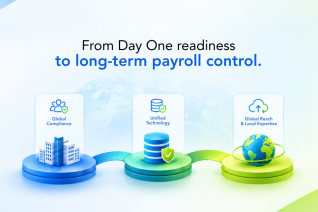
This requires more than reporting tools. It requires unified payroll architecture, standardized processes, integrated workforce data, and continuous compliance monitoring.
When payroll, HR, and compliance teams operate from the same foundation, organizations gain the visibility necessary to identify risks early, address disparities proactively, and respond confidently to regulatory requirements.
Looking Beyond Compliance
The organizations that approach the EU Pay Transparency Directive as a reporting exercise may achieve compliance.
The organizations that view it as a catalyst for payroll modernization will gain something more valuable: trust.
Trust from employees who expect fairness and transparency.
Trust from regulators demanding accountability.
Trust from leadership teams seeking greater visibility into workforce costs and compensation practices.
As pay transparency becomes a permanent feature of the employment landscape, the quality of an organization's payroll data will increasingly determine its ability to demonstrate fairness, maintain compliance, and support sustainable growth.
For global employers, the question is no longer whether transparency is coming.
The question is whether their payroll infrastructure is ready for it.
Preparing for a More Transparent Future with EU Pay Transparency
The EU Pay Transparency Directive is often discussed as a compliance requirement, but its implications extend far beyond reporting obligations and disclosure mandates.
At its core, the directive challenges organizations to demonstrate that their compensation practices are fair, consistent, and supported by reliable data. For multinational employers, that means rethinking how payroll, HR, and compliance functions work together to create a single source of truth across the workforce.
Organizations that begin preparing now have an opportunity to do more than meet regulatory expectations. They can strengthen data governance, improve workforce visibility, build greater trust with employees, and create a more resilient foundation for global growth.
As transparency becomes a defining feature of the modern workplace, payroll will play an increasingly strategic role in helping organizations navigate risk, support equitable pay practices, and maintain compliance across jurisdictions.
The question is no longer whether pay transparency will reshape workforce management. The question is whether organizations have the visibility, processes, and payroll infrastructure needed to thrive in a more transparent world.
To know more, write to irene.jones@neeyamo.com