What is the biggest obstacle to achieving accurate, compliant, and scalable global payroll? For many organizations, it isn't payroll itself; it's the fragmented technology ecosystem supporting it.
Now let's take a closer look at why disconnected systems have become one of the biggest barriers to modern payroll operations.
The Challenges of Fragmented Payroll
Organizations are expanding their operations, and consequently, their payroll becomes distributed across disparate HR, finance, time, and attendance systems. While these systems function well in isolation, the lack of seamless integration creates silos across functions. This fragmentation reduces visibility into payroll operations and increases the complexity of managing country-specific tax regulations, statutory compliance, currency variations, and reporting standards.
The operational impact permeates beyond payroll processing. Disconnected systems increase the likelihood of payroll errors, such as delayed payments, compliance violations, and inconsistent employee experiences. Enterprise-wide visibility also becomes difficult when payroll data is scattered across multiple systems and providers. The absence of a centralized view makes governance more difficult, slows decision-making, and reduces confidence in payroll data. When operating across multiple regions and jurisdictions, these challenges become more pronounced.
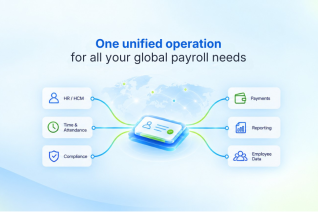
For many global enterprises, payroll data is spread across systems, resulting in fragmented visibility, inconsistent reporting, and increased compliance exposure. This is why enterprises are moving toward a unified payroll tech stack: a central operating foundation that brings together HRIS, time and attendance, finance, compliance, and payroll engines into one connected ecosystem where data is synchronized, validated, and accessible across the enterprise.
Also read: Why Multi-Country Payroll Complexity Breaks Traditional Payroll Technology Stack
Components of Unified Payroll Tech Stack
A unified payroll tech stack is built on several interconnected components, each serving a distinct role in ensuring seamless data flow, regulatory compliance, operational visibility, and end-to-end payroll execution. Elements that contribute to HRIS and payroll management form the foundation of the stack.
- Payroll: Workforce information across global operations.
- Time: Records working hours and absence.
- Compliance: Country-specific regulatory requirements.
- Hub: Comprises employee master data, query registrations, and other ancillary data.
Unified Payroll Tech Stack Solution
A unified payroll tech stack connects functions through a standardized framework, enabling seamless communication across HR, payroll, finance, compliance, and reporting. It establishes a single source of truth for workforce and payroll operations, allowing information to move securely and consistently across the enterprise without repetitive manual intervention or disconnected workflows.
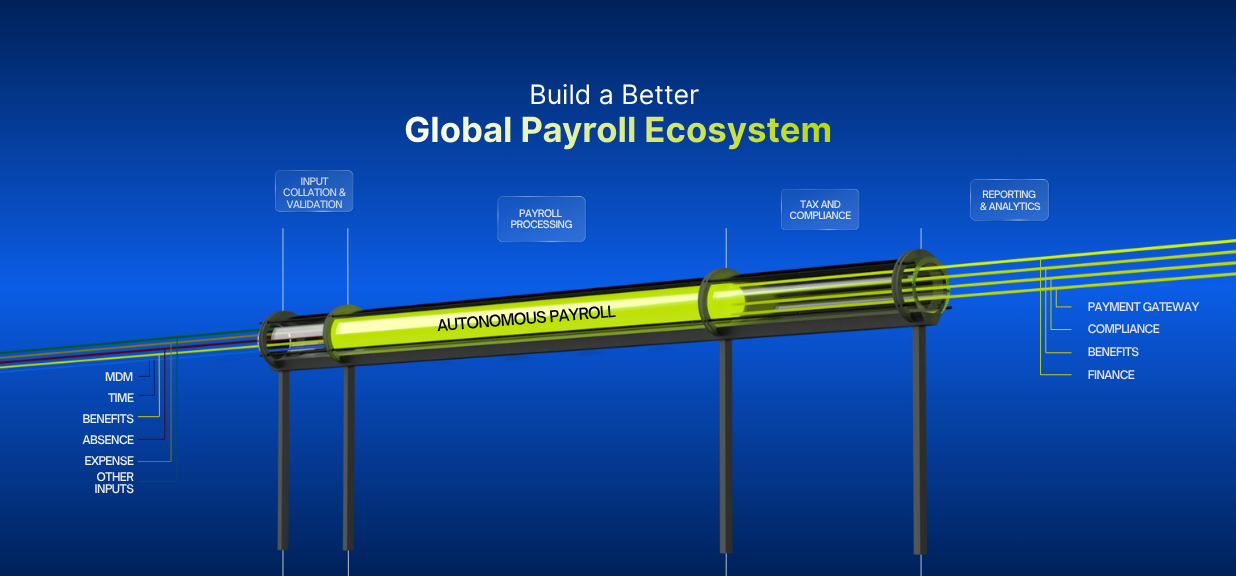
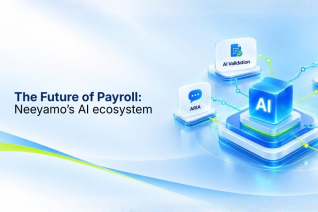
Neeyamo provides a unified payroll tech stack that creates a connected payroll ecosystem by integrating every stage of the payroll lifecycle into a single, synchronized workflow. Time, absence, benefits, and expense data flow seamlessly into a centralized validation layer, where information is standardized, verified, and enriched before payroll calculations begin. Once payroll is processed, the same ecosystem automatically manages statutory deductions, tax withholdings, provider payments, bank transfers, and regulatory reporting through predefined workflows and integrations. By eliminating manual handoffs between disconnected systems, organizations achieve straight-through processing, improve payroll accuracy, strengthen compliance, and gain real-time visibility across their global payroll operations.
How does a unified payroll tech stack help your business?
Seamless Data flow
Within a unified environment, these data points flow automatically between systems, eliminating duplicate entries and reducing reconciliation efforts. The result is a faster payroll cycle with fewer disruptions and greater operational control.
Accuracy through automation
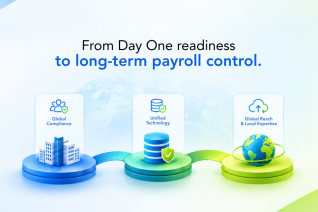
A unified payroll tech stack minimizes the number of touchpoints through automated workflows, real-time validation, and standardized integrations, allowing payroll teams to focus on governance rather than correction. Our core differentiator remains our single, unified technology stack, supported by 117 native payroll engines. This gives us greater control over compliance, consistency, and innovation, while reducing dependence on third-party providers across many countries.
Real-time insights for data-backed decisions
A unified stack centralizes payroll administration, providing real-time access to dashboards, reporting tools, and operational metrics. This visibility enables organizations to identify anomalies earlier, proactively monitor compliance obligations, and make informed decisions based on accurate workforce data.
Elevating the Employee Experience
For employees, payroll represents one of the most important touchpoints with their employer. Accurate and timely payments directly influence trust, engagement, and overall employee satisfaction. As organizations continue to build globally distributed workforces, delivering this level of consistency becomes increasingly important for strengthening employee confidence and organizational credibility.
The complexity of global payroll is no longer driven solely by compliance requirements. It stems from fragmented systems, disconnected data flows, and processes that struggle to keep pace with workforce expansion. By investing in a unified payroll architecture today, organizations can reduce operational complexity, improve employee experiences, and build a foundation that supports sustainable global growth in the years ahead.
Neeyamo’s solution encompasses a unified payroll tech stack that helps organizations achieve seamless workforce operations on a single platform while keeping all stakeholders aligned. Reach out to us at irene.jones@neeyamo.com to know more!