Few things land in an HR or payroll inbox with as much urgency as a garnishment order. It arrives with a deadline, legal language, and an implicit warning: get this wrong, and your company could be on the hook for the debt itself.
Yet garnishment remains one of the most misunderstood corners of payroll compliance. Employers often aren't sure how much to withhold, which orders take priority, or what happens if two garnishments land on the same employee in the same week.
What is Payroll Garnishment?
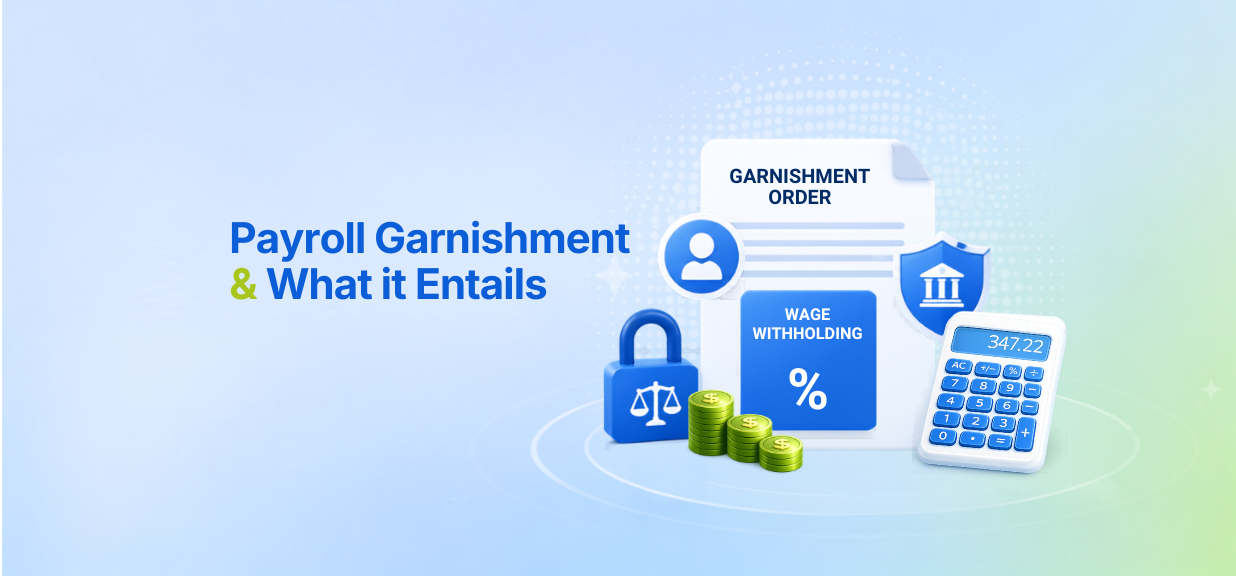
Payroll garnishment (also called wage garnishment) is a legal process that requires an employer to withhold a portion of an employee's earnings and send it directly to a creditor, government agency, or court to satisfy a debt. The employer doesn't choose to do this; it's a court order, administrative levy, or legally binding directive that leaves little room for discretion.
Once a valid garnishment order arrives, the employer becomes responsible for:
- Calculating the correct amount to withhold each pay period
- Withholding it from the employee's disposable earnings
- Remitting the funds to the correct agency or creditor on time
- Keeping accurate records of the entire process
Garnishment isn't optional, and getting the calculation wrong, withholding too much or too little, can actually expose the employer to liability.
Common Types of Payroll Garnishment
Not all garnishments are created equal. Each type has its own legal basis, withholding limits, and, often, its own priority level when multiple orders overlap.
1. Child Support and Alimony
Court-ordered support obligations are the most common garnishment type and carry the highest withholding limits of any category, since family courts prioritize a dependent's financial support.
2. Federal and State Tax Levies
The IRS and state tax agencies can levy wages directly for unpaid taxes, without going through a court judgment first. These levies often follow their own withholding formulas rather than the general consumer-debt limits.
3. Federal Student Loan Defaults
The federal government can administratively garnish wages for defaulted federal student loans without a court order, a process private lenders can't use since private loans require a judgment first.
4. Creditor Judgments (Consumer Debt)
Credit cards, medical bills, and personal loans fall into this "ordinary garnishment" category. A creditor must sue, win a judgment, and obtain a court order before an employer is required to withhold anything.
5. Bankruptcy Orders
When an employee files for Chapter 13 bankruptcy, the employer may receive a wage deduction order directing payments to a bankruptcy trustee as part of a court-approved repayment plan.
What Does an Employer Have to Do?
When a garnishment order arrives, here's what employers generally need to do:
- Check that the order is real and valid.
- Figure out how much to withhold from the employee's pay.
- Take that amount out of each paycheck.
- Send the money to the right place on time.
- Keep records of what was withheld and paid.
- Stop withholding once you get notice that the debt is paid off or the order ends.
Is There a Limit to How Much Can Be Withheld?
Yes. The law limits how much of someone's paycheck can be taken. This protects employees from losing too much of their income at once. The exact limit depends on the type of debt; child support has a higher limit than an unpaid credit card bill, for example.
Because these limits can vary by state and by the type of debt, it's a good idea to double-check the current rules or ask a payroll professional if you're unsure.
Can You Fire an Employee Because of a Garnishment?
No. If an employee has a single garnishment for a single debt, you cannot fire them because of it. This is protected by law.
A Few Tips for Employers
- Don't ignore a garnishment order; it's a legal requirement, not a suggestion.
- Double-check your math before withholding.
- Keep the employee's situation private within your company.
- If you're not sure how to handle it, ask a payroll expert or legal advisor.
The Bottom Line
Payroll garnishment might seem intimidating at first, but it comes down to a few simple steps: confirm the order, withhold the correct amount, submit it on time, and keep accurate records. Having a clear process in place makes it much easier to handle whenever it comes up.
Reach out to us at irene.jones@neeyamo.com for more information.