For multinational organizations, multi-country payroll is often the most significant administrative friction point. As companies expand into new territories, they frequently fall into a fragmentation trap, relying on a patchwork of disconnected local payroll providers, regional aggregators, and disparate HR systems.
Current industry data underscores the depth of the issue: 42.7% of global payroll professionals confirm their organizations lack a single, unified global payroll system. This indicates that for nearly half of multinational enterprises, payroll data is scattered across incompatible platforms, forcing a reliance on manual intervention to bridge the gap.
This environment is not just inefficient; it is a primary driver of compliance risk. The complexity of managing payroll across different regulatory environments, tax codes, and employment practices is immense. In a traditional aggregator-led model, data often passes through several hands and systems, creating silos where visibility is limited and manual reconciliation is the norm. For payroll leaders, the quest for a more resilient operating model has made the native payroll engine a fundamental requirement for scalable global growth.
Understanding the Native Payroll Engine
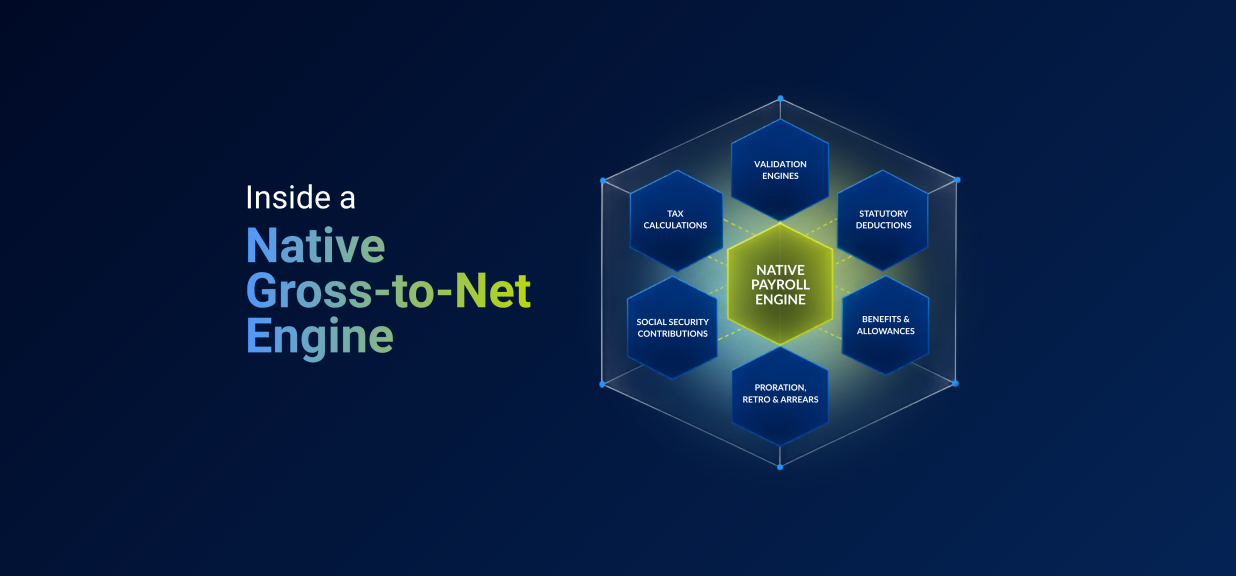
A native gross-to-net (G2N) payroll engine is the heart of an automated payroll platform. Unlike middleware or aggregation layers that rely on external vendors to perform calculations, a native engine processes the payroll logic directly within the platform’s core architecture.
It systematically applies country-specific variables, such as progressive tax brackets, social security contributions, statutory deductions, benefits, and local leave policies, to convert gross earnings into final net pay. By moving the calculation logic in-house within a single global platform, organizations move away from black-box processing, where data is exported to an in-country partner and returned as a final figure, often without transparent insight into how those calculations were derived.
Why Native Engines Redefine Global Efficiency
Adopting a native payroll engine shifts the operating model from reactive maintenance to proactive, data-driven orchestration. This technology provides several advantages for multinational enterprises:
- Eliminating Manual Reconciliations: Because the calculation occurs natively, the constant back-and-forth between disparate regional systems vanishes. Data is validated at the point of entry and processed immediately. This ends the phase where managers spend days manually matching results from various sources against internal projections.
- Granular Visibility and Auditability: A native engine provides a clear, audit-ready trail of the entire gross-to-net process. Because the logic is embedded, finance and compliance teams gain unprecedented transparency. You can drill down into how specific tax tiers or statutory contributions were applied, ensuring precision across all jurisdictions.
- Speed and Agility in Compliance: With a native engine, regulatory updates, such as shifts in tax withholding thresholds, are pushed globally through the platform logic. This removes the ticket-and-wait cycle of third-party dependencies, allowing your team to run payroll with significantly increased speed and responsiveness to changing local laws.
- Harmonized Data Governance and Security: Native engines act as a singular, unified data master. By eliminating the need to sync payroll data across diverse, insecure third-party local systems, you ensure that sensitive employee information adheres to a consistent global security policy. This architectural uniformity simplifies compliance with regional data privacy regulations and ensures that audit trails remain intact across all country operations.
Scalability as a Strategic Advantage
For organizations planning international growth, the benefits of a native engine are exponential. When you enter a new market, you are not tasked with the logistical burden of vetting, contracting, and integrating new local vendors. Instead, you simply activate that country within your existing, unified platform. This architecture creates a standardized, repeatable process regardless of geography, allowing your global payroll team to scale without a linear increase in headcount or operational complexity.
Also read | What Does the Future of Global Payroll Look Like in a Borderless World?
Towards a Unified Multi-Country Payroll Operating Model
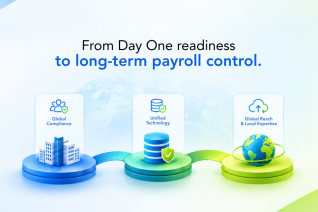
The shift from a fragmented payroll environment to a native-engine-driven architecture represents a maturity milestone. It transforms payroll from a collection of reactive, regional silos into a proactive, strategic global function. By regaining control over the calculation logic and data flow, organizations can focus their energy on growth rather than remediation.
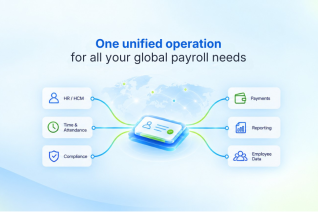
This evolution is at the heart of the Neeyamo Payroll platform, which features native payroll engines embedded across 117 countries and growing. By replacing reliance on disparate local vendors with a singular, natively integrated technology stack, Neeyamo helps enterprises reduce fragmentation, harmonize their data, and manage payroll through a truly unified, scalable, and connected global ecosystem.
As the world of work becomes increasingly borderless, the future belongs to those who view their payroll as a single, orchestrated engine driving the global enterprise forward. To know more, reach out to us here, or write to us at irene.jones@neeyamo.com.