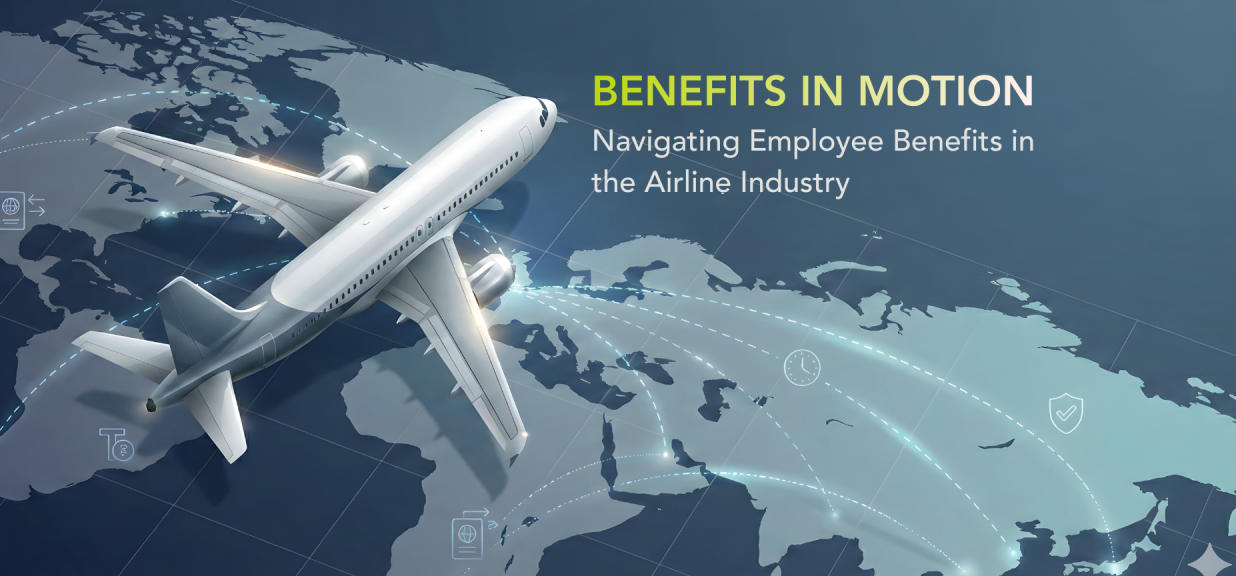
The airline industry operates in a uniquely complex ecosystem where work is mobile, regulations are layered, and employee roles are anything but uniform. While passengers experience seamless journeys across borders, airlines must manage an intricate web of employee benefits that change with geography, tenure, role, and regulatory jurisdiction.
Unlike industries anchored to a single location, airlines manage benefits for a workforce that is constantly in motion. Pilots, cabin crew, and ground staff operate under fundamentally different employment conditions, and organizations must adhere to accuracy, transparency, and compliance in how they manage employee benefits.
In the airline industry, even well-established benefits such as complimentary employee travel carry significant payroll and tax implications. Free or discounted tickets are typically structured based on an employee’s role and seniority, with eligibility and travel class varying between pilots, cabin crew, and ground staff. While these benefits are designed to enhance employee value, they are often taxable and require detailed calculation. Tax treatment may depend on factors such as distance flown, route direction, travel dates, and the jurisdiction under which the benefit is earned or consumed.
Accurately interpreting these variables demands more than internal payroll processing; it calls for specialized payroll expertise capable of translating operational data into compliant, auditable payroll outcomes across multiple regulatory environments.
When Inputs Multiply, So Does Complexity
Airline benefits calculations are driven by multiple inputs that extend far beyond basic employee data. A single benefits transaction may require interpretation of route information, travel class, mileage, exchange rates, tax applicability, and eligibility rules based on tenure.
These inputs must be processed accurately to produce compliant outputs such as taxable value, social security contributions, or reimbursable benefits. In a high-volume, multi-country operation, even minor discrepancies can quickly escalate into compliance risks or employee dissatisfaction.
Social Security: Same Principle, Different Rules
Social security is a statutory requirement across countries, but the way it applies varies significantly. Contribution rates may differ by age group, wage threshold, residency status, and length of service.
For pilots, this often means navigating higher wage ceilings and age-linked contribution changes as they approach the latter stages of their careers.
For cabin crew, who may be younger and more internationally mobile, eligibility can shift depending on base location and the countries they operate from.
For ground staff, social security tends to follow more traditional employment patterns, but still requires precise alignment with local labor laws and contribution timelines.
Managing all three profiles within a single organization highlights the operational strain airlines face when benefits rules diverge across roles and geographies.
Age and Tenure: Benefits That Evolve Over Time
In aviation, experience is both regulated and rewarded. Benefits are rarely static. They change as employees cross service milestones or move into different age brackets.
A long-serving pilot may qualify for different retirement-linked benefits than a newly recruited first officer. A senior cabin crew member with a decade of service may have access to enhanced travel or recognition benefits compared with newer hires. Ground staff with extended tenure may be entitled to different statutory or contractual benefits.
For airlines, this means benefits systems must dynamically adapt as employees progress through their careers, without manual recalculation or risk of error.
Grossing Up: When Recognition Becomes a Payroll Challenge
Long-service recognition is common in the airline industry, often delivered as complimentary travel or a monetary equivalent. While the intent is to reward loyalty, the execution introduces complexity.
When a benefit is monetized, it becomes taxable. Many airlines choose to gross up these awards so employees receive the full intended value without bearing the tax burden.
This is particularly complex when:
- A pilot receives a monetized travel benefit after crossing a service milestone
- Cabin crew earn recognition awards linked to cumulative flying years
- Ground staff receive long-service payouts governed by local tax rules
Each scenario requires precise tax treatment, correct gross-up calculations, and compliant reporting, often across different jurisdictions.
Benefits in Motion: An Airline-Specific Reality
What truly sets airlines apart is that benefits do not stay in one place. An employee may earn a benefit in one country, be taxed in another, and consume it elsewhere.
A pilot flying international routes, a cabin crew member changing bases, or a ground staff employee supporting overseas operations can all trigger overlapping regulatory obligations. This creates an environment where payroll, tax, and benefits must operate as a single, integrated system.
Turning Complexity into Capability
For airlines, managing employee benefits is no longer a transactional activity. It is a strategic capability that directly impacts compliance posture, cost control, and employee trust.
Organizations that manage this well tend to:
- Design benefits frameworks that are globally consistent yet locally compliant
- Automate rule-based calculations to handle role, age, and tenure variations
- Build transparency into benefit calculations so employees understand their entitlements
In an industry where operational precision is non-negotiable, benefits management must meet the same standard.
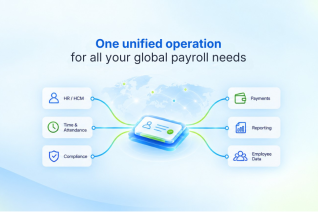
Achieving this level of precision requires more than policy intent or manual oversight. It calls for a payroll and benefits platform that can process airline-specific variables such as routes, mileage, travel class, age bands, and tenure, and convert them into accurate and compliant payroll outcomes. When tax rules, social security logic, and benefit eligibility frameworks are embedded directly into the payroll system, complex calculations can be handled automatically and consistently across geographies.
To address these airline-specific requirements, Neeyamo has a dedicated airline module that is designed to capture operational inputs unique to aviation and seamlessly integrate them with its global payroll platform. This enables airline organizations to compute taxable benefits, apply gross-up logic, and process payroll outcomes using a single, integrated framework, even as employees move across roles, routes, and jurisdictions. By aligning industry-specific benefit logic with a robust payroll engine, Neeyamo enables airlines to manage complexity with accuracy, auditability, and scale, reinforcing payroll as a strategic capability within one of the world’s most operationally demanding industries.
Reach out to us here, or write to us at irene.jones@neeyamo.com to know more!