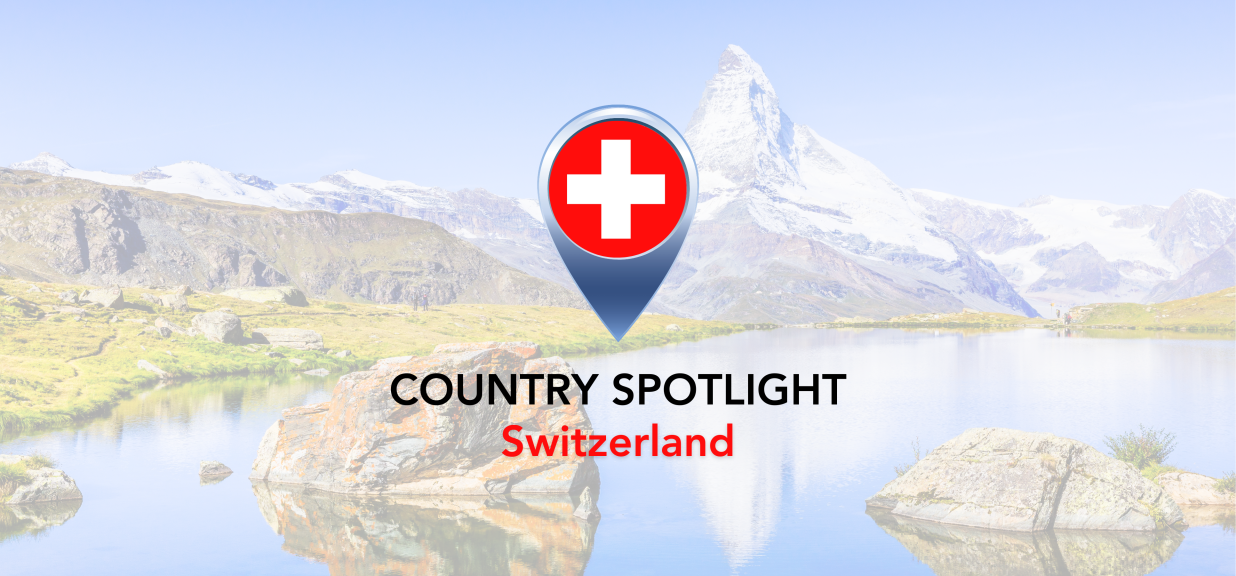
Switzerland doesn’t operate like most European countries.
It’s not part of the European Union, yet it maintains strong bilateral agreements that allow workforce mobility. It consistently ranks among the highest globally for GDP per capita. And instead of a centralized system, it functions through 26 autonomous cantons, each with its own influence over tax rates, public holidays, and administrative processes.
That decentralized structure makes Switzerland dynamic and business-friendly.
It also makes hiring more nuanced than many companies expect.
For international organizations that want to hire talent in Switzerland without setting up a legal entity, an Employer of Record (EOR) can provide a compliant, efficient path into one of Europe’s most sophisticated labor markets.
Why Companies Expand into Switzerland
Switzerland continues to attract global organizations for several compelling reasons. Cities like Zurich and Geneva are recognized as major financial hubs, offering access to capital markets and international banking networks. The country is also a global leader in pharmaceuticals and biotechnology, home to organizations such as Novartis and Roche. These companies have helped position Switzerland as a center for research, innovation, and advanced manufacturing.
Beyond industry leadership, Switzerland offers a highly skilled and multilingual workforce. Professionals are often fluent in German, French, Italian, and English, reflecting the country’s diverse linguistic regions. Its central location in Europe, combined with strong infrastructure and reliable transport networks, makes it strategically attractive for businesses serving multiple European markets.
Switzerland’s combined federal, cantonal, and municipal corporate income tax rates generally range between approximately 11.9% and 20.5%, depending on the company’s canton of residence. Following the 2020 Tax Reform and AHV Financing (TRAF), cantons introduced OECD-compliant measures such as patent boxes and enhanced R&D deductions, which can further reduce effective tax rates.
However, while the business environment is attractive, hiring employees in Switzerland requires careful attention to its layered regulatory framework.
Understanding Switzerland’s Employment Landscape
Federal vs Cantonal Structure
Switzerland comprises 26 autonomous cantons under a federal system, where national laws set baseline employment standards but cantons handle variations in taxes, sick leave, public holidays, and minimum wages. This leads to localized compliance nuances, such as differing administrative processes for payroll and registrations across regions.
Employment Contracts
Written agreements are essential and must detail terms like salary, role, and notice periods to ensure enforceability under the Swiss Code of Obligations. Probation periods typically last 1-3 months with simplified termination rules. Collective labor agreements (CLAs or GAV) apply in many sectors, mandating superior conditions beyond statutory minimums.
Working Hours & Overtime
The standard full-time workweek in Switzerland is typically 40 to 42 hours, generally spanning Monday to Friday, which is among the longest in Europe. While legal maximums can reach 45 or 50 hours depending on the industry, employees are legally entitled to at least four weeks of paid vacation, though five to six weeks is common. Overtime exceeding these requires compensatory time off or premium pay (125% rate minimum), capped at 2 hours daily unless via CLA.
Leave & Employee Protections
In Switzerland, adult employees are legally entitled to at least 4 weeks of paid annual leave, while those under age 20 receive 5 weeks. While federal law doesn't mandate extra days for seniority, many Collective Labour Agreements (CLAs) grant a 5th week to employees over age 50 or those with long tenure.
Payroll & Social Security in Switzerland
Mandatory Social Insurance
Switzerland mandates first-pillar contributions including AHV/AVS (Old-Age and Survivors' Insurance), IV/AI (Disability Insurance), EO/APG (Income Compensation for Military/Civilian Service and Maternity), and unemployment insurance (ALV). These are deducted from gross salary (typically 10.6% combined for AHV/IV/EO, split equally between employer/employee, ensuring broad social protections.
Occupational Pension (BVG/LPP)
The second-pillar BVG/LPP requires enrollment for employees over age 17 earning above CHF 22,680 annually (2025 threshold). Contributions are age-graded (e.g., 7-18% of coordinated salary, rising with age; min. 50% employer-funded), aiming to maintain living standards in retirement.
Accident Insurance (UVG/LAA)
UVG mandates employer-provided coverage for occupational (fully employer-funded, ~0.1-2%) and non-occupational accidents (~1-3%, often passed to employee), applicable from 8 hours/week employment. Premiums vary by industry risk.
Withholding Tax (Quellensteuer)
Switzerland imposes a 35% statutory withholding tax on dividends and certain bond-related interest, with treaty relief typically granted via refund or notification procedures.
Interest on ordinary commercial loans and royalties are generally not subject to Swiss WHT.
Double taxation treaties may reduce the residual rate—often to 0% for qualifying corporate shareholders, governments, or pension funds.
Risks of Non-Compliance in Switzerland
Non-compliance in Switzerland's complex federal-cantonal system carries severe financial and operational risks.
Key Risks Retroactive social contributions: Authorities can demand back payments for AHV/IV, BVG, and accident insurance up to 5 years, plus interest (e.g., 5% p.a.), crippling cash flow.
Tax penalties: Quellensteuer errors or undeclared payroll trigger fines up to 200% of owed amounts, plus criminal proceedings for evasion.
Employment disputes: Invalid contracts or improper terminations lead to court-ordered payments (up to 6 months' salary) and legal fees averaging CHF 20K+ per case.
Regulatory audits: Cantonal labor inspectorates impose immediate business halts, compliance orders, and daily fines (CHF 1K+) until resolved.
Reputational exposure: Public enforcement actions damage stakeholder trust in Switzerland's premium market, hindering future expansion.
Key Considerations When Choosing an EOR in Switzerland
Selecting the right Employer of Record (EOR) in Switzerland requires focusing on providers equipped to navigate its decentralized regulatory landscape.
In-country expertise: Choose EORs with deep knowledge of Swiss labor law, including federal Code of Obligations and cantonal variations.
Cantonal knowledge: Ensure coverage across all 26 cantons, handling diverse tax rates, holidays, and admin processes like Zurich vs. Geneva.
Payroll accuracy track record: Verify proven compliance in social insurance (AHV/IV/BVG), withholding tax, and timely filings to avoid penalties.
Data security: Switzerland’s data protection framework is governed by the revised Federal Act on Data Protection (FADP) (in force since September 2023), which aligns closely with GDPR principles and requires appropriate technical and organisational measures to safeguard personal data.
Employers and EOR providers must ensure lawful processing, breach notification to the Federal Data Protection and Information Commissioner (FDPIC) where required, and compliant cross-border data transfers supported by adequacy decisions or approved safeguards.
Scalability across regions: Opt for partners enabling seamless growth from 1-100+ hires across cantons without setup delays.
Switzerland offers a rare combination of economic resilience, regulatory clarity, and access to highly skilled talent. Yet its federal structure, mandatory social insurance framework, and canton-based tax variations require disciplined compliance management.
For organizations looking to hire in Switzerland without establishing a local entity, an Employer of Record provides a structured, low-risk pathway into this sophisticated market. It enables businesses to move with speed while maintaining alignment with Swiss labor, tax, and payroll regulations. In a country known for precision, expansion must be equally precise. An EOR model ensures your workforce strategy reflects that standard.
Why Choose Neeyamo for EOR in Switzerland
Neeyamo supports organizations in hiring and managing talent across more than 150 countries, including Switzerland. With experience in Swiss payroll operations, cantonal tax structures, and mandatory social security frameworks, Neeyamo enables compliant hiring without the need to establish a local legal entity.
If you are considering expansion into Switzerland, connect with our country EOR expert at irene.jones@neeyamo.com or explore Neeyamo’s Global Employer of Record solutions.