For most of human history, getting paid had no fixed rhythm. In early economies, workers were compensated in grain, goods, or wages whenever supplies arrived, sometimes weekly, sometimes months apart. Even well into the industrial age, payroll was handwritten and reactive. Before automation, payroll teams routinely spent days calculating wages for a single pay run, and errors were so common that delayed or incorrect pay was largely tolerated.
Today, that tolerance no longer exists. Payroll is expected to run with near-perfect accuracy, often across multiple countries, currencies, and regulations, all while paying employees on time, every time. What makes this possible is a deceptively simple construct: the pay period. By defining exactly when work is measured and when pay is calculated, pay periods turn labor into a predictable cycle that modern businesses can scale. To understand how payroll works today, you first have to understand how pay periods work and why they matter more than ever.
Understanding the Meaning of a Pay Period
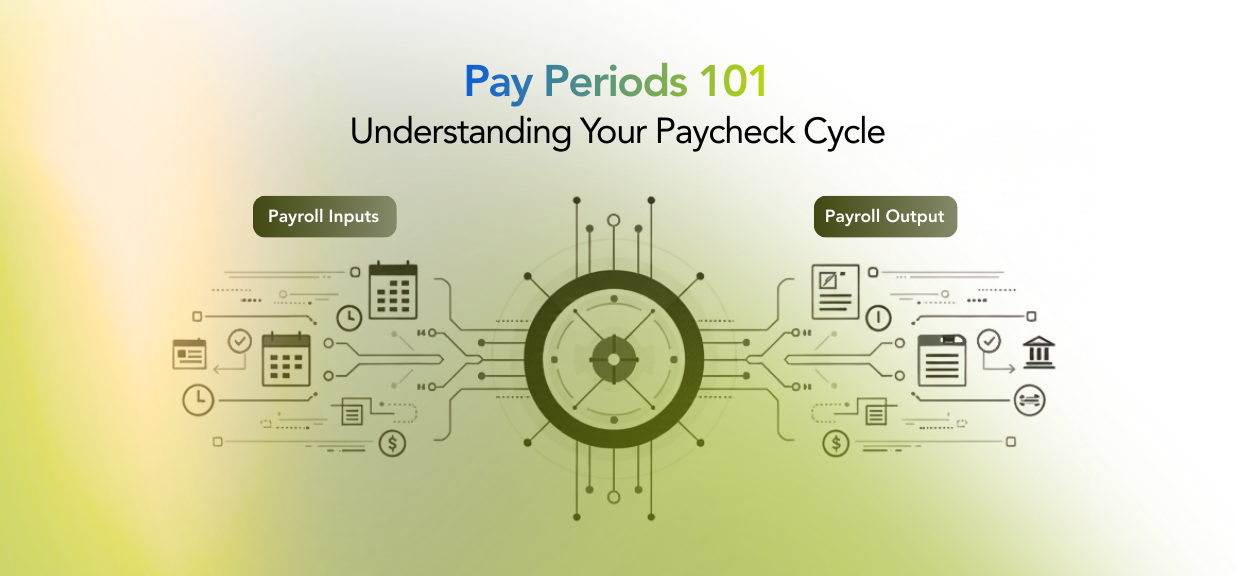
A pay period is the defined period during which an employee earns wages. This period typically concludes several days before the pay date, when wages are disbursed via paycheck or direct deposit to an employee’s bank account. The pay date is also the date reflected on an employee’s paycheck or pay statement.
The gap between the end of a pay period and the pay date is intentional. It allows employers sufficient time to collect and validate hours worked, calculate earnings and deductions, and complete payroll processing accurately. Employers should also be mindful that wage payment requirements can vary by jurisdiction. The state or states in which a business operates may mandate specific timelines for issuing payment after a pay period closes, making compliance a critical consideration in payroll planning.
Why Pay Periods Are Central to Payroll
Pay periods exist because payroll needs structure.
Without pay periods, employers would have to calculate wages daily, apply taxes continuously, and issue payments continuously. That would be messy, expensive, and nearly impossible to manage, especially for larger teams.
By setting clear pay periods, organizations create a rhythm. Time and attendance are tracked properly, overtime is calculated fairly, and deductions are applied correctly. Everyone knows when payroll closes and when payments go out.
For employees, this brings peace of mind. You know when you will be paid, what work your salary includes, and why your paycheck looks the way it does. That predictability is what makes payroll feel trustworthy.
How Different Pay Periods Work in Practice
Weekly pay periods compensate employees once every seven days, with wages calculated for work performed during that week. This structure results in 52 payroll runs each year and requires payroll teams to process wages frequently, making accurate time capture critical.
Biweekly pay periods operate on a 14-day cycle, with employees paid every two weeks on a fixed weekday. This structure leads to 26 pay runs annually, with the occasional year requiring an additional run. While predictable, it introduces periodic variations in monthly payroll totals.
Semi-monthly pay periods divide the month into two fixed pay dates, often mid-month and month-end, resulting in 24 payroll runs per year. Because these periods are tied to calendar dates rather than weeks, the number of working days in each period can vary, which complicates overtime calculations for hourly employees.
Monthly pay periods consolidate all earnings into a single payment made once per month. With only 12 payroll runs annually, this structure reduces processing frequency but extends the time between wage payments, an important consideration in jurisdictions with strict wage payment timelines.
Daily or on-demand pay departs from traditional cycles by allowing employees to access earned wages immediately or before the scheduled pay date. While increasingly visible in modern payroll conversations, this model depends heavily on real-time payroll systems and careful regulatory oversight.
How Organizations Decide on a Pay Period
Pay periods are not chosen randomly. They are built around something called a payroll calendar.
A payroll calendar outlines when pay periods begin and end, when attendance and overtime data must be finalized, how much time payroll teams need to process everything, and the exact day employees will be paid.
When organizations choose a pay period, they consider labor laws, workforce structure, overtime rules, and financial reporting requirements. For companies operating in multiple countries, this becomes even more important, as different regions often have different legal requirements around pay frequency.
A clear payroll calendar keeps everything aligned and helps avoid last-minute rushes, errors, and delays.
From Pay Period to Paycheck: Gross Pay and Net Pay
When a pay period ends, payroll processing begins, but payments do not occur immediately. Payroll teams need time to review attendance, verify hours worked, and ensure all input for that pay period is accurate.
All earnings for the pay period are first brought together to calculate gross pay. This includes base salary or wages, overtime, bonuses, incentives, and any applicable allowances. Once gross pay is finalized, statutory deductions such as income tax and social security contributions are applied. The amount left after these deductions is net pay, which is what the employee ultimately receives in their bank account.
This transition from gross pay to net pay, often referred to as gross-to-net calculation, is one of the most sensitive and critical stages of payroll. Even small errors can result in incorrect payments, employee dissatisfaction, and compliance risks, especially in complex or multi-country payroll environments.
In modern payroll environments, this complexity is typically managed by built-in gross-to-net payroll engines that apply country-specific tax rules, statutory deductions, and calculation logic within the payroll platform. When gross-to-net logic is natively embedded rather than layered through external tools, payroll calculations remain consistent, auditable, and aligned with local regulations across geographies.
Platforms such as Neeyamo’s global payroll solution use in-house gross-to-net engines to support compliant payroll processing across countries, enabling payroll teams to run accurate salary calculations with greater confidence and control.
Why Pay Periods Are Tied to Compliance
Pay periods are not just about convenience. They are closely linked to labor laws.
Many countries clearly define how often employees must be paid, how overtime is calculated within a pay period, and how quickly wages must be paid after work is completed. If pay periods are set up incorrectly, organizations can face delayed payments, disputes, or legal penalties.
For global organizations, this complexity grows quickly. Managing different pay periods and rules across countries requires careful planning and the right systems.
Managing Pay Periods in a Global Workforce
As businesses expand across borders, payroll becomes harder to manage. Different countries, pay frequencies, and rules must work together without error.
This is where platforms like Neeyamo make payroll simpler. By supporting multiple pay periods, maintaining centralized payroll calendars, and using native gross-to-net engines designed for local regulations, Neeyamo helps organizations pay their people accurately and on time, wherever they are.
Conclusion
A pay period is a foundational element of payroll, shaping how work is measured, wages are calculated, and compliance is maintained. When there is a clear understanding of what a paycheck covers and how time is structured, payroll becomes more transparent and predictable.
For employees, well-defined pay periods build clarity and trust. For organizations, they provide the structure required to deliver accurate, compliant payroll at scale. Supported by the right payroll technology, even complex pay period models across regions and workforce types become manageable. When pay periods are clearly defined and consistently applied, payroll fulfills its core responsibility: paying people accurately, on time, and without ambiguity.
To learn more, book a demo call with us or write an email to irene.jones@neeyamo.com