Navigating the complexities of payroll is a fundamental challenge for any growing organization. Among the various cycles available, the biweekly pay schedule has emerged as the most popular choice for North American businesses. But why is it so widely adopted, and is it truly the best fit for your specific workforce?
This blog dives deep into the mechanics of biweekly payroll, comparing it against other common schedules, and highlighting the compliance landmines you need to avoid.
What Is a Biweekly Pay Schedule?
A biweekly pay schedule means employees are paid every two weeks, resulting in a consistent payday (e.g., every other Friday). Unlike monthly or semi-monthly schedules, which are date-driven, biweekly payroll is interval-driven.
Key Definitions
- Pay Period: The 14-day window during which an employee’s hours are tracked.
- Pay Period End Date: The final day of the work window being calculated.
- Pay Date: The day the funds are credited to the employee's bank account. Usually, there is a "processing gap" of 3–5 days between the end date and the pay date to allow for administrative review and bank transfers.
How a Biweekly Pay Schedule Works
The mechanics of biweekly pay are deceptively simple, but they carry unique mathematical quirks that finance teams must master.
The 26 vs. 27 Pay Period Phenomenon
In a standard year, there are 52 weeks, which translates to 26 pay periods. However, because a calendar year is 365 or 366 days, every 11 years or so your organization will encounter a "Leap Year" payroll with 27 pay periods.
Pro Tip: Failing to account for a 27th pay period can lead to budgeting shortfalls or unintended "raises" for salaried employees if their annual salary is divided by 26 instead of 27.
Salaried vs. Hourly Impacts
- Salaried Employees: Their annual gross pay is divided by 26. Each paycheck is identical, making personal budgeting easier.
- Hourly Employees: They are paid for the hours worked within the specified 14-day window, including any accrued overtime.
Overtime and Variable Pay
Biweekly schedules are often preferred by HR departments because they align with the standard 40-hour workweek. Calculating overtime (hours worked over 40 in a 7-day period) is cleaner when the pay period consists of two full workweeks, rather than a semi-monthly cycle that might cut a workweek in half.
Biweekly vs. Other Pay Schedules
Choosing a frequency is a balancing act between administrative costs and employee satisfaction.
| Feature |
Biweekly |
Weekly |
Semi-Monthly |
| Paychecks per Year |
26 (sometimes 27) |
52 |
24 |
| Best For |
Mixed (Hourly/Salary) |
High-turnover/Trade |
Salaried White-Collar |
| Admin Effort |
Moderate |
High |
Low |
| OT Calculation |
Simple |
Simple |
Complex |
While weekly pay is great for employee morale, it doubles the administrative burden and bank fees. Semi-monthly (paid on the 15th and 30th) is great for accounting, but makes overtime calculations a nightmare because pay periods often end mid-week.
Advantages of a Biweekly Pay Schedule
Predictable Payroll Processing
Because payday always falls on the same day of the week, the payroll department can build a "rhythm." Tuesdays are for data entry, Wednesdays for approvals, and Fridays for funding.
Easier Overtime Calculation
Since most labor laws define overtime based on a 7-day workweek, a 14-day pay cycle ensures that two full workweeks are captured. There is no need to "split" a week across two different paychecks.
Balanced Cash Flow
For employers, biweekly pay provides a middle ground. It doesn’t drain cash as frequently as weekly payroll, but it maintains a steady outflow that is easier to forecast than large, once-a-month payments.
Disadvantages and Challenges
The "Three-Paycheck" Month
Twice a year, employees will receive three paychecks in a single month rather than two. While employees love this, it can complicate budgeting and accruals for the business. You must ensure you have sufficient cash on hand to cover the third payroll in a single month.
Benefit Deduction Confusion
Most benefits (health insurance, 401 (k)) are calculated monthly. When a three-paycheck month occurs, companies must decide:
- Should we deduct from all 26 checks?
- Do we only take deductions out of 24 checks, leaving the "extra" two checks as "deduction-free"?
Compliance Considerations
Compliance is where many organizations stumble. Payroll isn't just about math; it's about law.
- Wage and Hour Laws: Some states (such as New York and California) have specific "manual worker" laws that may require weekly pay in certain industries, making biweekly pay illegal for those roles.
- Statutory Deductions: Tax withholdings must be accurately calibrated for 26 periods.
- Record-Keeping: Most jurisdictions require you to keep payroll records for at least 3 years. Biweekly systems must clearly indicate the start and end of each workweek to demonstrate overtime compliance.
Managing Payroll Across Multiple Locations
If your organization operates in multiple states or countries, a "one size fits all" biweekly approach might not work.
- Holiday Adjustments: If your biweekly payday falls on a bank holiday (e.g., July 4th), you must decide whether to pay the day before or the day after. Many states require you to pay before the holiday.
- Localized Expertise: In the UK or Europe, monthly pay is the standard. Forcing a biweekly schedule on international teams can lead to friction and tax reporting errors.
Best Practices for Implementation
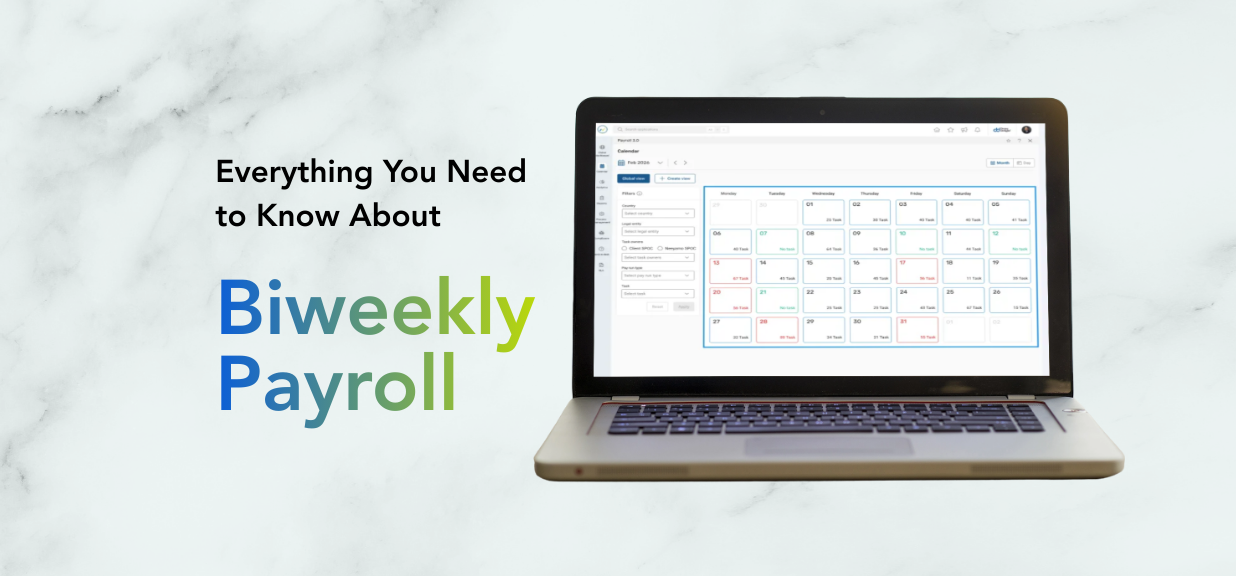
- Use a Payroll Calendar: Provide employees with a PDF calendar at the start of the year, highlighting pay periods and pay dates.
- Automate: Use payroll software to handle the 26 vs. 27 period calculations automatically.
- Clear Communication: Explain to employees how their "extra" paychecks will be handled regarding insurance premiums.
- Buffer Time: Always end your pay period at least 3 to 5 days before the actual payday to allow for timecard corrections.
Is Biweekly Right for You?
Ask yourself these three questions:
- Do you have many hourly employees? If yes, biweekly is likely better than semi-monthly.
- Can your cash flow handle two months a year with "triple" payroll?
- Is your payroll team overwhelmed? If you currently pay weekly, switching to biweekly payments can reduce your workload by 50%.
A biweekly pay schedule strikes a balance between administrative efficiency and employee satisfaction. It simplifies overtime, aligns with the standard workweek, and provides a predictable cadence. However, the occasional 27th pay period and the complexity of benefit deductions require a vigilant HR and finance team.
For further queries, feel free to contact irene.jones@neeyamo.com