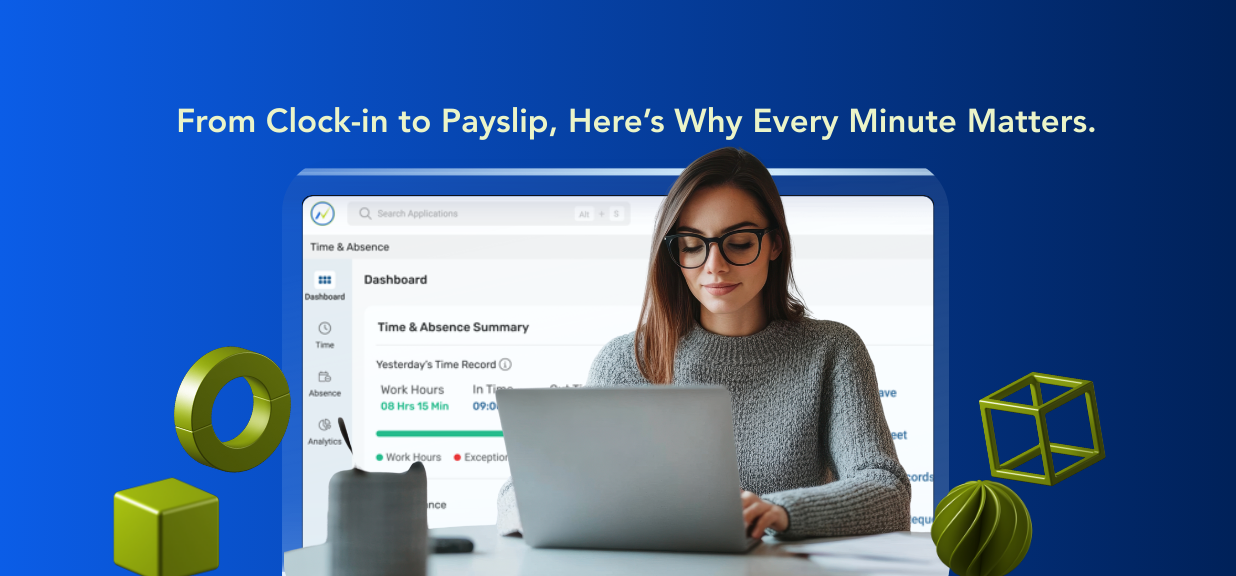
Payroll accuracy depends directly on how effectively time tracking is implemented. Every payroll outcome, including gross pay calculations, overtime application, and statutory compliance, is influenced by the accuracy with which time tracking captures, calculates, and transfers work hours into payroll systems.
As payroll environments become more complex, driven by distributed workforces, multiple pay frequencies, and evolving labor regulations, time tracking has moved beyond basic attendance recording. It now operates as a rule-based function that applies organizational policies and regulatory requirements before payroll processing begins, ensuring consistent and compliant pay outcomes.
A clear understanding of the role of time tracking within the payroll lifecycle is therefore essential for organizations aiming to reduce payroll errors, maintain compliance, and gain greater control over labor costs.
Where Time Meets Pay
Payroll does not begin with salary structures or tax rules. It begins with time. Whether employees are paid hourly, salaried with overtime eligibility, or based on shift premiums, payroll systems rely on time data as the primary input for pay determination.
From a systems perspective, payroll engines process structured time information such as hours worked, overtime eligibility, shift differentials, and absences. When this data is inaccurate or poorly classified, payroll errors occur before calculations even start. This makes time tracking a foundational payroll control rather than a supporting HR function.
What Is Time Tracking in Payroll?
In payroll terms, time tracking refers to the structured capture and processing of employee work hours in a format that payroll systems can calculate against. It extends beyond simple clock-in and clock-out records.
Modern time tracking systems record timestamps, scheduled shifts, breaks, and exceptions. This raw data is then processed through labor rule engines that define how time should be categorized. These rules determine whether hours are treated as regular time, overtime, double time, or premium hours, based on jurisdiction, contract type, and organizational policy.
The output of this process is not raw time but pay-ready time data that payroll systems can consume without manual intervention.
How Time Tracking Connects to Payroll Systems
The relationship between time tracking and payroll is technical and tightly coupled. Payroll systems depend on time tracking platforms to deliver validated, approved, and categorized time data.
Once time entries are captured, they pass through calculation rules that apply labor laws, overtime thresholds, and pay differentials. Supervisory approvals ensure accountability and accuracy before the data is locked for payroll processing. At this stage, time data is transferred to payroll systems through direct integrations or structured interfaces, typically mapped to earnings codes and cost centers.
When time tracking systems are not properly aligned with payroll, payroll teams are forced to rely on manual corrections and off-cycle adjustments, increasing risk and processing time.
Why Time Tracking Matters in Payroll
Time tracking is not treated as a standalone operational activity, but as a core component of the payroll ecosystem. Even small discrepancies in captured time can lead to incorrect pay outcomes, especially in environments with overtime eligibility, complex shift structures, and diverse workforce models.
From a compliance standpoint, labor regulations clearly define how working hours, rest periods, and overtime must be calculated and reported. Neeyamo’s time capabilities are structured to reflect regulatory requirements at the time of capture. And is able to apply statutory rules effectively only when time data is accurately classified, calculated, and integrated into payroll workflows. As a result, time tracking functions as a core enabler of payroll compliance, rather than merely a tool for operational efficiency.
Time tracking also plays a critical role in audit readiness. Payroll audits often require clear evidence of when work was performed, how time was interpreted under applicable rules, and how those calculations flowed into payroll results. Neeyamo’s integrated time and payroll framework provides the historical records, rule-based logic, and transparency required to support audits confidently across regions and jurisdictions.
Challenges of Payroll Without Reliable Time Tracking
Organizations that depend on manual or disconnected time tracking methods often encounter recurring payroll challenges. These commonly include repeated payroll adjustments, employee pay disputes, and processing delays caused by last-minute data reconciliation and verification.
From a technical standpoint, such issues are typically driven by fragmented time data, inconsistent application of pay and overtime rules, and limited integration between time tracking and payroll systems. When time tracking fails to generate payroll-ready data, payroll teams are forced to rely on manual interventions, increasing operational effort and the risk of errors and compliance gaps.
To provide an example:
Consider a global organization operating across multiple locations with shift-based employees. Time is captured through less reliable attendance systems or even spreadsheets. while payroll is processed centrally. Overtime eligibility and rest-period rules vary by location, but these rules are not applied at the time-tracking stage.
At the end of each payroll cycle, the payroll team must manually review time entries, adjust overtime hours, and correct exceptions before processing payroll. This leads to delayed payroll runs, frequent post-pay corrections, and employee queries related to underpaid overtime. During a compliance audit, the organization is unable to clearly demonstrate how working hours were calculated and applied, resulting in increased audit risk and corrective actions.
The Role of Modern Time Tracking Solutions
Modern time tracking platforms are designed to function as calculation engines rather than attendance logs. They apply configurable labor rules to raw time data in real time, ensuring compliance with regional regulations and organizational policies.
These systems support automated overtime calculations, premium pay rules, exception handling, and audit logging. When integrated with payroll systems, they provide a continuous flow of validated time data that reduces manual effort and improves payroll accuracy.
Advanced time tracking solutions also support multi-location and multi-time zone environments, which are increasingly common in global payroll operations.
Best Practices for Payroll Focused Time Tracking
Effective time tracking for payroll begins with treating time as a payroll input rather than an HR metric. Labor rules should be configured with payroll outcomes in mind to ensure alignment between time categories and payroll earnings codes.
Organizations should also enforce approval and locking mechanisms before payroll cutoffs to prevent retroactive changes. Maintaining a single source of truth for time data reduces reconciliation issues and ensures consistency across systems.
Time Tracking and Payroll Integration
Whether time tracking and payroll operate within one system or across multiple platforms, the technical requirement remains the same. Time data must be standardized, validated, and seamlessly transferred into payroll systems.
The real risk lies not in system architecture choices but in data fragmentation. When time tracking and payroll are misaligned, accuracy and compliance are compromised.
Final Thoughts
Payroll accuracy does not start on payday. It starts at the moment time is recorded, calculated, and validated.
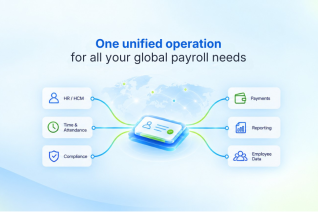
At Neeyamo, time tracking is treated as a core payroll control rather than a standalone process. By aligning time capture, labor rule configuration, and payroll processing within a unified operational framework, organizations are able to move from reactive payroll corrections to predictable, compliant payroll outcomes.
In complex payroll environments, accuracy is not achieved through manual checks. It is built into the system. When time data is payroll-ready by design, payroll teams gain control, confidence, and consistency across every pay cycle.
Because in payroll, time is not just recorded. It is transformed into pay.
For any queries related to Neeyamo’s time & attendance system, please feel free to contact irene.jones@neeyamo.com