The modern workforce is no longer defined by office boundaries, fixed employment models, or predictable growth patterns. Organizations today operate across geographies, time zones, and talent ecosystems that are in constant flux. While business models have evolved to accommodate this shift, payroll is often built for stability rather than change, and has struggled to keep pace.
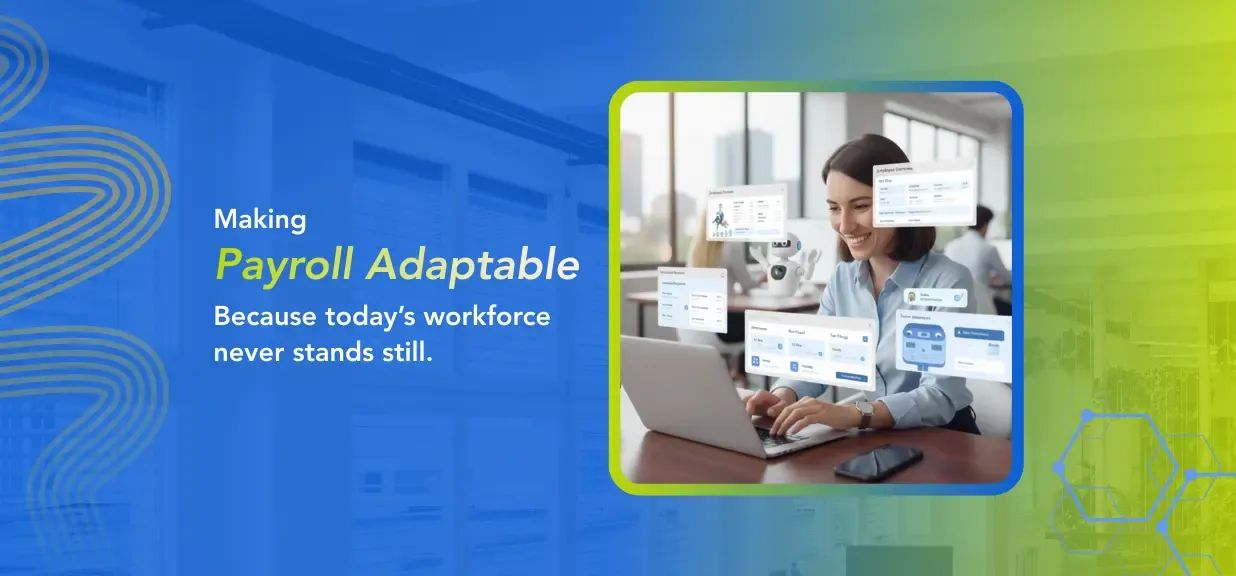
Adaptable payroll is no longer a future aspiration. It is a present-day necessity for organizations looking to sustain growth, ensure compliance, and deliver a consistent employee experience in an increasingly dynamic world of work.
Workforce Change Is a Strategic Reality
The modern workforce spans geographies, contracts, and employment types. Organizations are hiring talent where it exists, restructuring teams dynamically, and entering new markets faster than ever before.
This shift has altered the complexity and risk profile of payroll. Systems designed for centralized and predictable workforces struggle to support decentralized and constantly evolving employment models. For leadership teams, this creates a clear inflection point where payroll must either enable workforce strategy or constrain it.
Why Legacy Payroll Models Limit Agility
Traditional payroll models are built for predictability. Fixed processes, siloed country operations, and manual interventions may function in stable environments, but they falter when workforce structures change.
When payroll lacks flexibility, workforce decisions slow down. Market entry timelines extend. Compliance exposure increases. Operational effort multiplies. For organizations pursuing growth or transformation, these limitations directly impact business momentum and governance.
The Expanding Complexity of Global Employment
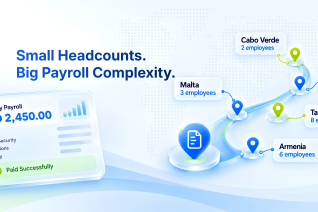
Today’s workforce is global and structurally diverse. Full-time employees operate alongside contractors and contingent workers. Compensation models vary. Pay frequencies differ. Regulatory obligations depend on where work is performed, not where the organization is headquartered.
Adaptable payroll treats this complexity as the standard operating environment. It is designed to support multiple employment models, currencies, and statutory requirements without fragmenting controls or increasing operational risk.
Compliance as a Moving Variable
Regulatory change is continuous and uneven across jurisdictions. Labor laws, tax regulations, and reporting requirements evolve independently, often with limited notice.
For leadership, compliance is a financial and reputational risk. Payroll models that rely on reactive updates or disconnected local vendors struggle to maintain consistency. Adaptable payroll embeds compliance into its operating framework, ensuring regulatory responsiveness without disruption to business operations.
Technology That Supports Change
Payroll technology must support organizational speed rather than resist it. Yet many enterprises operate with layered systems and fragmented integrations that create complexity instead of control.
A modern payroll architecture is unified, configurable, and scalable. It integrates seamlessly with enterprise HR systems, supports real-time data flow, and enables organizations to respond to workforce changes without reengineering processes. For executives, this delivers improved visibility, stronger governance, and faster decision-making.
ALSO READ | How ARIA Improves Employee Experience: 5 Practical Use Cases
Payroll and Business Scale
Payroll is central to execution during expansion, restructuring, and acquisitions. An adaptable payroll framework supports scale without compromising accuracy or control.
Standardized global processes, supported by deep local regulatory expertise, allow organizations to move quickly while maintaining consistency. In this model, payroll becomes a stabilizing force during periods of growth and change.
Employee Trust and Payroll Consistency
In distributed workforce models, payroll is one of the most visible operational touchpoints. Accuracy, timeliness, and transparency are baseline expectations.
Adaptable payroll ensures that workforce changes such as relocations, role transitions, or contractual shifts are absorbed seamlessly. This consistency plays a critical role in sustaining employee trust across geographies.
Payroll Data as Strategic Insight
Payroll data provides real-time visibility into workforce cost, structure, and risk. When payroll systems are unified and adaptable, leaders gain consolidated insights across regions.
This visibility supports better forecasting, informed decision-making, and proactive risk management. Payroll data becomes a strategic input rather than a retrospective report.
From Operational Function to Strategic Capability
Adaptable payroll is not defined by tools alone. It is shaped by unified global frameworks, strong local expertise, and intelligent automation working together.
Across the global payroll landscape, organizations that have embraced this approach are redefining payroll’s role in workforce strategy. Providers such as Neeyamo, with a focus on global consistency supported by deep local compliance, reflect this shift toward payroll models that move in step with evolving workforce strategies.
For leadership teams navigating uncertainty, adaptable payroll is no longer a back-office consideration. It is a strategic capability that supports growth, protects governance, and enables future workforce models.
Neeyamo’s Approach to Adaptable Payroll
At Neeyamo, adaptable payroll brings together global consistency and local compliance within unified frameworks built to scale with evolving workforce strategies. Supported by standardized processes, deep in-country expertise, and intelligent automation, organizations can respond to change without compromising accuracy or governance. Enhancing this ideology, ARIA (Adaptive Real-time Intelligent Assistant) simplifies global payroll interactions through conversational, real-time support improving responsiveness, transparency, and control in complex, multi-country environments.
Reach out to us at irene.jones@neeyamo.com to know more!